







Introduction:Geisha coffee is hailed as the pinnacle of coffee, but its flavor profile varies greatly depending on origin, processing method, and grade. This article delves into the Boquete region of Panama's Hacienda Esmeralda, explaining the grading logic and regional characteristics of Red and Green Label Geishas, with a special focus on the terroir advantages of plots such as Jaramillo. It also provides practical pour-over parameters for the Hacienda Esmeralda Red Label Natural Geisha, including filter choice, water temperature, brew ratio, and grind size — helping you master the key brewing elements to savor the layered floral and fruity notes of Geisha.
Geisha (Geisha) is considered the finest coffee in the world, but in reality, the flavor can vary significantly across different regions, farms, and even grades. Especially from Panama’s Boquete region, Hacienda Esmeralda brings out the full potential of Geisha. This article will take you deep into how Hacienda Esmeralda categorizes Geisha into Red and Green Labels, and explores the unique terroir conditions of renowned areas like Jaramillo. We’ll also share recommended pour-over guidelines for the Hacienda Esmeralda Red Label Natural Geisha, covering filter type, water temperature control, brew ratio, and grind fineness — so you can better understand how to brew out Geisha’s captivating floral and fruity aromas and complexity.
Panama’s specialty coffee cultivation is concentrated in the western highlands, particularly represented by Boquete, Volcán (Volcano Valley), and Renacimiento. Among them, the Boquete Valley, adjacent to the Barú Volcano and blessed with volcanic soil and pristine forest environments from Chiriquí Province, stands as the most ideal location for growing specialty coffee. Situated at the heart of the world coffee belt, influenced by high altitude and significant day-night temperature variations, this area not only facilitates sugar accumulation in coffee cherries but also enhances flavor concentration. Boquete lies on the eastern side of the Barú Volcano, at elevations between 1,000 and 2,000 meters, featuring steep terrain, cool climate, constant cloud cover, and abundant rainfall — creating a microclimate highly conducive to Geisha cultivation. The renowned Hacienda Esmeralda is located here.
When it comes to Geisha, Hacienda La Esmeralda (翡翠莊園) absolutely cannot be overlooked. In 2004, this estate won the Best of Panama competition with its Geisha coffee, gaining instant fame and seeing its auction prices repeatedly set new records. Not only did Hacienda Esmeralda bring global recognition to Geisha, but it was also the first farm in the world to implement a rigorous grading system for the Geisha variety. The Peterson family manages Geisha systematically based on altitude, growing area, and cupping scores, ensuring traceability and quality consistency for each batch.
Hacienda Esmeralda’s Geisha is primarily grown in three renowned sections: Cañas Verdes, Jaramillo, and El Velo. To manage more precisely, the Peterson family further divides each large plot into multiple sub-sections, allowing consumers to trace the specific origin of the Geisha through batch information. Among these, Jaramillo is regarded as the birthplace and core cultivation area of Geisha. This region has an average elevation exceeding 1,650 meters, with cool and humid mountain conditions that endow Geisha with intense natural fruit and floral characteristics. Jaramillo is further divided into five smaller plots: Mario, Noria, Reina, Bosque, and Buenos Aires, with Mario and Bosque frequently standing out in international competitions.
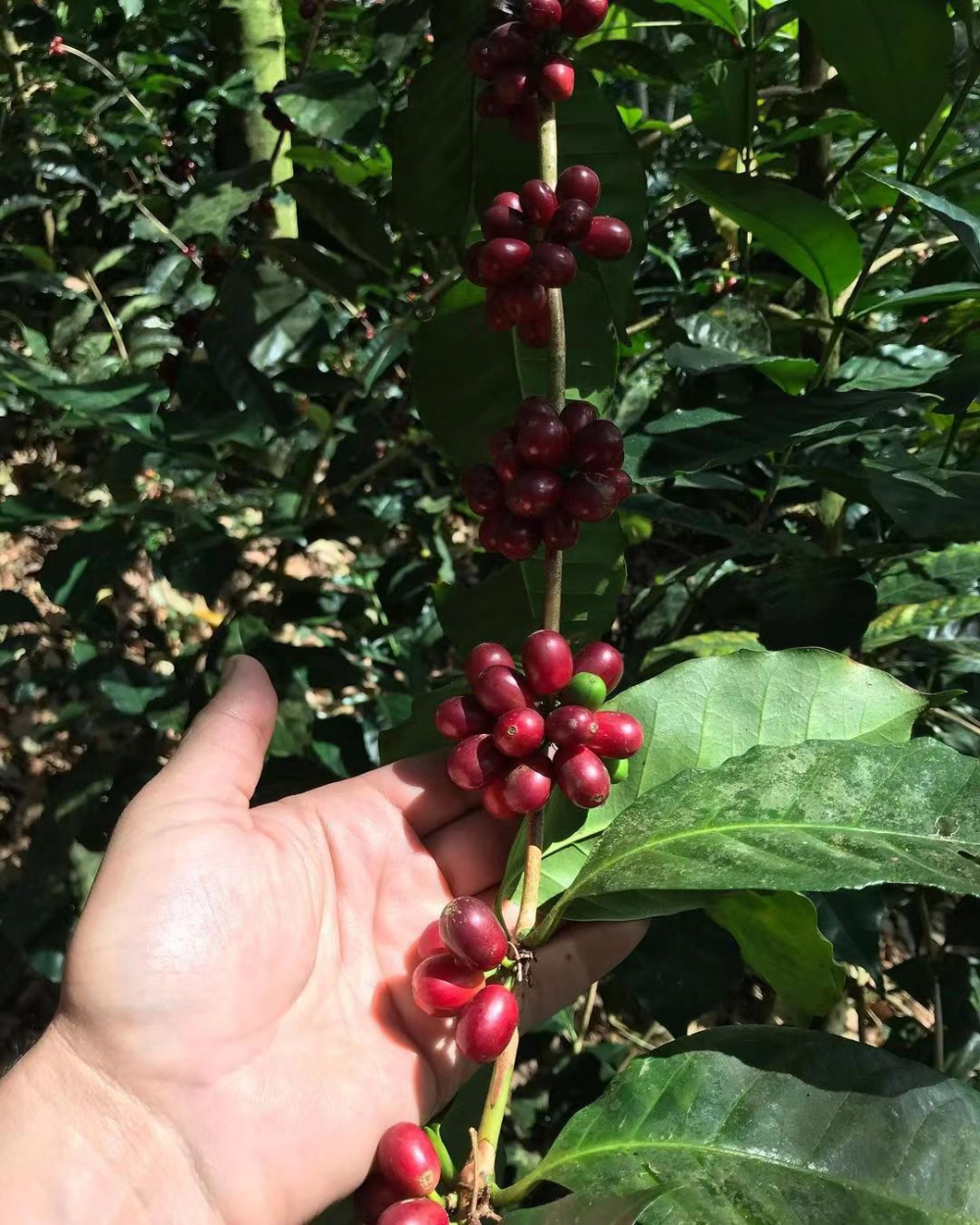
Hacienda Esmeralda’s coffee processing facility is located in Cañas Verdes, near the base of the Barú Volcano, about a twenty-minute drive from the town of Boquete. When coffee cherries reach optimal ripeness, workers handpick them selectively and quickly transport them to the processing plant to ensure freshness and quality. Depending on the grade and processing method, subsequent steps are carried out, resulting in the distinct profiles of Red and Green Label Geishas.
In Hacienda Esmeralda’s grading system, the “Red Label” represents the highest-grade Geisha, officially known as ESMERALDA SPECIAL, usually entered into auctions. These Geishas are grown at altitudes of 1,600 to 1,800 meters, often scoring above 90 points in cupping, and mainly come from the Jaramillo and Cañas Verdes farms. Due to the challenges posed by high-altitude environments for both cultivation and harvesting, Red Label Geishas often possess the most pronounced floral and fruity aromas along with complex layers. Among them, the Mario plot in Jaramillo is particularly iconic — the commonly seen Hacienda Esmeralda Red Label Natural Geisha originates from this plot and is processed using the natural (sun-dried) method. To stabilize the drying process, the farm combines traditional patio drying with Guardiola mechanical dryers, ensuring even heat distribution and balanced flavors.
In contrast, the “Green Label” belongs to the Private Collection series, also sourced from Jaramillo and Cañas Verdes at elevations between 1,600 and 1,800 meters, but without indicating specific plots or entering auctions. Although slightly lower in grade than the Red Label, Green Label Geishas still showcase the classic profile of high-altitude Geisha, typically processed via washed methods, with flavor profiles leaning fresh — such as lemon, berries, yuzu, and even carrying a light oolong tea note.
So, how should Geisha be brewed to taste its best? Given its rich floral and fruity character, roasters often opt for medium-light roasts to preserve its bright acidity and delicate layers. However, medium-light roasted beans are denser and harder, so a higher extraction rate is needed during pour-over brewing to fully express their flavors. It is recommended to use a higher water temperature and a finer grind size, paired with an appropriate brew ratio, to enhance aroma release and balance taste.
In practice, the V60 filter cone is recommended, thanks to its unique spiral ribs and central large hole design, which accelerate water flow while extending the contact path between coffee grounds and water — aiding fuller flavor extraction. Additionally, the focused water flow toward the center of the cone ensures more uniform extraction, highlighting the layered profile of Geisha.
Here are the recommended pour-over parameters for the Hacienda Esmeralda Red Label Natural Geisha: Use a V60 filter cone, control water temperature at 92°C, use 15 grams of coffee, set a brew ratio of 1:16, and aim for a grind size roughly equivalent to fine sugar (about 80% of particles passing through a #20 sieve). The specific steps are as follows: Wet and attach the filter paper to the cone, then discard excess water; place the coffee grounds and gently tap to level; pour 30 grams of water for a 30-second bloom; pour water up to about 125 grams in a centered, outward spiral; once the water level drops halfway, continue pouring to a total of 240 grams; then wait for the dripping to finish, with total brew time around 2 minutes. This brewing method fully highlights the citrus, jasmine, and tropical fruit notes of Geisha, with bright acidity and a soft tea-like aftertaste. The flavor transformation as it cools is equally captivating.
The above content is compiled by CoffeeHunters, a coffee news website.


