








Introduction:Yellow Bourbon is an exceptionally distinctive variety within the Arabica family, renowned for its orange-yellow fruits and sweet, juicy flavor profile, particularly excelling in high-altitude regions. This article delves into the genetic origins of Yellow Bourbon, its unique flavor characteristics, and through the real-world example of Brazil’s Fazenda Rainha (Queen Estate), explores practical details from sun-drying processing and roast design to pour over parameters. Whether you’re new to specialty coffee or looking to refine your Yellow Bourbon tasting experience, you’ll find valuable insights here.
Among the many Arabica coffee varieties, Bourbon has long been one of the most celebrated classic lineages. It evolved from the ancient Typica variety, characterized by its round and plump bean shape. Originating from the French Bourbon Island (now Réunion) in the 18th century, this variety was introduced to Brazil in the 19th century and gradually became a foundational pillar of coffee cultivation across Central and South America. Bourbon varieties generally possess rich aromas and soft acidity, and when grown in high-altitude environments, they can accumulate sufficient sugars, giving rise to delicate and multi-layered flavor profiles.
Among the many variants of Bourbon, one has garnered significant attention due to the uniquely colored mature fruits—namely, Yellow Bourbon (also known as Bourbon Amarello). Unlike typical Bourbon varieties, which transition from green to yellow, then orange to deep red as they ripen, Yellow Bourbon fruits do not turn the common red when fully ripe but instead exhibit a warm, bright orange-yellow hue. This coloration is primarily determined by the selective expression of genes related to fruit peel pigment deposition. This variety originated in the high-altitude regions of São Paulo State in Brazil, where large diurnal temperature variations, abundant sunlight, and the fruit sugar accumulation effect of the growing environment enable Yellow Bourbon to often display high sweetness, rich fruity aromas, and soft acidity during cupping.
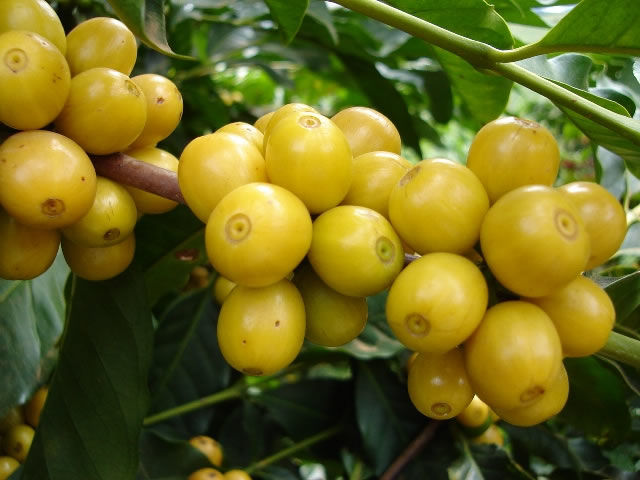
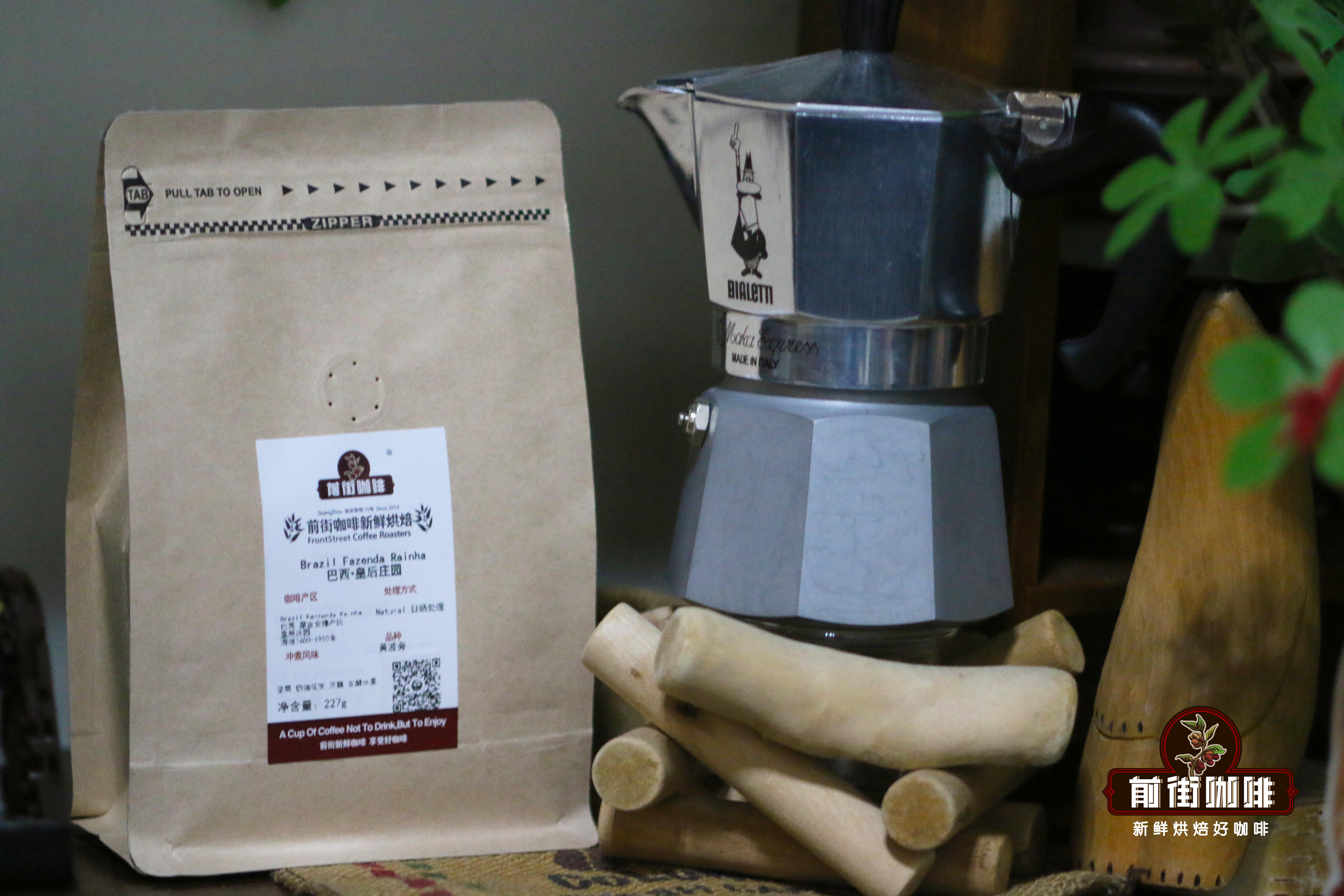
Taking the renowned Mogiana region in Brazil as an example, Fazenda Rainha (Queen Estate) is one of the outstanding representatives of Yellow Bourbon coffee. Nestled at an altitude of 1400 to 1950 meters on a plateau, the estate’s climate conditions and soil properties are highly suitable for varieties like Yellow Bourbon that require extended periods to accumulate sugars. In terms of processing method, the estate opted for the Natural (sun-dried) technique. Through rigorous selection and control, freshly harvested ripe Yellow Bourbon cherries are first subjected to floatation to remove unripe or defective beans, then placed on African raised beds for slow drying. Throughout this process, workers periodically turn the coffee cherries to ensure even heat distribution and to prevent over-fermentation or off-flavors. Compared to the traditional “pulped natural” method of direct exposure on bare earth, this refined sun-drying process not only preserves the natural sweetness from the pulp but also results in a cleaner, brighter final coffee flavor, along with intense notes of caramel and dried fruit.
According to cupping data, Yellow Bourbon from Fazenda Rainha typically exhibits complex flavors of nuts, cream, dark chocolate, peanuts, and sugarcane. Upon tasting, it delivers pronounced sweetness, soft and balanced acidity, and a long, pleasant aftertaste. These flavor characteristics have earned Yellow Bourbon numerous accolades in Brazil’s COE (Cup of Excellence) competition, making it a prized choice among many coffee professionals and enthusiasts.
If you’d like to experience the unique charm of this coffee at home via pour over, here is a set of extraction parameters that have proven effective: Use water at 87–88°C, with a medium grind size (similar to that of fine sugar) passing about 70% through a Chinese standard No. 20 sieve, using approximately 15 grams of coffee grounds, with a brew ratio controlled at 1:15. For the pour over device, you may opt for a KONO filter, which is designed to enhance extraction uniformity and accentuate the coffee’s richness and rounded mouthfeel.
The specific steps are as follows: First, perform a bloom with hot water at approximately double the weight of the coffee grounds (about 30 milliliters) for around 30 seconds. This helps awaken the coffee grounds and release initial aromas. Then, pour water in small streams in circular motions from the inside out. When the total water volume reaches 125 grams, perform the first pour pause. Wait until the coffee bed descends to the middle section of the filter, then continue pouring with the same fine stream until you reach 225 grams, allowing all the coffee liquid to drip through. The total extraction time is recommended to be around 2 minutes. After completion, gently swirl the coffee liquid before enjoying.
It’s important to note that since Yellow Bourbon is a high-density, high-sugar variety, when using a medium-depth roast (as in this example), care should be taken to avoid overly high water temperatures or excessively fine grinds during extraction, so as to prevent the release of excessive bitter or astringent substances. It is recommended to adjust water temperature and grind coarseness to find the balance between flavor and extraction yield, allowing the sweetness and aroma to fully shine while maintaining overall smoothness and complexity in the mouthfeel.
In summary, Yellow Bourbon is not only a product of the interplay between genetics and environment but also a brilliant representation of coffee variety diversity. From its unique fruit color, to the sugars accumulated at high altitudes, to the refined sun-drying process and the appropriately designed roast and extraction, each step influences the final flavor in the cup. Whether you’re new to coffee or already have some tasting experience, gaining a deeper understanding of Yellow Bourbon can add an unforgettable flavor memory to your coffee journey.
The above content is compiled by CoffeeHunters, a coffee news website.


