







Introduction:Many coffee enthusiasts encounter a disparity in flavor when brewing PWN Golden Mandheling at home using a V60 dripper, often finding it differs significantly from what they taste in cafés. The key lies in the vastly different flow rates and extraction characteristics of the Kono and V60 drippers — simply applying café parameters directly is unlikely to replicate the same taste. This article delves into how to adjust grind size, coffee-to-water ratio, and water temperature based on the unique traits of the V60, and provides a method to measure the 0.85mm sieve filtration rate, helping you precisely control variables to brew a rich and full-bodied Golden Mandheling.
After purchasing PWN Golden Mandheling beans, many coffee lovers find that even when following the recommended parameters on the package for home pour over brewing, the flavor still falls short compared to the café experience. This discrepancy primarily stems from the choice of dripper — cafés typically use the Kono dripper, while most households commonly use the V60 dripper. These two drippers differ significantly in flow control and extraction efficiency, making it unsuitable to directly use the same settings. This article will focus on the characteristics of the V60 dripper, detailing how to adjust grind size, coffee-to-water ratio, and water temperature so you can consistently brew a layered, rich, and full-bodied Golden Mandheling at home. It also includes tips on measuring the 0.85mm sieve filtration rate and grind recommendations for different brewing methods, helping you more accurately manage extraction variables.
PWN Golden Mandheling comes from the Aceh region of Sumatra, Indonesia, produced by PWN. The coffee is grown at altitudes between 1100–1600 meters, using the Ateng variety, and is processed via wet hulling with four rounds of screening (only beans larger than 19 mesh are retained). This medium-roasted coffee bean has a distinctive rich base, but if the dripper and parameters are not well matched, its inherent depth of flavor can easily be lost.
The design differences between the Kono and V60 drippers directly affect the extraction performance of the coffee. The V60 is a large-hole dripper with a low-rib structure that results in a faster flow rate. Baristas can flexibly control the slower initial flow to fully extract flavor compounds, then speed up the flow later to reduce off-flavors; the overall brewed coffee exhibits distinct layering. In contrast, the Kono dripper’s small hole size and lack of ribs at the top cause the filter paper to cling tightly to the cup wall, restricting airflow and significantly slowing the water flow. This extended contact time between water and coffee grounds enhances the coffee's body, making it particularly suitable for medium-roast beans.
It’s worth noting that the parameters used by cafés when brewing PWN Golden Mandheling with the Kono dripper (15g coffee, 1:15 coffee-to-water ratio, 88°C water temperature, medium-coarse grind / 65% 0.85mm sieve filtration rate), if directly applied to the V60 dripper, often result in a thinner-tasting cup. The reason is that the fast flow rate of the V60, when paired with the same grind size, shortens the extraction time and fails to fully release the coffee’s rich body.
Regarding the function of the 0.85mm sieve, it is designed to provide a calibration reference for the grind size of specific coffee beans. In practice, weigh out 10 grams of coffee beans, grind them to the target size, and pour the ground coffee onto the upper part of the sieve. Shake vigorously so that particles smaller than 0.85mm fall through to the lower section. Continue shaking until no fine particles remain, then weigh the coffee powder in the lower section and divide that weight by 10 grams to get the sieve filtration rate (for example, 6.5 grams passing through equals 65%).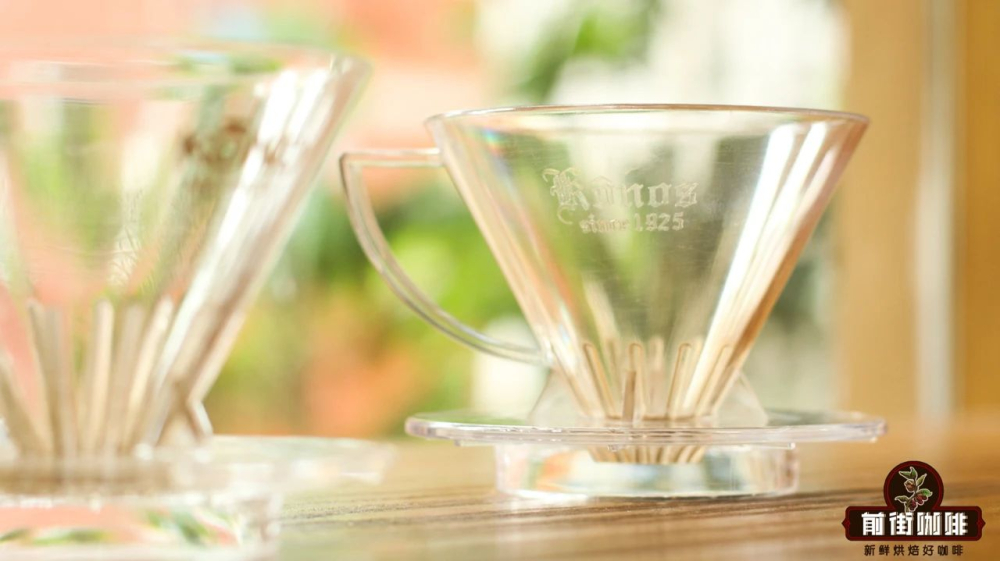 Extensive experiments have found that for medium-roast pour over coffee, a sieve filtration rate of 65%–70% is recommended (approximately 6.5–7 grams of 10 grams of coffee passing through the sieve). This grind coarseness is similar to coarse sugar, balancing flavor and mouthfeel.
If you decide not to change the grind size (maintaining a 65%–70% sieve filtration rate), then you’ll need to adjust other parameters to accommodate the V60 dripper’s characteristics. First, adjust the coffee-to-water ratio from the Kono’s 1:15 to 1:13 — since the V60 has a fast flow rate and clear layers, reducing the ratio extends extraction time and increases the overall body of the coffee. Second, raise the water temperature to 90°C. A higher temperature accelerates the release of flavor molecules, and when combined with the V60’s flow properties, results in a richer-tasting cup. However, note that if the grind is too fine (filtration rate exceeding 70%), using 90°C water can lead to over-extraction, resulting in bitterness or woody off-notes.
Based on the above adjustments, the recommended parameters for brewing PWN Golden Mandheling with the V60 are as follows: 15g coffee, 1:13 coffee-to-water ratio, medium-coarse grind (0.85mm sieve filtration rate 65%–70%), 90°C water temperature. For the specific brewing steps, it is suggested to use a three-stage pour: first, pour 30g of water for the bloom (fully saturating the coffee bed); then, pour 70g of water evenly in a medium-fine stream in a circular motion (totaling 100g); when the liquid level drops to about two-thirds of the coffee bed, pour the third 95g (for a total of 195g). Maintain a steady flow and consistent circular pouring throughout, yielding approximately 170g of brewed coffee in about 1 minute and 45 seconds. After brewing, gently swirl the server to mix the coffee evenly before tasting to fully experience its flavor profile.
The above content is compiled by CoffeeHunters, a coffee news website.


