







Introduction:Want to delve deeper into the unique charm of Indonesia’s classic Mandheling coffee? This article starts with the brand story behind Golden Mandheling, explores the terroir characteristics of the high-altitude Gayo region in Sumatra, introduces you to the local mainstream Ateng variety and how the wet-hulled processing method influences flavor, and compares cupping differences between Lintong and PWN Golden Mandheling. It also provides expert-level pour over parameters to help you grasp the essence of this deep-roast flavor representative.
Among the many fine coffees of Southeast Asia, Indonesian Mandheling holds a distinctive place with its rich body and unique spicy notes. If you’ve seen the “Golden Mandheling” option at a coffee shop, this premium bean from the Gayo Mountains of Sumatra is the top-tier representative of the Mandheling lineage. This article will break down the origins of its name, growing environment, varietal traits, and processing techniques step by step to unravel the reasons behind its flavor profile, and through actual cupping comparisons, introduce you to the differences between various grades of Mandheling. Finally, pour over parameters are included so you can achieve professional-level results at home.
Regarding the origin of the name “Mandheling,” there’s a WWII anecdote: Japanese soldiers stationed in Indonesia tasted a richly flavored coffee in a café and asked for its name. The shop owner mistakenly thought they were asking about his origin and answered “Mandailing” (referring to the Acehnese people). After the war, the soldier recalled that coffee and managed to import 15 tons of Indonesian beans to Japan through connections, which unexpectedly became hugely popular. The name “Mandheling” spread from there. The person who introduced these beans to the Japanese market was none other than the founder of what would later become PWN—then a coffee shop owner who keenly recognized the potential of Mandheling.
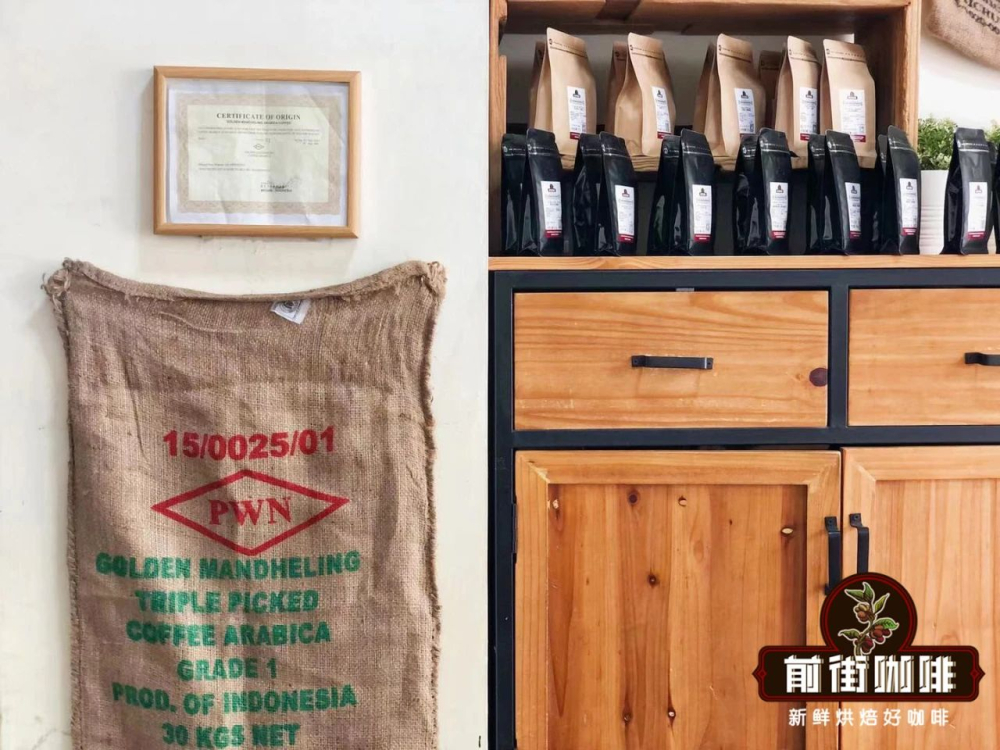
Since 1957, PWN has focused on purchasing high-quality Mandheling green beans from Sumatra and established strict screening standards. To ensure plump beans and reduce off-flavors, they employ a process of “one machine sort + four manual hand sorts,” inspecting each batch for density, size, and color, and removing defective beans. It’s said that beans processed through this method take on a golden shimmer in the sunlight, hence the name “Golden Mandheling.” Notably, although Japan once attempted to produce a similarly named product locally, PWN had already registered the trademark in Japan, so today only PWN-produced Mandheling can be rightfully called “Golden Mandheling.” When purchasing, look for the PWN label on the jute sack and the origin certification.
The raw materials for Golden Mandheling mainly come from the Gayo Mountains in the central-northern Aceh region of Sumatra. This mountainous area, ranging from 1,500 to 2,500 meters in elevation, features a tropical rainforest climate with high temperatures and humidity year-round. Coffee trees are mostly planted in high-altitude woodland areas. Compared to the politically less stable Lintong region, Gayo has seen improved environmental stability in recent years, resulting in better coffee quality, with many trees being ancient, disease-resistant varieties. The commonly used Ateng variety (i.e., Catimor) is one of the disease-resistant strains introduced by Indonesia in the 19th century to combat leaf rust. Although it belongs to the Timor hybrid series (a cross between Robusta and Arabica), its adaptation to Sumatra’s terroir has given it unique cedar and spice notes.
In terms of processing, the Gayo region generally uses the “wet-hulled method”: the coffee fruit’s skin and pulp are first removed, followed by a short fermentation period, then drying to a semi-dry state (about 30–40% moisture content). At this point, the parchment layer (silver skin) hasn’t fully hardened, so it’s removed before continuing to dry down to 12% moisture. Since the entire process takes place in a high-humidity environment of 70–90%, and the parchment layer is removed in the final stage, the green beans easily absorb impurities from the air. As a result, the finished product often has intense earthy, herbal, and spicy aromas. This processing method is closely tied to the region’s high-humidity climate and is key to the “heavy, rich aroma” that defines Mandheling-style coffees.
A cupping comparison between Golden Mandheling and the more common Lintong Mandheling reveals clear differences: the Lintong version, roasted medium-dark, highlights a profile of chocolate, brown sugar, and nuts, with a herbal aftertaste; whereas PWN Golden Mandheling emits a complex dry aroma of pine, nuts, spices, and herbs. After brewing, the sweetness of licorice and caramel becomes more pronounced, with a balanced core of black chocolate and spices. Overall, it has high clarity and a long-lasting finish, with exceptional body.
If you want to brew Golden Mandheling at home, a medium-dark roast is recommended to highlight its herbal and spicy characteristics. Tested and effective parameters are: water temperature 87–88°C, 15 grams of coffee, a 1:15 coffee-to-water ratio, using a medium-coarse grind (70% passing rate through a Chinese standard #20 sieve), with a KONO filter cone using a three-stage pouring method—first, 30ml to bloom and initiate degassing; second, 100ml to bring out golden crema and lift the coffee bed; finally, 95ml poured gently in the center to enhance sweetness. This process effectively balances the rich body and caramel sweetness, ideal for coffee lovers who enjoy bold flavors with layered complexity.
The above content is compiled by CoffeeHunters, a coffee news website.


