








Introduction:Want to brew a well-balanced, flavorful iced americano at home? This article dives deep into the three key factors that influence the flavor of an iced americano: water choice, type and proportion of ice cubes, and coffee bean selection with extraction parameters. Whether you're new to coffee or already an enthusiast, you'll learn professional-level brewing techniques to craft your perfect cup of iced americano.
Making an iced americano may seem simple—just pour espresso over ice water—but crafting one with balanced flavor and lasting appeal requires mastering several critical details. From water selection and ice cube configuration to the coffee-to-water ratio, each element significantly impacts the final taste and aroma.

Next, we’ll explore these three main aspects—water quality, ice cubes, and the coffee itself—to help you understand how to adjust these elements, allowing you to easily create a stunning iced americano.
I. Water Choice: The Key Player in Coffee Flavor
Many overlook the impact of water on coffee, but the hardness of the water and its mineral content (usually measured in ppm) directly affect how coffee flavors are expressed. Even for iced americano, where most of the water doesn’t go through extraction, the water used to dilute the espresso still shapes the final taste and flavor profile.

Just as we can distinguish between the tastes of different bottled water brands—some smooth, others slightly astringent—when this water is used to dilute espresso, its texture directly reflects in the overall coffee experience. Practical tests have shown that using different brands of water to brew americano results in noticeably varied flavors. For example, iced americanos made with Yibao water often exhibit a more pronounced sweetness, while Nongfu Spring tends to taste richer and smoother.

It’s recommended to select an appropriate water ppm value based on the roast level of the coffee beans: for medium-dark or dark roasts, choose softer water with less than 100ppm to highlight sweetness and smoothness; for medium-light or light roasts, opt for water in the 100–200ppm range to bring out more complex layers and clearer flavor definition.
II. Ice Cube Configuration: Melting Speed Dictates Concentration Curve
In an iced americano, ice cubes aren’t just for cooling—their size and hardness affect melting speed, thereby altering the coffee’s concentration curve. If ice melts too quickly, the coffee can become overly weak; if too slowly, it may start too strong and lack balance later.
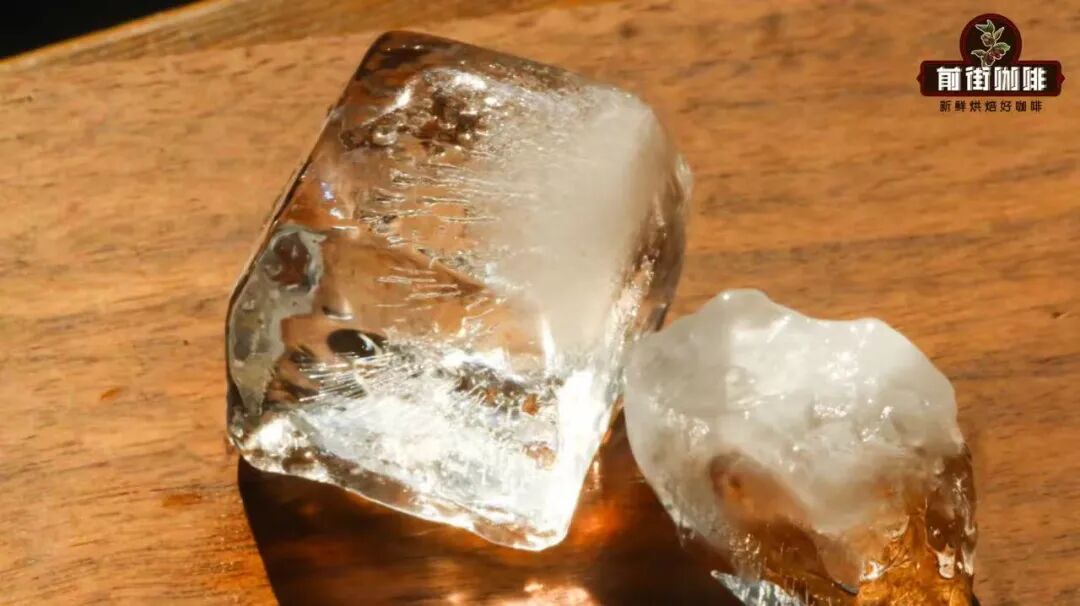
Generally, small, soft ice cubes melt faster, so it’s advisable to increase the ice ratio and slightly reduce the amount of water, resulting in a slightly higher initial concentration. As the ice melts quickly, the coffee concentration gradually adjusts to an ideal drinking strength. For instance, when using 20g of coffee grounds and extracting 40ml of espresso in 30 seconds, pairing it with fine, small ice cubes might call for over 120g of ice and about 130ml of water. This way, the initial flavor is intense and then naturally eases into a smooth finish.

Conversely, if using large, hard ice cubes that melt slowly, you can reduce the amount of ice and increase the water to maintain a stable and moderate concentration from the start. For example, using 3 large ice cubes (about 90g) with around 160ml of water results in a more sustained flavor that resists excessive dilution.
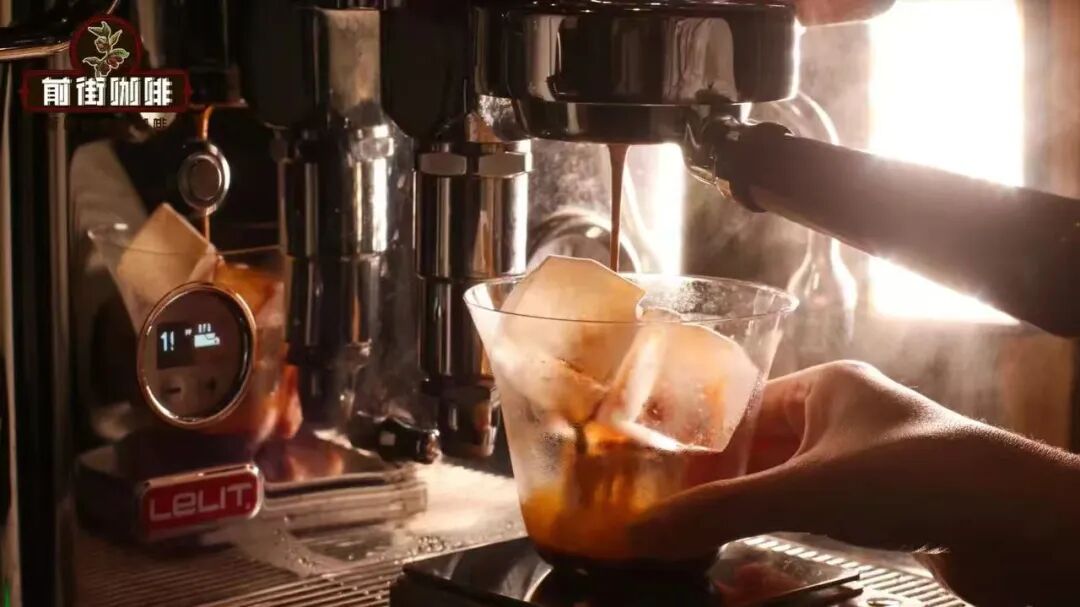
Additionally, the quality of the water used to make the ice cubes is worth noting. Clean, low-impurity water helps avoid introducing unwanted flavors, and while not absolutely essential, it’s worth trying when pursuing the ultimate flavor experience.
III. Coffee Beans and Extraction: The Espresso Texture Determines Base Flavor
The choice of coffee beans directly determines the foundational tone of an iced americano. Light roast beans often feature bright fruity acidity and fresh herbal notes, ideal for those who prefer a refreshing taste; dark roast beans, on the other hand, showcase rich caramel, chocolate, and bold textures, suiting drinkers who favor deeper flavors.

When making espresso for iced americano, there’s greater flexibility in adjusting the extraction ratio, since the final concentration can be fine-tuned afterward by adding water. Compared to a latte, iced americano better highlights the intensity of the espresso’s own flavors.
Taking a classic Italian blend as an example, a 1:2 coffee-to-water ratio (e.g., 20g of coffee grounds yielding 40ml of espresso) is generally suitable for most coffee drinks. However, for iced americano, you can slightly increase the extraction yield to 1:2.2 (i.e., 20g of coffee yielding 44ml of espresso), extending the extraction time by about 2 seconds. This adjustment enhances the coffee’s aroma richness and aftertaste without over-extraction, especially when served cold, where bitterness isn’t overly pronounced, instead revealing a fuller flavor profile.


In summary, by mastering the three key elements—water quality, ice cubes, and espresso extraction—you can easily brew your own delicious iced americano at home. Whether it's a hot summer day or you need a daily pick-me-up, you can enjoy a balanced and layered coffee experience.
The above content is compiled by CoffeeHunters, a coffee news website.


