








Introduction:Although an iced latte is an entry-level coffee drink, creating one with distinct flavor layers and a smooth mouthfeel requires mastering several key techniques—from selecting the right coffee beans and milk, to balancing the ratio of espresso to milk, and attending to every practical detail. This article will delve into the essential elements of making a great-tasting iced latte, including recommended bean-and-milk combinations, ideal proportion references, and operational tips, so you can brew a café-quality iced latte at home.
An iced latte may seem like just three simple steps—“add ice, pour milk, pour coffee”—but crafting one with balanced flavor and a refreshing texture involves quite a bit of skill and knowledge. Everything from the type of coffee beans and milk used, to the ratio of milk to coffee, and even the details of extraction and pouring, can directly influence the final taste experience.
First and foremost, choosing the right ingredients is the first step to success.The flavor characteristics of the coffee beans directly shape the foundation of the iced latte.For example, darker roasted blends often carry rich notes of nuts, chocolate, and caramel, making them suitable for those who prefer bolder flavors; whereas light to medium roasted blends can showcase more fruity or floral aromas, often resulting in a softer and more nuanced profile when paired with milk. Even coffee beans labeled as “espresso blends” from different brands or regions can yield vastly different flavor profiles due to variations in roast level and bean variety.

In addition to the coffee beans, the choice of milk is also critically important. There are many types of whole milk available on the market, each differing in terms of milk aroma intensity, sweetness, and creaminess. The ideal milk should strike a balance with the coffee—not overwhelming the coffee’s characteristics with excessive milkiness, nor being too light and making the overall flavor feel weak. It’s recommended to try different brands of fresh milk according to personal taste preferences to find the combination that best suits your flavor profile.
Next comes setting the ratio. While there is no so-called “standard formula,” based on actual testing and the experience of most coffee professionals, acommon and beginner-friendly iced latte recipe is: 40 grams of espresso liquid, paired with about 240 grams of cold milk and 75 grams of ice cubes, with a total volume of approximately 300 milliliters. An iced latte made with this ratio usually achieves a harmonious balance between coffee and milk, though it can be fine-tuned according to personal preference. For instance, if you prefer a stronger coffee flavor, you can slightly increase the amount of espresso; if you want a more refreshing taste, you can add more ice or milk.
The details of the process also should not be overlooked. Though the iced latte may appear to have a simple preparation method,the timing of each step can affect the flavor outcome. The quality of the espresso extraction is one of the key factors—if channeling occurs, the extraction is uneven, or the timing is off, it will directly impact the overall taste of the drink. Additionally, when pouring the extracted espresso into a cup already containing ice and cold milk, the action should be quick to prevent the ice from sitting in the milk for too long and melting, which would dilute the liquid and weaken the flavor.
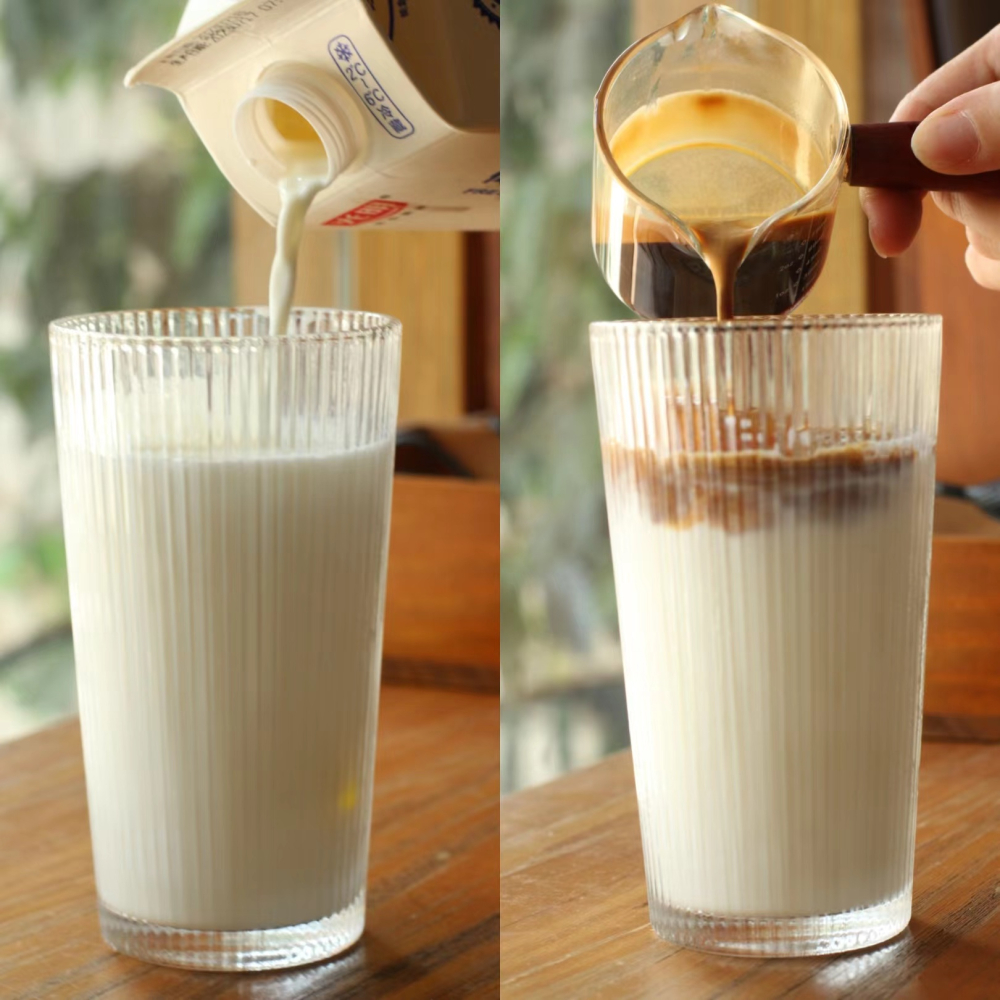
Another point worth noting is the presentation of the “crema layer.” Freshly extracted espresso typically has a rich crema (coffee foam), which not only adds aroma but also helps create an attractive gradient effect between the coffee and milk. However, if the espresso is left to sit for more than 30 seconds after extraction, this crema will gradually dissipate, not only affecting the appearance but also reducing the intensity of the aroma. Therefore, it’s recommended to pour the espresso into the cup immediately after extraction to preserve optimal flavor and visual appeal.
In summary, making a delicious iced latte involves several crucial steps: selecting the beans, choosing the milk, mastering the ratio, and paying attention to operational details. With continuous experimentation and fine-tuning, you can also easily replicate a café-quality iced latte at home and enjoy a refreshing coffee experience with distinct flavor layers.

The above content is compiled by CoffeeHunters, a coffee news website.


