








Introduction:From the first coffee trees planted in Zhukula in 1892 to today's increasingly clear path toward specialty production, Yunnan coffee has traversed a century-long development journey. This article delves into the main varietal transitions of Yunnan coffee, the terroir conditions of its producing regions, explores its unique flavor profile, and provides tested hand pour parameters and tasting notes for Typica from 2013, offering you a comprehensive understanding of this highland coffee with great potential.
Within the global coffee map, the Asian producing regions stand out with their distinctive herbal and fresh tonalities, and Yunnan, China is one of the important birthplaces of this style. From the first coffee tree planted by French missionaries in Zhukula, Yunnan in 1892, to the subsequent alternating dominance of Typica and Catimor varieties, and now the specialty attempts with Typica in the high-altitude areas of Lincang, the evolution of Yunnan coffee has been both winding and remarkable. This article will take you deep into the planting history, mainstream variety characteristics, natural terroir conditions, and unique flavor direction of Yunnan coffee, along with practical tested hand pour recommendations and tasting notes for 2013 Yunnan Typica, allowing you to experience the charm of the coffee nurtured by this land.

Looking at the global coffee belt, spanning Africa, Asia, and the Americas, each region produces coffee with its own personality. African coffees are often known for their pronounced floral and fruity aromas, leaving a memorable impression on the palate; American coffees emphasize a balance of acidity, sweetness, and bitterness, often accompanied by nutty and chocolatey aftertastes; while Asian coffees often exude a fresh, herbal aroma, showcasing a natural and unpretentious side. Next, we’ll focus on an important domestic producing region—Yunnan.
According to historical records, in 1892, a French missionary successfully planted the first coffee tree in Zhukula Village, Binchuan County, Dali Prefecture, Yunnan, to meet his personal drinking needs. At that time, he might not have foreseen that hundreds of years later, coffee would become an important symbol of Yunnan’s plateau specialty agriculture. Records from that time indicate that these coffee plants belonged to the small-fruited variety, yielding small beans, hence commonly referred to as "small-bean coffee."
Later, through scholarly research, it was confirmed that the earliest introduced coffee variety in Yunnan was Typica, one of the oldest lineages within the Arabica species. Most subsequently evolved varieties are derived from natural mutations or hybrids of Typica. What Typica is most praised for is its clean and balanced flavor profile, along with an unforgettable sweet aftertaste.
However, by the late 1950s to early 1960s, with the disruption of economic ties with the former Soviet Union and Eastern European countries, the coffee export market shrank. Coupled with the social context of the time, which held biases against coffee culture, and the high planting costs and difficulty in maintaining Typica, many farmers chose to cut down coffee trees and switch to other cash crops, causing Yunnan coffee production to nearly come to a halt. It wasn’t until the early 1980s, when international coffee giant Nestlé, seeing Yunnan’s favorable climate conditions, introduced the more easily cultivated and disease-resistant Catimor variety, that Yunnan coffee restarted and gradually began to scale up.
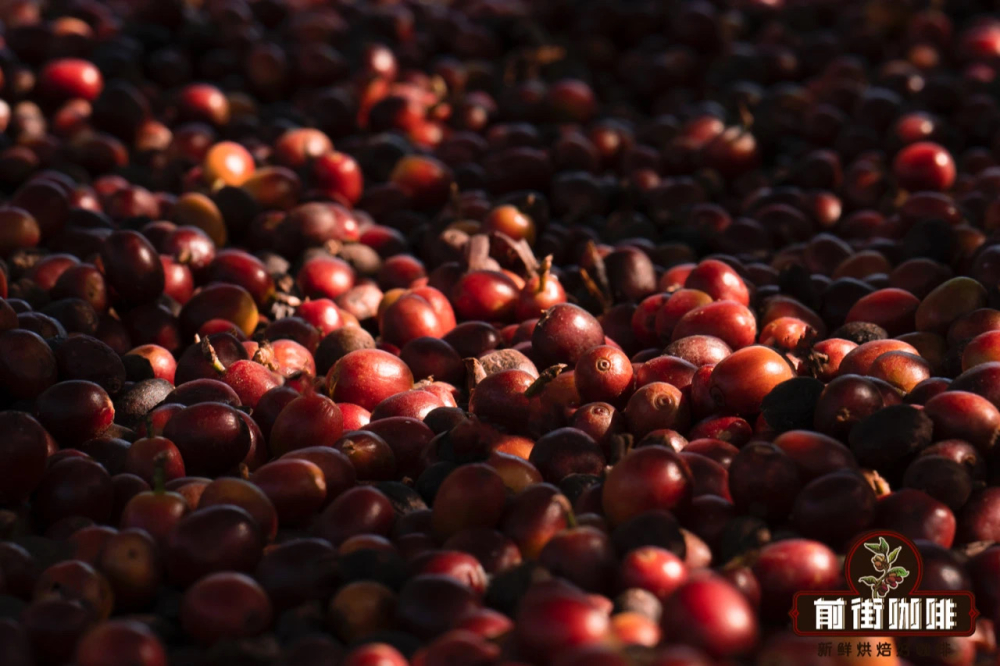
Early coffee cultivation in Yunnan was dominated by Typica, but due to its relatively low yield per unit and limited resistance to diseases, it failed to gain widespread adoption. In contrast, Catimor quickly gained favor among coffee farmers due to its stable yield and good adaptability, becoming the main variety in Yunnan today. Most of the coffee consumed in Yunnan today comes from Catimor.
Catimor is currently widely planted in areas such as Dehong, Baoshan, and Pu’er in Yunnan, even extending to Panzhihua in Sichuan and neighboring Myanmar. The high-altitude regions of Yunnan, especially areas above 800 meters in elevation, with abundant rainfall, fertile and well-aerated soil, and particularly the dry-hot river valley climate around Baoshan, provide an ideal environment for coffee growth.
Speaking of the main varieties of Yunnan coffee, Typica and Bourbon are both types known for their excellent flavor performance within Arabica, celebrated for their clean, balanced, and nuanced profiles. In 1991, Yunnan introduced Catimor from Kenya, a variety with stronger disease resistance and higher yield per unit, but relatively speaking, its flavor complexity is not as rich as that of Typica and Bourbon. Since Typica and Bourbon are similar in appearance and growth habits, it is common to find them interplanted in the fields.
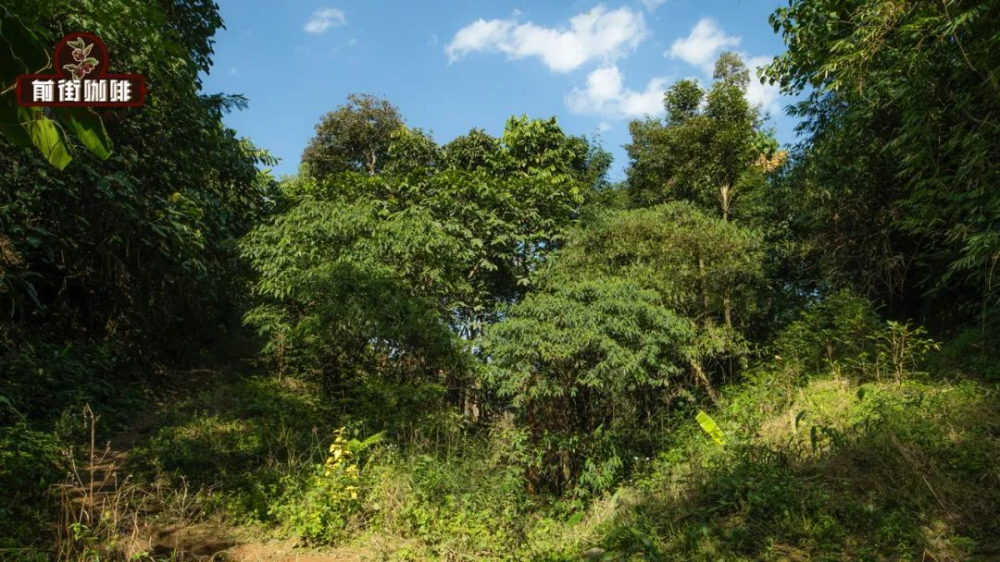
In recent years, with the scientification of planting techniques and the refinement of green bean post-harvest processing, the overall flavor performance of Yunnan coffee has significantly improved. Even Catimor processed using traditional washed or natural methods can exhibit a relatively pure flavor profile. However, to reach specialty coffee grade, varietal selection remains key. For this reason, in 2013, a coffee brand planted the Typica variety in mountainous areas of Lincang, Yunnan, at an altitude of 1300 meters, putting its potential to the test. Compared to Catimor, this batch of high-altitude Typica exhibited a more pronounced sweetness and an enchanting black tea-like finish, with well-balanced acidity, sweetness, and bitterness, as well as a rich and captivating flavor complexity.
Yunnan’s coffee-growing regions are mainly concentrated in Lincang, Baoshan, Simao, Xishuangbanna, and Dehong. Among them, Baoshan is considered one of the most suitable regions for growing small-bean coffee due to its average annual temperature of about 21.5°C, maximum temperatures reaching 40.4°C, and almost frost-free year-round conditions.
The small-bean coffee produced in Baoshan is well-received in the market for being rich but not bitter, having an elegant and non-irritating aroma, uniformly fine and delicate beans, a mellow mouthfeel with fruity notes. Some experts have even compared it to wet-processed small-bean varieties from Colombia, believing it holds world-class quality potential. Today, Baoshan small-bean coffee has been listed as a national geographical indication product, becoming a shining calling card for Yunnan coffee.
Below is a tested hand pour case reference for 2013 Yunnan Typica: the producing region is Lincang, Yunnan, planted at an altitude of 1300 meters, the variety is Typica, and the post-harvest processing method is natural (sun-dried). Its flavor profile includes dried apricot, plum, brown sugar, chocolate, and a black tea-like finish, with a diverse and harmonious layering.
Regarding hand pour recommendations, the freshness of the coffee beans greatly affects flavor release. It is advised to choose freshly roasted beans within 5 days of roasting. Generally, there is a 4 to 7-day degassing period after roasting, during which the flavors reach a better state. Even if the beans are not fully degassed, you can still try brewing to experience the different stages of aroma changes.
Tested brewing parameters are as follows: using a KONO filter, water temperature controlled at 88–90°C, coffee-to-water ratio of 1:15, grind size medium-fine (approximately 80% passing through a Chinese No. 20 sieve). Employing a three-stage extraction: first, pre-infuse with twice the coffee dose (about 30 grams) for 30 seconds; then pour in a small circular motion until reaching 125 grams and pause; once the water level drops and begins to expose the coffee bed, pour again up to 225 grams to finish (timing starts at pre-infusion), with total extraction time around 2 minutes. Keeping the brewing technique consistent for both beans helps ensure a fair comparison.
From this Typica coffee, one can perceive complex layers of flavor, including the sweet aromas of chocolate, nuts, roasted sweet potato, and toffee, along with a slight acidity from dark berries. The overall body is outstanding, making it a high-altitude Yunnan specialty coffee worthy of careful savoring.
The above content is compiled by CoffeeHunters, a coffee news website.


