








Introduction:Golden Mandheling is regarded as the top-tier quality among Indonesian Mandheling coffees, boasting a unique character that is rich yet refreshingly clean. This article delves into the historical background of Indonesian coffee, the origin of the name "Mandheling," and the distribution of its producing regions. It also provides a detailed explanation of Golden Mandheling’s selection criteria, flavor profile, roasting recommendations, and optimal brewing methods. Whether you’re a newcomer exploring single-origin coffees or an experienced coffee enthusiast, you’ll find practical guidance on selection and brewing here.
Among the many dark-roasted coffees, Indonesian Mandheling has long been a classic choice for coffee lovers due to its bold and full-bodied taste. Among the Mandheling series, Golden Mandheling stands out as a premium representative, distinguished by its clarity and well-balanced richness. To truly understand this coffee, let’s start with the historical context of Indonesian coffee.
The cultivation of coffee in Indonesia began in 1699, when the Dutch introduced the Typica variety from Ceylon (now Sri Lanka) and successfully planted it on Java Island. Within just ten years, Indonesia was exporting around 60 tons of coffee annually, gradually becoming one of the world’s important coffee-producing regions. Subsequently, between 1725 and 1780, the Dutch East India Company monopolized the local coffee trade for half a century, expanding the planting areas to Sumatra, Sulawesi, and other regions, while gradually developing a marketing strategy aimed at the high-end market.
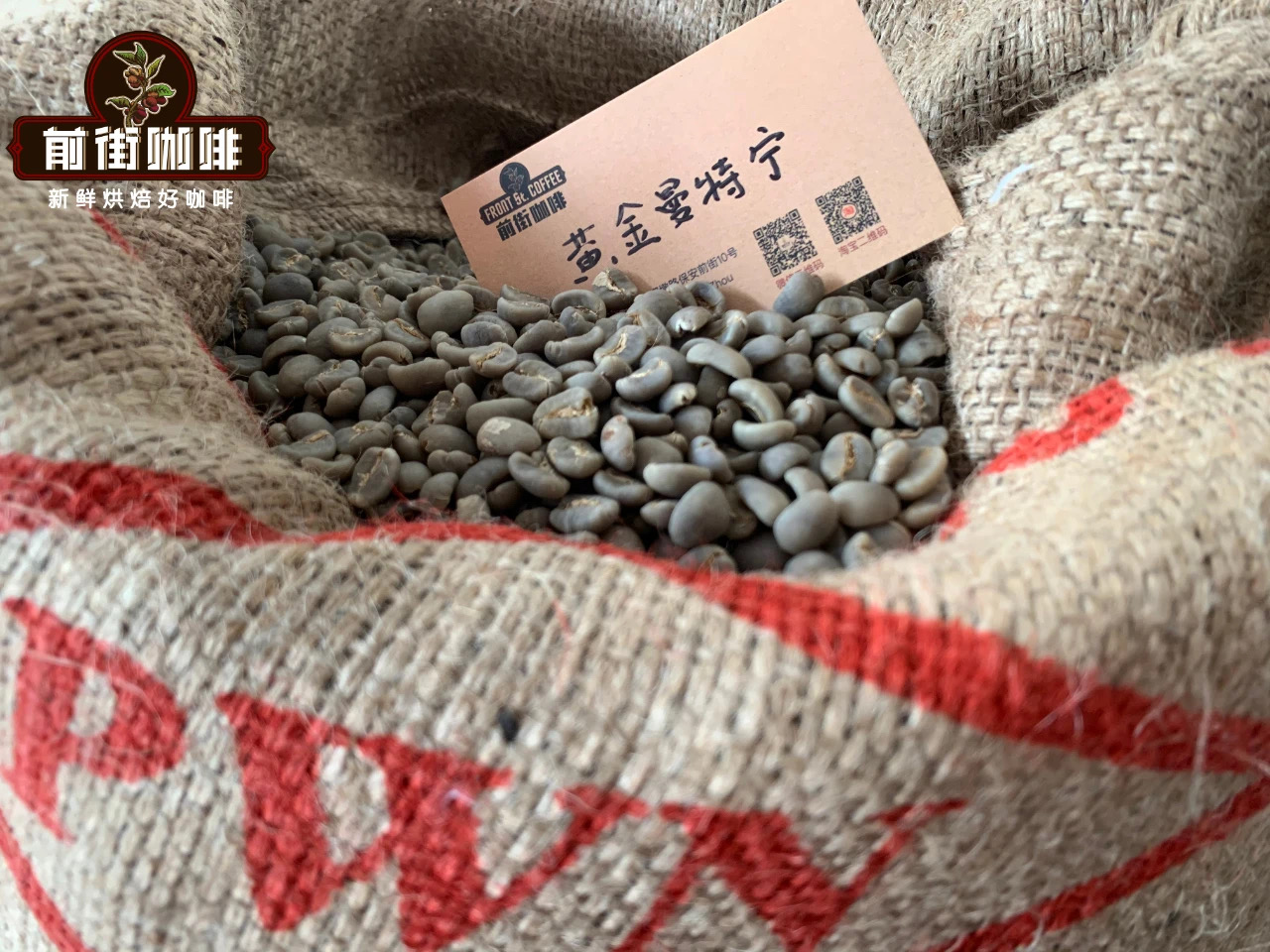
Many people wonder if "Mandheling" is the name of a coffee variety? In fact, the term originates from the name of an indigenous tribe in Sumatra, Indonesia, called "Mandailing." During World War II, Japanese troops were stationed there and developed a strong preference for this rich-flavored coffee. After the war, they returned to Japan and sought beans with the same flavor through traders, but due to a language barrier, they misheard "Mandailing" as "Mandheling." Later, a sharp local trader seized this business opportunity and gradually established what is now known as the Pwani Coffee Company (abbreviated as PWN), becoming one of the first suppliers to export high-quality Mandheling to Japan.
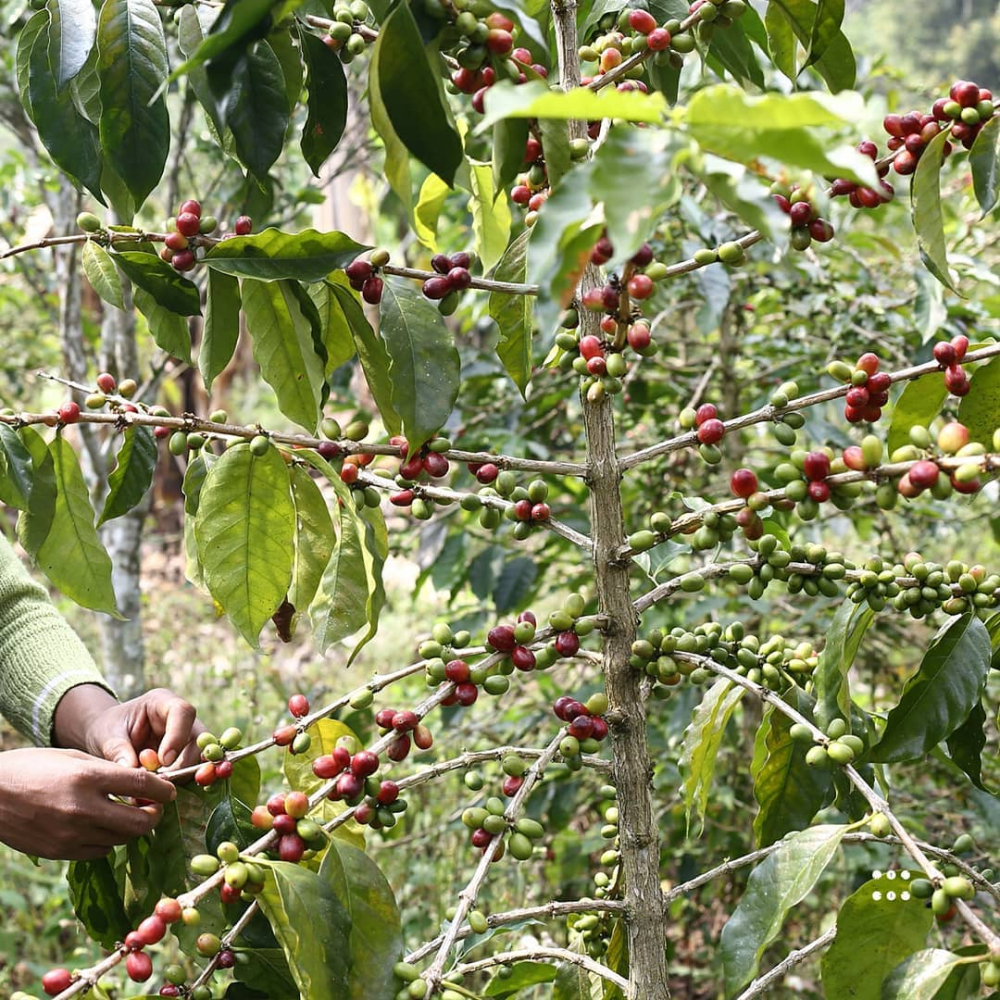
So, can all Indonesian coffee be called Mandheling? The answer is no. Only coffee beans produced in the mountainous regions around Lake Toba in Sumatra, particularly in the Lintong and Gayo regions, qualify to be labeled as "Mandheling." These areas have an average planting altitude of about 900 meters and mainly grow Typica or its variants. The climate and soil conditions together shape the unique flavor profile of Mandheling.
Among them, the PWN Golden Mandheling, which a certain brand has long favored, primarily comes from the Gayo highlands. Starting in 2020, the packaging of this coffee was changed from the traditional 60-kilogram jute sacks to 30-kilogram bags to make it more accessible to consumers, and the producing region was clearly identified as Gayo.
Regarding the selection of Golden Mandheling, PWN has set extremely high standards. They only use green beans larger than 19 mesh, and in a 300-gram sample, there must be no more than three defective beans, placing it in the top-grade G1 category. These green beans are dark green in color, with intact and flat shapes. They undergo multiple rigorous screenings, including density grading, color sorting, and at least four rounds of manual picking, ensuring that each bean meets consistently high quality standards. It is said that under sunlight, these meticulously processed green beans emit a faint golden glow, hence the name "Golden Mandheling."
So, how can consumers identify genuine PWN Golden Mandheling? The answer is simple: officially exported PWN Golden Mandheling will always come in jute sacks bearing the official PWN logo and will be accompanied by a factory certificate for that specific batch, ensuring transparent and traceable origin and quality.
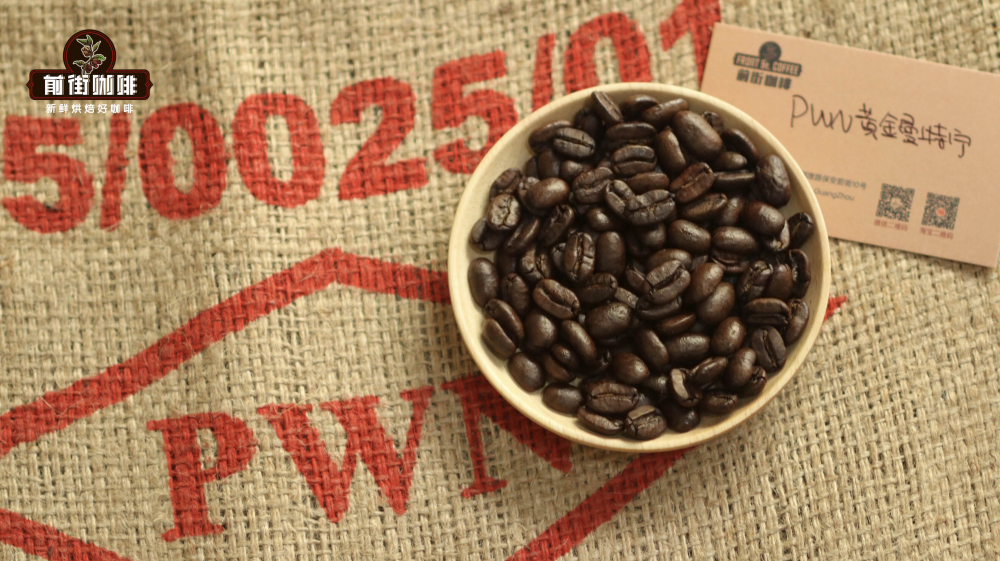
In terms of flavor, PWN Golden Mandheling exhibits a performance distinctly different from that of typical Mandheling. Through cupping comparisons, its most notable characteristic is the near absence of the earthy or off-flavors commonly associated with Mandheling, replaced instead by a cleaner and more transparent taste, paired with pronounced sweetness and a rich layered body. Many coffee professionals note that this bean achieves an excellent balance between brightness and intensity.
In terms of roasting, to fully showcase the richness of Golden Mandheling while maintaining overall flavor clarity, the brand's baristas typically opt for a medium-dark roast. Specifically, using the Yangjia 800N roaster with a charge of 480 grams, beans are dropped in when the drum temperature reaches 200°C. The initial air damper is set to 3; after one minute, the heat is reduced to 160°C, with the air damper remaining unchanged. At 5 minutes and 40 seconds, when the bean surface turns yellow and the grassy smell disappears—marking the end of the drying phase—the heat is adjusted to 140°C, and the air damper is increased to 4. By 9 minutes and 40 seconds, the bean surface shows wrinkles and black spots, the coffee aroma gradually replaces the toastiness, and first crack is imminent, requiring close monitoring of the beans. First crack begins at 9 minutes and 54 seconds; the heat is then reduced to 60°C, and the air damper is set to 5. The roast is completed at 204.5°C, resulting in a balanced and layered roast flavor.
As for brewing suggestions, to highlight the rich, clean, and aromatic characteristics of Golden Mandheling, it is recommended to use a KONO filter. This filter’s channel design extends to the bottom, with short ribs close to the filter paper, effectively slowing down the water flow to allow the coffee grounds to steep fully, releasing a fuller body. The recommended grind size is medium-coarse, passing about 73% through a 0.85mm standard sieve, with 15 grams of coffee and a 1:15 coffee-to-water ratio, at a water temperature of 88°C.
Brewing steps are as follows: Start with a 30-second bloom using 30 grams of water; then pour in a small circular motion up to 125 grams, pause to let the coffee drip until the water level is about to expose the coffee bed; in the final stage, continue pouring up to 225 grams, then wait again for the water level to drop and nearly expose the coffee bed before removing the filter. The total extraction time is controlled to around 2 minutes and 20 seconds to fully express its flavor layers.
The final cup offers a richly layered taste experience—rich yet refreshing—with interwoven aromas of nuts and caramel, along with a soft chocolate note. The finish is long and well-balanced, making it an unforgettable single-origin coffee.
The above content is compiled by CoffeeHunters, a coffee news website.


