







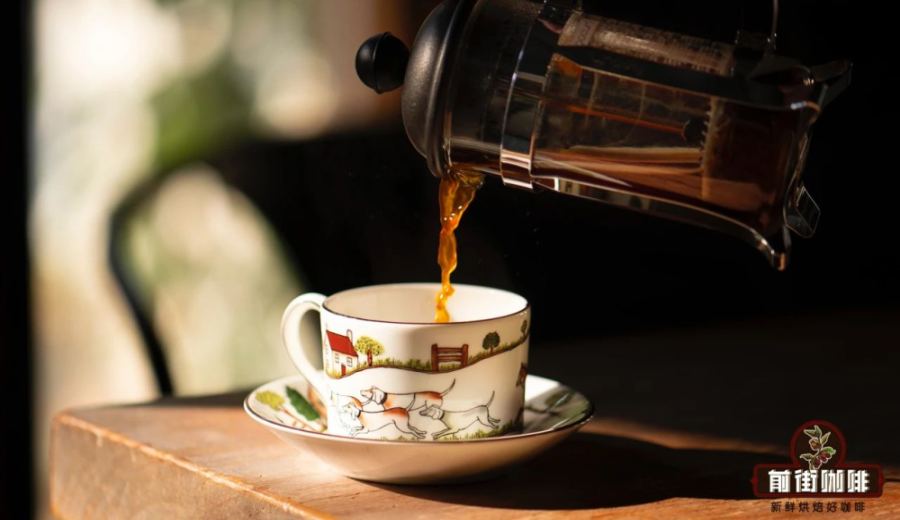
Introduction:The French press is a staple brewing device in many coffee enthusiasts' homes. It’s simple to use yet capable of producing rich and well-balanced coffee. This article provides a detailed breakdown of the French press brewing method, offering expert-level recommendations on grind size, water temperature, steeping time, and coffee-to-water ratio, along with suggested coffee bean types to help you consistently brew a smooth and full-bodied cup of French press coffee.
The French press (French Press), known for its simplicity and ease of use, has long been a beloved brewing tool in households and cafés across Europe and America. However, many users treat it merely as a teapot, overlooking its potential for coffee extraction. In fact, when the right parameters are mastered, the French press can produce coffee that rivals pour over results, and can even brew more than two servings at once, making it an ideal choice for beginners and everyday enjoyment.
The basic structure of a French press is quite intuitive: a cylindrical metal or glass container paired with a movable plunger fitted with a built-in metal filter. During brewing, coarsely ground coffee is steeped with hot water to allow the flavor compounds to fully extract, after which the plunger is slowly pressed down to separate the grounds from the liquid. This immersion-style brewing method delivers a flavor profile distinctly different from traditional drip or pour over methods.
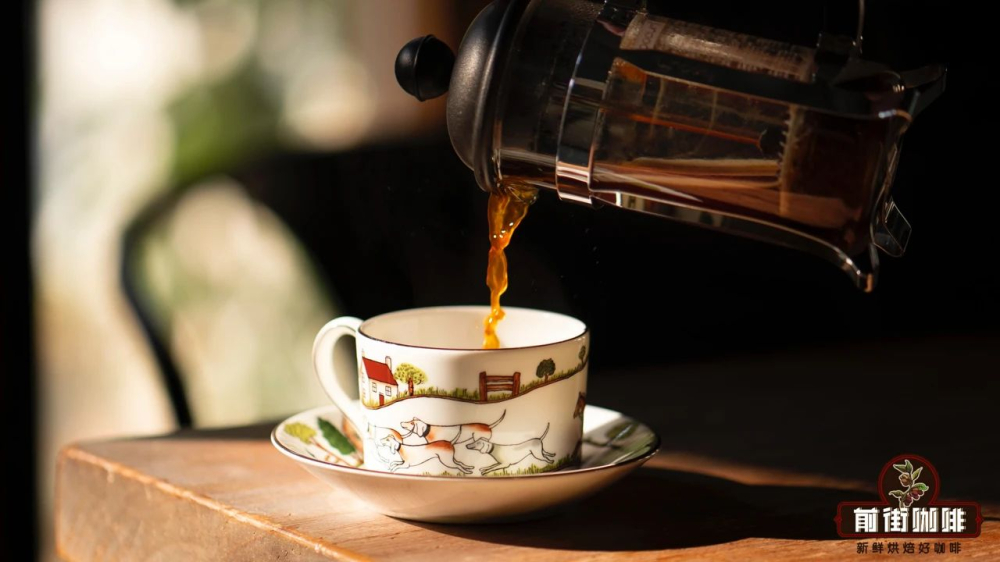
When it comes to grind size,it is recommended to use a coarse grind with a particle size similar to 70% passing through a Chinese Standard No. 20 sieve,resembling the texture of coarse sugar. This grind size effectively reduces the chance of producing overly fine particles, preventing them from passing through the metal filter and causing cloudiness in the coffee, while also providing a wider margin for extraction error. If you prefer a richer mouthfeel, you may try a slightly finer grind, but be sure to shorten the steeping time accordingly to avoid over-extraction and bitterness.
Steeping time is one of the key variables affecting the flavor of French press coffee. With grind size and water temperature fixed,coffee beans with light to medium roasts are recommended to steep for about 4 minutes,which allows the fruit acids and aromas to fully develop; whereasmedium to dark roasted beans are better steeped for just 3 minutes and 30 seconds,to reduce the release of bitterness and woody notes. Proper time control helps achieve the optimal balance between sweetness and body.
Water temperature is equally crucial. Since the French press involves a single pour followed by immersion brewing, the overall water temperature gradually decreases over time, so it is advisable to use slightly hotter water than with pour over.Light to medium roasted coffees with pronounced acidity are best brewed with water at 92–94°C,whilemedium to dark roasted beans with heavier bitterness are better suited to 89–90°C.In cold seasons or low ambient temperature environments, you may preheat the French press with hot water beforehand to minimize heat loss during brewing.
Regarding coffee-to-water ratio,a commonly recommended ratio is 1:16,such as 15 grams of coffee to 240 milliliters of water, yielding a coffee concentration of around 1.1–1.2%, which offers balanced flavor and suits most palates. For a stronger taste, you may adjust to a 1:15 ratio, fine-tuning according to personal preference.
In terms of coffee bean selection, theoretically any beans suitable for pour over can be used in a French press. However, because the French press employs an immersion brewing method, it tends to highlight the coffee’s richness and full body, sobeans with medium to dark roasts or higher often perform better.For those who dislike pronounced acidity, beans with medium to dark roasts offering flavors like dark chocolate, nuts, or caramel are great choices; if you prefer bright fruity notes, you can also try medium-roasted beans with prominent fruit characteristics—each can showcase the unique charm of the French press.
Finally, a reminder: the metal filter of the French press can accumulate coffee oils over time, and if not cleaned regularly, these may oxidize and spoil, affecting the flavor of subsequent brews. After each use, it is recommended to disassemble all metal parts, clean them thoroughly with detergent, ensure they are completely dry, and then store them properly to maintain the best possible brewing quality.
The above content is compiled by CoffeeHunters, a coffee news website.


