








Introduction:The washed processing method is one of the most critical steps influencing the flavor of coffee, especially in Ethiopia’s Sidamo region, where it plays a key role in highlighting regional characteristics. This article will provide a detailed explanation of the historical background and processing procedures of washed coffee, and delve into the clean acidity and clear layers of Sidamo washed coffee. It will also introduce several representative washed beans to help you better understand the "terroir flavor" of coffee from the perspective of processing methods.
The washed processing method can be considered one of the most traditional and widely used approaches in green coffee bean production, having a significant impact on the final flavor of the coffee. This article will start with the evolution of washed processing, gradually analyzing its operational details, and focusing on washed coffee from Ethiopia’s Sidamo region to explore its unique flavor profile characterized by clarity, brightness, and vibrant acidity. Additionally, several classic washed beans will be introduced to help coffee enthusiasts appreciate regional terroir characteristics through the lens of processing methods and experience the clarity and refinement unique to washed coffee.

Since its inception, the washed processing method has been one of the most common and historically rich methods in green coffee processing. Compared to natural (sun-dried) beans, washed processed coffee beans usually have higher cleanliness, brighter and more layered acidity, and a cleaner and more balanced mouthfeel. For example, many well-known washed beans from regions such as Sidamo’s Alo Alo village or the Guddina cooperative exhibit a fresh and elegant profile, making them highly suitable as the base for pour over coffee. These beans are typically available through specialty coffee channels.
Looking back at history, the birth of the washed method is closely related to 18th-century colonial coffee trade. As early as 1740, the Dutch, who controlled colonial coffee cultivation at the time, were the first to introduce washed processing technology in the West Indies. They discovered that soaking depulped coffee beans in water effectively removed the sticky mucilage layer, not only shortening the drying time but also reducing the risk of mold and pests. At the time, washed beans were almost synonymous with high quality.
It wasn’t until 1844 that the invention of the coffee pulper further improved the efficiency of washed processing. However, the cost of the washed method has always been relatively high, especially due to its significant demand for water—according to statistics, processing around 200 kilograms of green coffee beans requires 10 to 20 tons of water. For this reason, washed processing plants are mostly located in areas with abundant water resources. Although washed processing can enhance flavor stability, its widespread adoption is more based on considerations of yield, quality rate, and standardized production, rather than solely pursuing flavor performance. Even today, the washed method remains one of the most common processing methods in the market.
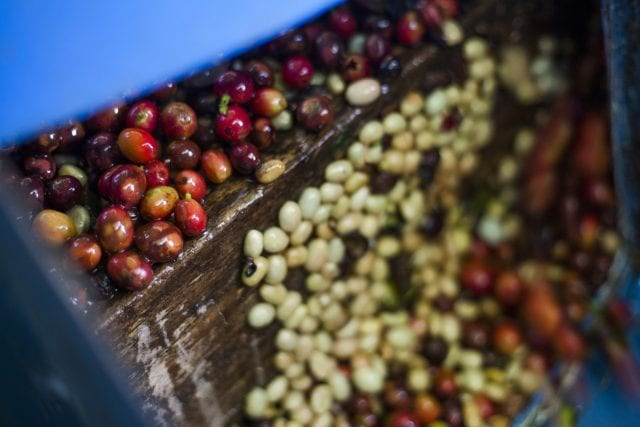
Each step in the washed processing procedure is meticulously designed to improve coffee quality and reduce defect rates. First, harvested coffee cherries undergo flotation, where water buoyancy is used to separate underripe fruits. Next, a pulping machine is used to remove the skin and pulp, leaving the coffee beans coated with a slippery layer of mucilage. These mucilage-covered beans are then placed in fermentation tanks for about 24 hours, during which acidic substances in the mucilage gradually break down and detach. After fermentation, the beans still require manual or mechanical scrubbing for 30 to 60 minutes, along with flowing water, to ensure complete removal of the mucilage.
To further enhance quality, processing facilities often use washing channels that leverage differences in water density to remove light or defective beans, retaining only high-density, high-quality parchment beans. These beans are then drained and spread out on raised beds or drying racks to dry until their moisture content reaches the target standard, typically around 11% to 12%, before being packaged and stored. This rigorous process not only ensures the cleanliness of the coffee but also results in brighter acidity and a more complete expression of regional characteristics.
The multiple steps of washed processing effectively screen out defective beans, significantly improving the overall stability and consistency of the coffee. Since there is no fruit flesh covering during the drying process, the flavor profile tends to be crisper, with vibrant and layered acidity that clearly conveys the unique terroir characteristics of the origin. If you want to deeply experience the “taste of the region” of a particular origin, washed processed beans are definitely the top choice. We particularly recommend trying the washed beans from Sidamo’s Alo Alo village and the Guddina cooperative—both are classic representatives of Ethiopia’s specialty coffee flavors.
The above content is compiled by CoffeeHunters, a coffee news website.


