







Introduction:Jamaican Blue Mountain coffee is world-renowned for its unique flavor profile, and the St. Thomas region, as one of the three core producing areas, plays a pivotal role in shaping the overall quality of Blue Mountain coffee. This article delves into the geographical conditions, historical background, industry structure, and bean variety characteristics of the St. Thomas region, helping you understand the grading system, quality certification, and the dominant role of the Japanese market when it comes to Blue Mountain coffee. It will also assist coffee enthusiasts in selecting and appreciating truly high-quality Blue Mountain coffee with greater precision.
Jamaican Blue Mountain coffee has long been regarded as a representation of the world’s finest coffees, and the St. Thomas region is one of the three regions that uphold this reputation. The other two are Portland and St. Andrew. Together, these three areas constitute the golden belt of Blue Mountain coffee production. This article will detail the unique qualities of Blue Mountain coffee from the St. Thomas region from various perspectives such as geographical environment, historical evolution, industry management, and grading system. It will also explore its quality certification mechanism and current market situation, giving you a comprehensive grasp of the essence of this legendary coffee.
Looking back at history, Jamaica once achieved a record annual coffee output of 15,000 tonnes in 1932, showcasing its profound potential as a coffee-producing region. However, with changes in the industry, the actual cultivated area of Blue Mountain coffee on the island is now only about 6,000 hectares, with limited annual production. The total annual export of authentic Blue Mountain coffee is around 375 tonnes. As early as 1950, the Jamaican government established the Jamaica Coffee Industry Board, responsible for setting strict quality standards and issuing official certification stamps for both green beans and roasted beans intended for export. This move significantly enhanced the international credibility of the country’s coffee. Currently, there are six official certification labels that serve as proof of the authentic origin of Blue Mountain coffee, each authorized and issued by cooperatives or associations in different producing regions.
In 1969, with the aid of Japanese funding, Jamaica saw significant improvements in coffee cultivation and processing techniques, leading to more stable yields and quality. In 1981, the authorities further cleared approximately 1,500 hectares of land for expanding coffee cultivation, followed by additional investments to develop coffee farms spanning up to 6,000 hectares. However, the actual area dedicated to cultivating Blue Mountain-grade coffee remains around 6,000 hectares, with the rest of the land primarily used for planting High Mountain Supreme and Jamaica Prime coffee. As a result, many coffees on the market that claim to be “Blue Mountain” may not actually originate from the authentic Blue Mountain producing regions. Consumers should pay extra attention when making their selections.
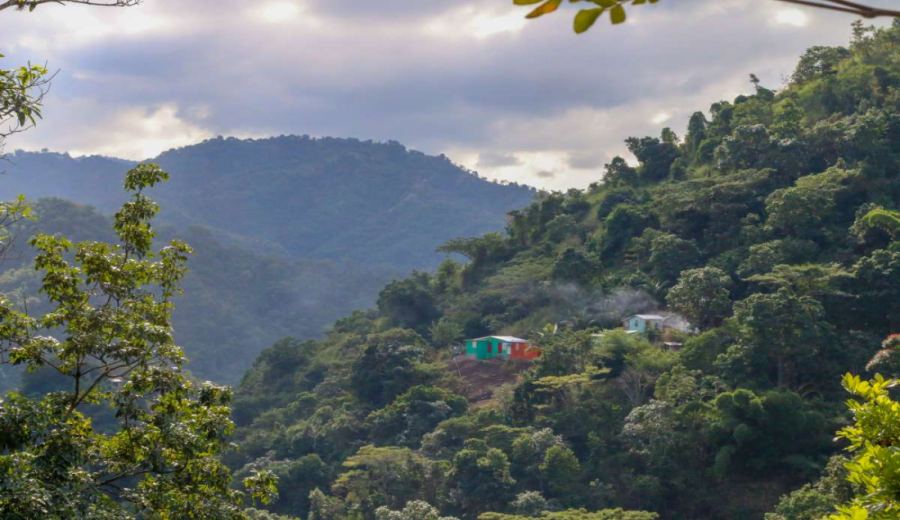
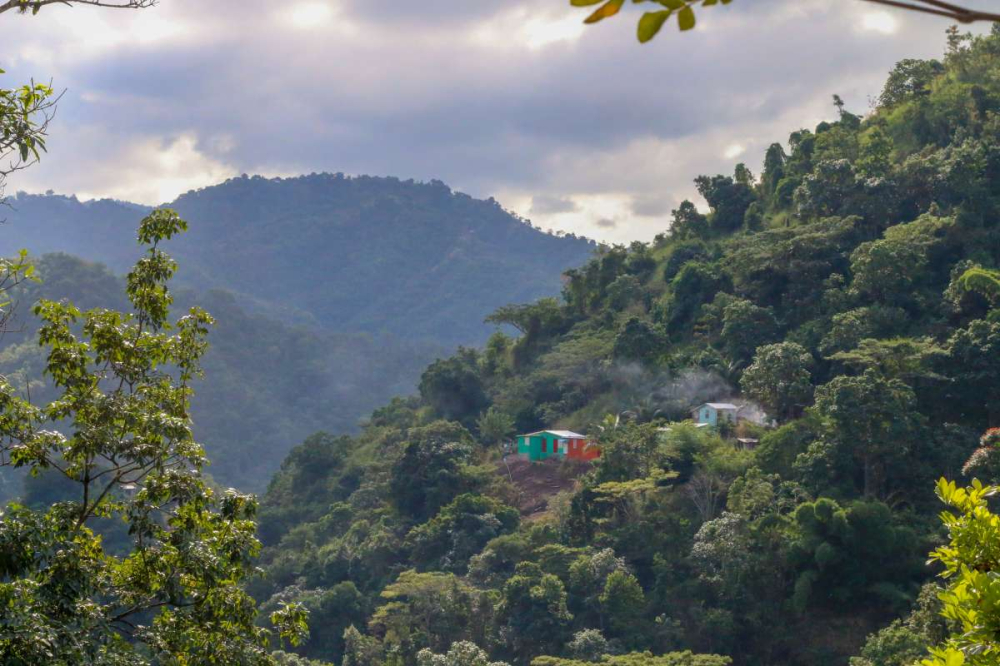
The St. Thomas region is located in the eastern part of the Blue Mountain range, characterized mainly by mountainous terrain and terraced fields, with elevations generally exceeding 1,200 meters—some areas even approaching the core height of over 2,100 meters in the heart of the Blue Mountains. The region enjoys a cool and humid climate, with abundant and evenly distributed rainfall throughout the year, coupled with persistent cloud cover, providing an ideal growing environment for coffee trees. Local farmers often use mixed-cropping methods, with coffee trees commonly growing alongside shade-providing crops such as bananas and avocados on terraces. This traditional planting approach helps maintain soil fertility and the stability of the microclimate. However, due to the steep terrain, large machinery is difficult to deploy, and most farms still rely on manual labor and traditional methods, resulting in relatively small-scale operations. Many estates have even been family-run for generations, boasting over two hundred years of planting history.
Blue Mountain coffee is divided into three main grades based on producing region and quality: Blue Mountain Coffee, Jamaica High Mountain Supreme, and Jamaica Prime Coffee. Among these, Blue Mountain Coffee and Jamaica High Mountain Supreme can each be further subdivided into two sub-categories. Blue Mountain Coffee, grown at elevations between 1,200 and 1,700 meters within the Blue Mountain range, is known for its exceptional balance and delicate flavor profile, and is widely considered the pinnacle choice for coffee enthusiasts. Jamaica High Mountain Supreme, though grown at slightly lower altitudes, still maintains a commendable level of flavor. Jamaica Prime Coffee, on the other hand, falls under the country’s general commercial-grade coffee category, with more affordable pricing but a distinctly different flavor profile compared to the Blue Mountain series.
For consumers seeking to experience the true flavor of Blue Mountain coffee, it is recommended to first ensure that the product comes with an official certification stamp and check whether the producing region is one of the core areas—St. Thomas, Portland, or St. Andrew. Typically, certified Blue Mountain coffee not only offers more layered flavors, but also boasts a gentle acidity, pronounced sweetness, and a long-lasting aftertaste, making it an excellent choice for refined brewing methods such as pour over or siphon. When selecting, you may also refer to the roast date and storage conditions to ensure the flavor is at its peak.
The above content is compiled by CoffeeHunters, a coffee news website.


