







Introduction:Delve into the representative varieties of Brazil, the world’s largest coffee-producing country. From classic members of the Bourbon family to renowned regions like Cerrado and São Paulo, explore how varying altitudes and processing methods influence flavor. Understand the distinct characteristics of Red Bourbon and Yellow Bourbon, and learn how to extract their nutty tones and sweet aftertaste through appropriate brewing techniques. This is your beginner’s guide to selecting and hand brewing Brazilian coffee beans.
Brazil has long been the world’s top coffee producer, with its diverse growing regions and varieties serving as a key pillar of the international market. From the introduction of the first coffee plants in the 18th century to its current role as a critical player in global supply, the development of Brazilian coffee is a vivid tale of agricultural evolution. This article takes you through the evolution of coffee varieties, focusing on two classic Brazilian Bourbons—Cerrado Red Bourbon and Fazenda Rainha Yellow Bourbon. We’ll examine their respective regional environments, processing techniques, flavor profiles, and offer practical pour over recommendations.
The history of coffee cultivation in Brazil dates back to the 1820s, reportedly beginning when a Portuguese officer accidentally brought coffee seeds back from Guyana during a mission. These seeds quickly adapted to Brazil’s land and climate, especially in highland areas such as Minas Gerais, where coffee trees rapidly expanded. As global demand for coffee rose, and the United States turned to coffee instead of British tea, Brazil’s coffee exports and cultivation scale grew significantly. Particularly during the American Civil War, when coffee became a strategic commodity with soaring demand, Brazil expanded both its production area and variety selection.
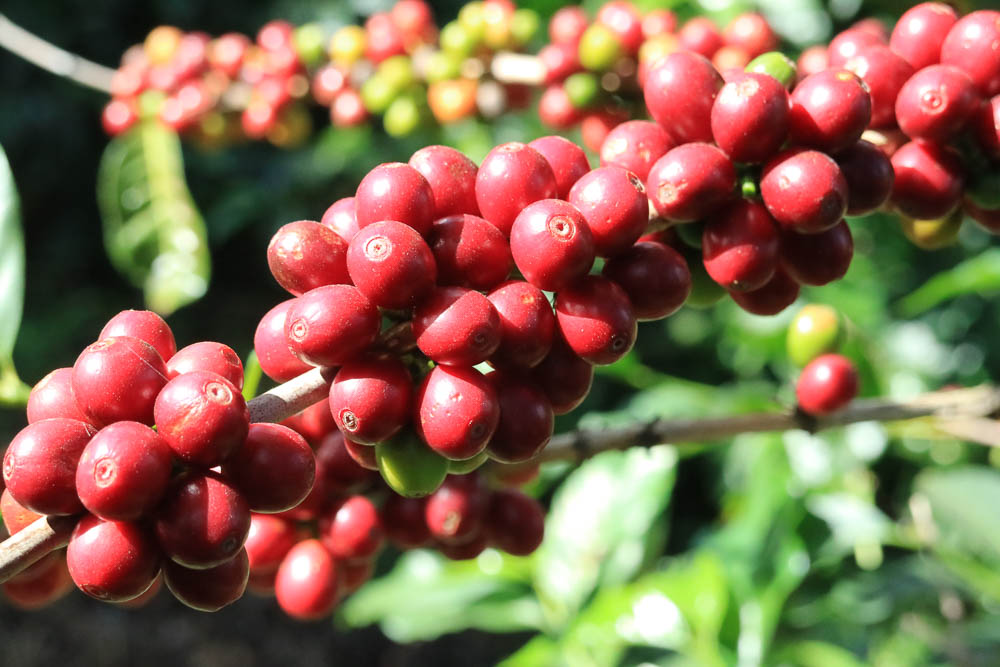
In the early days, Brazil primarily cultivated the Typica variety. While elegant in acidity and delicate in flavor, Typica had relatively low yields. By the mid-to-late 19th century, the Bourbon variety from Réunion Island was introduced. Thanks to its high productivity and stable performance, it quickly became the dominant variety. The Bourbon family later evolved into several variants in Brazil, among which Red Bourbon and Yellow Bourbon became staples in the specialty coffee market. These Bourbon variants typically have thicker mucilage layers and accumulate rich sugars, resulting in standout sweetness and a full-bodied mouthfeel.

Among Brazil’s many producing regions, Cerrado in Minas Gerais is one of the earliest to receive origin certification and is an important Red Bourbon-growing area. The Cerrado region has an average altitude of about 1,000 meters, with a stable climate and significant day-night temperature differences that aid in sugar accumulation and flavor development in coffee cherries. Red Bourbon from this region is processed using the Pulped Natural method. Originating in the 1990s, this technique was adopted by Brazil to reduce reliance on water and lower processing costs. After removing the skin and pulp, part of the mucilage is retained for sun drying. This method not only speeds up drying but also preserves more sweetness and body, resulting in coffee with intense nutty, chocolatey, and creamy smooth textures.
This processing method shares similarities with the later-popular Honey Process and is considered a precursor to it. When Red Bourbon processed via Pulped Natural is medium-dark roasted, it highlights its mild acidity and rich, nutty base tone. It is well-suited for brewing with a KONO filter cone, using water at 88°C, medium-coarse grind (about 75% passing through a #20 sieve), a 1:15 coffee-to-water ratio, and a three-stage pouring method. This approach achieves a balanced and smooth mouthfeel.
Another noteworthy variety comes from Fazenda Rainha in São Paulo state. This estate has won multiple awards at Brazil’s Cup of Excellence (COE) competition since 1999, earning high praise and consistent quality. Fazenda Rainha mainly grows the Yellow Bourbon variety, a natural mutation of Red Bourbon known for its thicker mucilage layer and strong sugar accumulation capacity. The estate plants Yellow Bourbon at elevations between 1,400 and 1,950 meters, which not only extends the fruit’s ripening time but also promotes the formation of more complex flavors.
Fazenda Rainha’s Yellow Bourbon is processed using the traditional Natural (sun-dried) method. Though this technique requires more labor and time, it fully showcases the fruit’s natural sweetness and aromatic complexity. During processing, the coffee cherries are placed on raised beds to avoid ground contamination and are frequently turned to ensure even drying and reduce the risk of spoilage. The final product features intense nutty aromas, gentle cane sugar sweetness, subtle hints of lemon acidity, and a long-lasting dark chocolate finish. The overall profile is layered, rounded, and silky smooth.
In terms of roasting strategy, both of these Brazilian Bourbon varieties are well-suited for medium-dark roasting. This approach effectively brings out their nutty foundation and sweet characteristics while preserving moderate acidity and a full body. For pour over enthusiasts, it is recommended to use a KONO filter cone for stable flow rate and filtration, paired with water at 88°C to balance extraction and avoid over-extraction. Using a medium-coarse grind and a 1:15 coffee-to-water ratio, along with a three-stage pouring technique, allows for more precise control over extraction time and uniformity, further highlighting the softness and richness unique to Brazilian coffee.
In summary, Brazilian coffee is renowned for its stable quality, full body, and distinctive soft bean traits. Whether it’s the nutty-chocolate notes of Cerrado Red Bourbon or the layered sweetness of Fazenda Rainha Yellow Bourbon, both showcase the diverse expressions of the Bourbon family across different altitudes and processing methods. Understanding the history, regional conditions, and processing techniques behind these varieties will help coffee lovers better grasp their flavor potential when selecting and brewing Brazilian beans, allowing them to enjoy a classic South American brew of depth and elegance.
The above content is compiled by CoffeeHunters, a coffee news website.


