








Introduction:To truly appreciate the authentic flavor of Jamaican Blue Mountain coffee, every step from bean selection to pouring water demands precision. This article delves into the terroir characteristics and roasting logic of Blue Mountain No. 1, while providing professional pour over parameters and operational details to teach you how to consistently brew at home a classic cup that balances dark chocolate notes with sweet caramel aftertaste.
Jamaican Blue Mountain coffee is world-renowned for its balanced and mellow profile, featuring delicate dark chocolate flavors, gentle yet bright acidity, and a long-lasting caramel finish that leaves a lasting impression. However, to fully experience its layered complexity, every aspect—from selecting the beans and controlling grind size, to mastering water temperature and precise pouring—requires careful attention. This piece uses washed Blue Mountain No. 1 from the high-altitude Clifton Estate in the Blue Mountains as an example, detailing its origin background, processing features, and optimal extraction method, along with shop-level pour over parameters, so you can easily recreate the rich and smooth classic taste of Blue Mountain coffee.
The key to a high-quality cup of Blue Mountain coffee lies first in the freshness of the beans and their processing method. As one of the most historic coffee-growing regions in the Blue Mountains, the Clifton Estate sits at an altitude of about 1,310 meters—the golden zone for cultivating Blue Mountain No. 1. This grade of coffee beans is selected only for those sized between 17–18 mesh, with a defect rate below 3%, and a full, consistent appearance. Such strict selection criteria not only ensure even heat distribution during roasting but also contribute to a clean and clear cup profile.

After harvest, these green coffee beans undergo a washed processing method, where the fermentation stage imparts a more delicate and mild acidity. A close sniff reveals a fresh, grassy and lemon-like aroma. Upon arrival, Blue Mountain No. 1 green beans exhibit an attractive bluish-green hue, crystal-clear like gemstones—this is the visual indicator of both high quality and freshness.
In terms of roasting, given that Clifton Blue Mountain No. 1 has a moisture content of around 13% and medium bean density, it’s recommended to adopt a steady temperature-rise roasting strategy. Generally, roasters choose to drop the beans about 4 minutes after the first crack, when the roaster temperature reaches 201°C, achieving a medium-dark roast level. This roast degree highlights the coffee’s rich base while preserving moderate acidity, resulting in a more layered overall flavor.
To successfully extract the nuanced flavors of Blue Mountain coffee, the foremost requirement is using freshly roasted beans. Typically, after roasting, beans are left to rest in a sealed environment for several days to allow internally built-up carbon dioxide to gradually dissipate. During the first 5 days, these gases help carry away residual smoky off-notes from roasting; afterward, they slowly diminish the coffee’s aroma and flavor. Therefore, the optimal enjoyment period for Blue Mountain No. 1 usually falls between the 5th and 30th day post-roast, and it’s recommended to enjoy them as soon as possible to experience their full flavor.
When choosing grind size, to balance extraction efficiency and flavor expression, it’s recommended to use a medium-coarse grind, roughly the size of coarse sugar, specifically comparable to a Chinese 20-mesh standard sieve with about a 70% passing rate. This grind size ensures that water flow isn’t too fast or too slow, which could otherwise affect extraction uniformity. Additionally, water temperature is advised to be controlled between 88–89°C; too high a temperature can amplify bitterness, while too low may lead to under-extraction.
If you wish to further enhance the coffee’s body and overall balance, it’s recommended to use a KONO filter cone for pour over. This cone’s design allows the filter paper to adhere tightly to the cup wall, creating an immersion-like extraction effect during pouring, which helps prolong the contact time between coffee grounds and water, thereby improving body and mouthfeel smoothness.
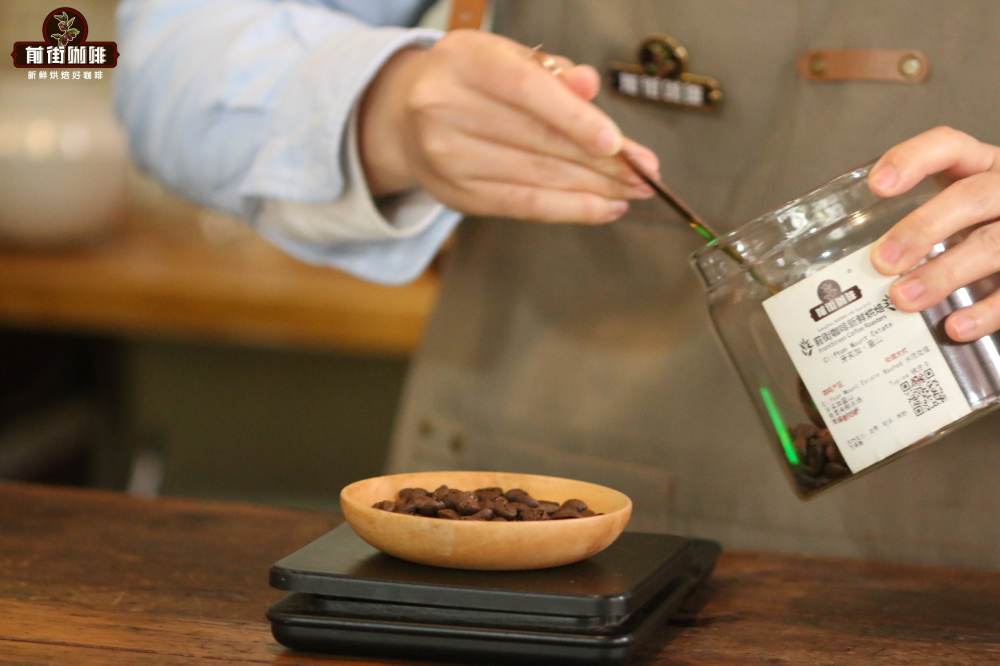
For actual operation, you can refer to the following shop-level pour over parameters: set water temperature to 89°C, use 15 grams of coffee grounds, with a 1:15 coffee-to-water ratio, paired with the aforementioned medium-coarse grind (70% passing rate through a 20-mesh sieve). First is the blooming phase: pour about 30 grams of water and let it sit for 30 seconds. This helps release internal CO₂ from the coffee grounds, laying the foundation for stable extraction afterward. Then, pour water in small circles; when the total water volume reaches 125 grams, perform the first pour break, then continue pouring until the total reaches 225 grams before stopping. After waiting for all the water in the filter cone to completely drip through, remove the cone. The entire extraction process takes approximately 2 minutes and 10 seconds. Finally, it’s recommended to gently swirl the brewed coffee before pouring it into the cup to enjoy a more balanced flavor experience.
The finished Blue Mountain No. 1 pour over coffee presents a rich, smooth texture akin to dark chocolate, accompanied by the aroma of roasted nuts. It feels creamy on the palate, with a pronounced and lingering aftertaste. The balance among acidity, sweetness, and bitterness is just right, delivering a well-rounded and layered profile—an exemplary showcase of the essence of Blue Mountain coffee.
The above content is compiled by CoffeeHunters, a coffee news website.


