








Introduction:Coffee from the Kilimanjaro region of Tanzania is renowned for its mild fruit acidity, rich body, and unique wine-like aroma, making it one of the representative coffees of East Africa. This article delves into the geographical conditions of the region, key varieties such as Bourbon, Typica, and Kent, details of the washed processing method, and provides a comprehensive grading system along with roasting recommendations. Whether you’re looking for beginner-friendly coffee bean suggestions or aiming to refine your pour over brewing skills, you’ll find practical guidance here.
Located in East Africa, Tanzania is home to Mount Kilimanjaro, the highest peak on the continent. The foothills of the mountain boast exceptional climate and altitude conditions, nurturing uniquely flavored coffee. Kilimanjaro coffee from this region is celebrated for its gentle acidity, bold body, and subtle wine-like notes, earning it the title "gentleman of coffee." Most of the coffee in this region is grown at elevations between 1,300 and 2,000 meters, with the Bourbon variety being the most famous. Through the washed processing method, it achieves bright fruit acidity and a well-balanced sweetness.

Tanzania’s coffee cultivation history dates back to the late 19th century. In 1893, the first Arabica coffee seeds were introduced from Réunion Island (formerly known as Bourbon Island) in French territory and were successfully trial-planted in the Bayamoyo and Mogoro regions, later excelling particularly on the slopes of Mount Kilimanjaro. By the 1950s, more varieties were introduced from neighboring Burundi to the western regions, and to this day, high-altitude areas still account for 75% of the planting area. Tanzania’s annual coffee production is about 50,000 tons, comparable to that of neighboring Kenya, but its flavor profile is more distinctive.
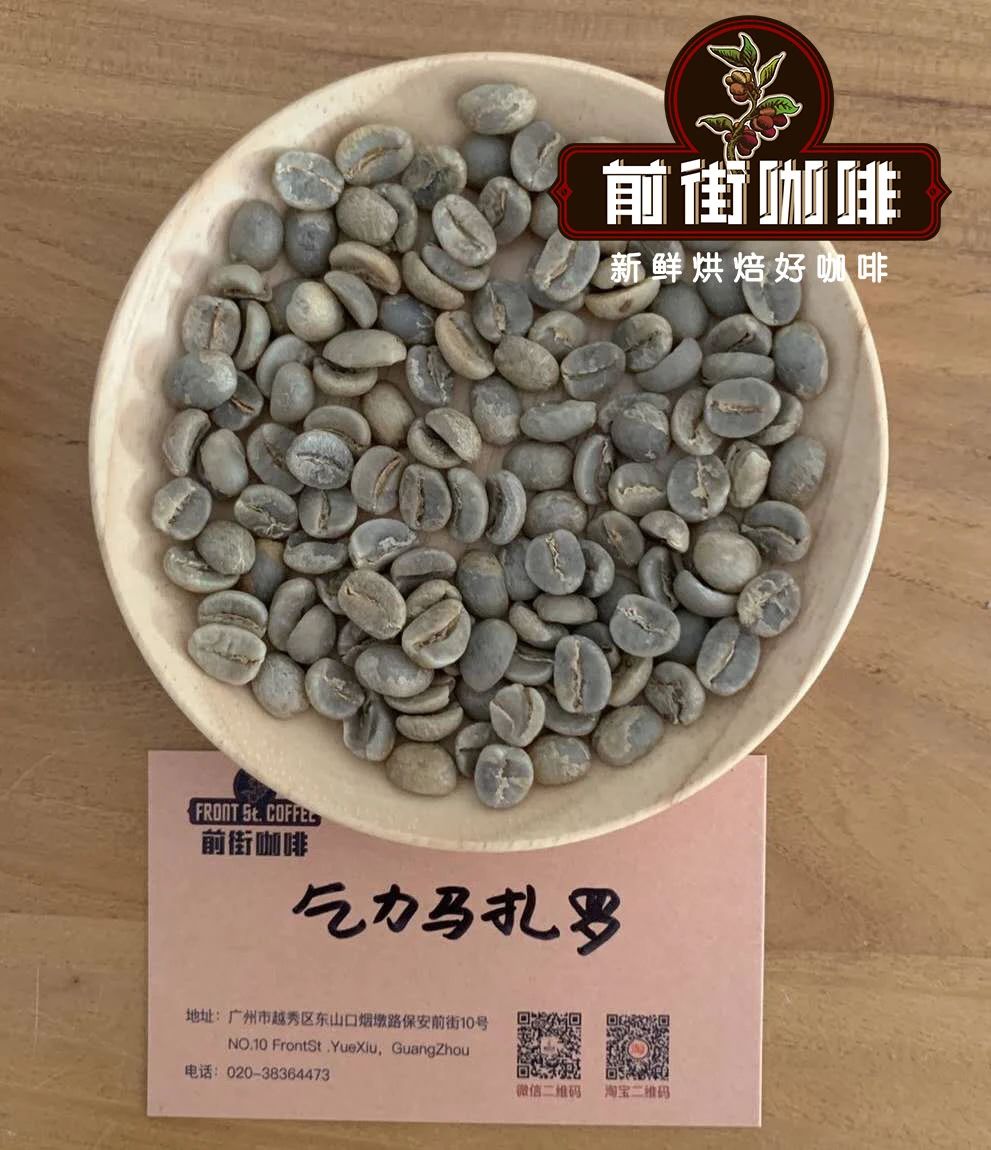
Tanzanian coffee is often compared with Kenyan beans. In comparison, Tanzanian coffee has a milder acidity, a softer body with distinct sweetness, and emits a rich, wine-like aroma, which is a key feature distinguishing it from other East African producing regions. Additionally, due to government protection of the local sisal industry, Tanzanian coffee beans no longer use traditional jute bags for packaging but have switched to coarse burlap sacks made from agave fibers.
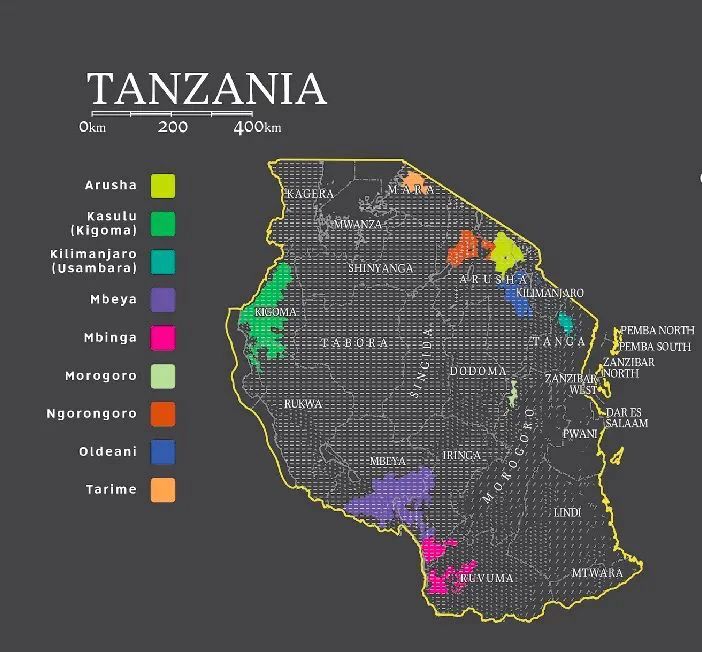
The Kilimanjaro region is the most important coffee-producing area in Tanzania, with major producing zones including Moshi, Mbeya, and others. Planting altitudes generally exceed 1,150 meters, with some premium areas reaching over 1,800 meters. The fertile volcanic soil here is rich in minerals, and the significant diurnal temperature variation helps coffee cherries ripen slowly, accumulating rich flavors. The coffee from this region typically exhibits pronounced fruit acidity, a full body, and unique regional aromas, making it a classic representation of African flavor profiles.
In terms of varieties, Tanzania mainly cultivates Bourbon, Typica, and Kent. The Bourbon variety originated in Yemen and was named after its initial cultivation on Bourbon Island (now Réunion Island). The coffee cherries of this variety are usually round, with firm pulp, and are known for their prominent sweetness and bright acidity. Some high-altitude-grown Red Bourbon even carries layered wine-like aromas, which is the main variety of Kilimanjaro beans selected in this region. Typica is regarded as a classic variety in specialty coffee, offering excellent flavor performance but with lower yields and susceptibility to rust disease, requiring more meticulous field management. Kent is a Typica hybrid discovered in India in 1911, known for its strong disease resistance, stable yields, and rich aroma, and is widely planted in countries such as Kenya and Indonesia.
Tanzania’s coffee-growing regions can be divided into two major blocks: northern and southern. The northern region is centered around Moshi and Arusha near Mount Kilimanjaro, with altitudes mostly ranging between 1,100 and 1,800 meters. The main harvest season is from July to December each year, and the planted varieties include Kent, Bourbon, and Typica. The southern region is represented by the Ruvuma area, distributed along the Ruvuma River basin, at altitudes of 1,200 to 1,800 meters, with the main harvest season from June to October. Varieties planted here include not only Bourbon and Kent but also N5 and N39, which are derived from Bourbon. Each area, due to differences in terrain and microclimate, also has slightly varying coffee flavors.
Tanzania’s coffee industry was initially dominated by large estates, but today over 85% of coffee is cultivated by smallholder farmers, who often organize production and sales through cooperatives. Among them, the Kilimanjaro Native Cooperative Union (KNCU) is one of the most important cooperative organizations. Coffee sales are coordinated by the Tanzania Coffee Board (TCMB), which previously mainly conducted transactions through auctions, but has recently gradually opened up more direct sales channels. With future market mechanism reforms, it is expected that grade distinctions will be further refined to attract buyers from high-end markets such as Germany, Japan, Belgium, and Finland.
In terms of processing methods, Tanzania predominantly uses washed processing, which effectively highlights the purity and layered acidity of the coffee. The steps of washed processing include: first removing impurities and unripe cherries, then stripping the pulp and outer skin, followed by fermenting the mucilage-covered coffee beans in fermentation tanks to remove the mucilage layer by controlling fermentation time, and finally washing and drying the beans. This method preserves the coffee’s bright acidity while delivering clear fruit aromas and a well-structured sweetness, which is a crucial factor in enabling Kilimanjaro coffee to showcase its delicate flavors.
Tanzania’s coffee grading system is similar to Kenya’s, primarily based on bean size. The top-grade AA refers to coffee beans that pass through a 17–18 mesh sieve (approximately 7.20mm), featuring large and uniform beans that usually exhibit the best flavor profiles; AB grade consists of beans sized 15–16 mesh (approximately 6.8mm–6.2mm), with quality just below AA; PB grade refers to peaberry beans, accounting for about 10% of the total; C grade includes beans sized 12–14 mesh (approximately 4.8mm–5.6mm), which are of lower grade. Understanding these grades helps consumers assess the potential quality of coffee when making selections.
In terms of roasting, since Kilimanjaro coffee beans are mostly large-sized and dense, medium-light roasting is recommended to preserve their bright acidity and fruity characteristics. Typical roasting curve parameters are as follows: bean inlet temperature is set at 170°C, the yellowing point appears at around 6 minutes 30 seconds at 150.8°C, first crack begins at 10 minutes 16 seconds at 182.7°C, the first crack development phase lasts about 1 minute 45 seconds, and the final drop temperature is 193°C. This roast level balances sweetness and acidity, making it suitable for subsequent pour over or drip extraction methods.

Recommended pour over parameters are as follows: use a V60 dripper, set the coffee-to-water ratio at 1:15, control water temperature at 91°C, and the grind size is suggested to be BG#5G (medium-fine). During brewing, it is recommended to use a three-stage pouring method. The first stage involves blooming to release CO₂ from the coffee grounds, helping ensure even extraction later; the second stage involves pouring water in a small area from the center of the coffee bed, keeping the stream focused and avoiding contact with the filter paper; the third stage gradually expands the pouring area as the water level drops, while observing foam changes and particle movement to ensure full release of flavor compounds. Paying attention to pouring rhythm and stirring techniques can further enhance extraction efficiency and flavor expression.
In summary, Tanzanian Kilimanjaro coffee holds a unique place in the global specialty coffee market with its distinctive regional flavors, gentle acidity, and wine-like aromas. Understanding its regional characteristics, variety traits, processing methods, and precise roasting and brewing parameters not only helps coffee enthusiasts choose the right beans but also enhances the quality and enjoyment of home brewing.
The above content is compiled by CoffeeHunters, a coffee news website.


