







Introduction:Colombian coffee is renowned for its rich complexity and consistent quality, ranging from deep chocolate notes to bright floral and fruity aromas, showcasing the diverse allure of South American coffee. This article delves into the characteristics of Colombia’s three major coffee-growing regions, the core logic of its grading system, and provides insights on flavor profiles, ideal medium roast profiles, and V60 three-stage pour-over parameters for classic beans such as Huila, Maragogype, and Gesha—helping coffee enthusiasts master everything from bean selection to brewing.
Dubbed the “green gold,” Colombian coffee has long been celebrated for its full-bodied texture and flavors reminiscent of dark chocolate. With the rise of specialty coffee, its bright acidity and vibrant floral and fruity notes have allowed coffee lovers around the world to rediscover the charm of this South American origin. This article will take you through a systematic exploration of Colombian coffee’s diverse facets—from regional distribution and grading systems to flavor profiles and brewing essentials of representative beans.
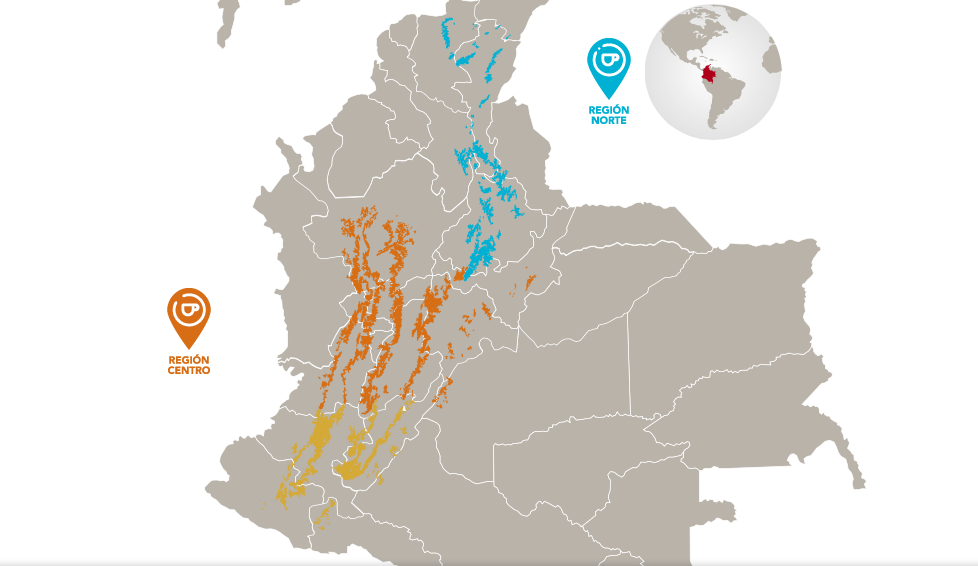
Located in the northwest of South America, Colombia features a diverse topography encompassing western mountains, eastern plains, and the Amazon basin, with coffee grown in 20 out of the country’s 32 provinces. Due to significant variations in terrain and climate, Colombia’s coffee flavor spectrum is extremely rich, mainly divided into three major regions: northern, central, and southern.
The northern region includes provinces such as La Guajira, Magdalena, and Cesar. With lower latitude and abundant sunlight, shade-grown cultivation is commonly used to avoid excessive direct sunlight. Coffees from this area feature soft acidity and higher body, making them suitable for drinkers who prefer a mellow taste.
The central region covers departments such as Antioquia, Valle del Cauca, Tolima, and Quindío. It is Colombia’s largest and most traditional coffee-growing belt, densely packed with farms and known for stable production, serving as the origin of many classic beans.
The southern region comprises departments like Cauca, Huila, and Nariño. Proximity to the equator and high-altitude mountain cultivation result in bright acidity and unique floral and fruity notes, with quality generally receiving high praise in the market.
Colombia’s coffee grading system is primarily based on bean size rather than flavor profile. The top-grade “Supremo” indicates that over 80% of the beans are 17 mesh (approximately 8 mm) or larger, but this is not directly related to flavor. If the coffee bag does not specify a particular origin (such as southern Cauca or Huila), it is often commercial-grade coffee. When selecting, it is recommended to prioritize origin information, as southern regions, due to altitude and microclimate advantages, often produce more outstanding specialty beans.
A certain brand’s Huila-origin beans are processed using the washed method, which removes excess sugars from the fruit skin, pulp, and mucilage, highlighting the local terroir of Huila. With a medium-dark roast, it showcases intense dark chocolate, pronounced lemon acidity, and caramel sweetness—ideal for those who enjoy balanced, full-bodied flavors.
With advances in roasting techniques, an increasing number of consumers are drawn to coffees with distinct fruit acidity, sweetness, and floral notes. A certain brand’s Gesha and Maragogype beans are both medium-roasted. The former offers aromas of grape, passionfruit, apricot, and almond, while the latter presents a refreshing profile of berries, blackcurrant, and citrus. Both beans, with their gentle fermentation character and elegant fruity-floral tones, have become popular everyday choices for many customers.
For roasting Colombian coffee beans, the focus is on preserving acidity and sweetness. A certain brand’s medium roast extends the time from yellowing to first crack, promoting sugar caramelization to enhance sweetness in the aftertaste. At the same time, it ensures shipment within 5 days post-roast, allowing consumers to enjoy the optimal flavor of freshly roasted coffee.
For brewing, using a V60 filter cone (No. 60, with large holes and spiral ribs designed to facilitate air release and extraction efficiency), the recommended parameters are as follows: water temperature 90–91°C, grind size similar to superfine sugar (or Chinese standard No. 20 sieve basket, sieved to 80%), and a coffee-to-water ratio of 1:15 (15 grams of coffee, 225 grams of total water). The three-stage pouring process is: first pour 30 grams of water for a 30-second bloom, then pour 95 grams (total weight approximately 125 grams) over about 1 minute; when the water level drops to two-thirds of the coffee bed, pour the remaining 100 grams (total weight approximately 225 grams) over about 1 minute and 40 seconds. The total extraction time is controlled at 2 minutes. Remove the filter cone to complete the brew, achieving a balanced, full-bodied, and layered coffee experience.
The above content is compiled by CoffeeHunters, a coffee news website.


