







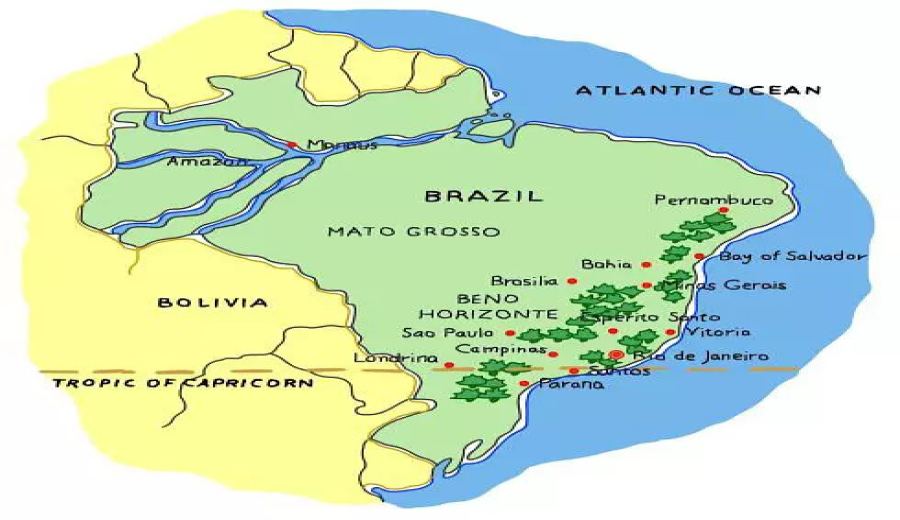
Introduction:Brazil is the world’s largest coffee-producing country. Its flat terrain and large-scale cultivation have given rise to a unique, richly mellow flavor profile, making Brazilian beans a popular base for espresso blends. This article delves into Brazil’s major producing regions such as Cerrado, explores the characteristics of the popular Red Bourbon variety, examines the pulped natural processing method, and details the country’s rigorous grading system. It also provides practical pour over parameters and roasting recommendations to help coffee enthusiasts grasp the essence of Brazil’s specialty beans.
Thanks to its vast land area and favorable tropical highland climate, Brazil has consistently ranked as the world’s leading producer and exporter of coffee, accounting for about one-third of global production. Compared to high-altitude regions in Africa or Central and South America, most of Brazil’s coffee farms are located on hills and plains at elevations of just a few hundred meters, relying heavily on large-scale operations and mechanization. The resulting flavors tend to be bold, sweet, and well-balanced, making Brazilian beans an ideal base for espresso and milk-based drinks.
This article will take you from the historical origins of Brazilian coffee and its main cultivation and harvesting methods, to exploring the characteristics of renowned regions like Cerrado, detailing the uniqueness of the Red Bourbon variety, and analyzing Brazil’s distinctive pulped natural processing technique along with its detailed grading system. Practical pour over parameter suggestions and roasting directions will also be provided, offering a more comprehensive understanding of the allure of this South American coffee giant’s specialty beans.
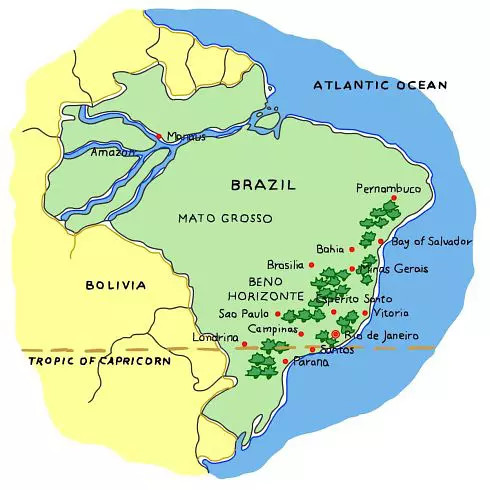
The history of coffee cultivation in Brazil dates back to the early 18th century. In 1717, Portuguese diplomat Francisco de Melo Palheta successfully obtained coffee seeds during a diplomatic mission in French Guiana and planted the first coffee tree in Pará, Brazil. Legend has it that he won the favor of the governor’s wife in the region to secure the seeds. These seeds quickly spread to São Paulo and Minas Gerais, forming the foundation of Brazil’s modern coffee industry.
Due to geographical differences, Brazilian coffee farms are mostly located on flat or gently sloping terrain at elevations below 800 meters, which is quite different from high-altitude regions in Africa or Colombia. In such environments, coffee cherries ripen faster, and the acidity is less pronounced compared to high-altitude beans. However, this results in a fuller, sweeter, and more balanced cup, making Brazilian beans particularly suitable for use in blends to stabilize overall flavor structure and deliver rich roast aromas.
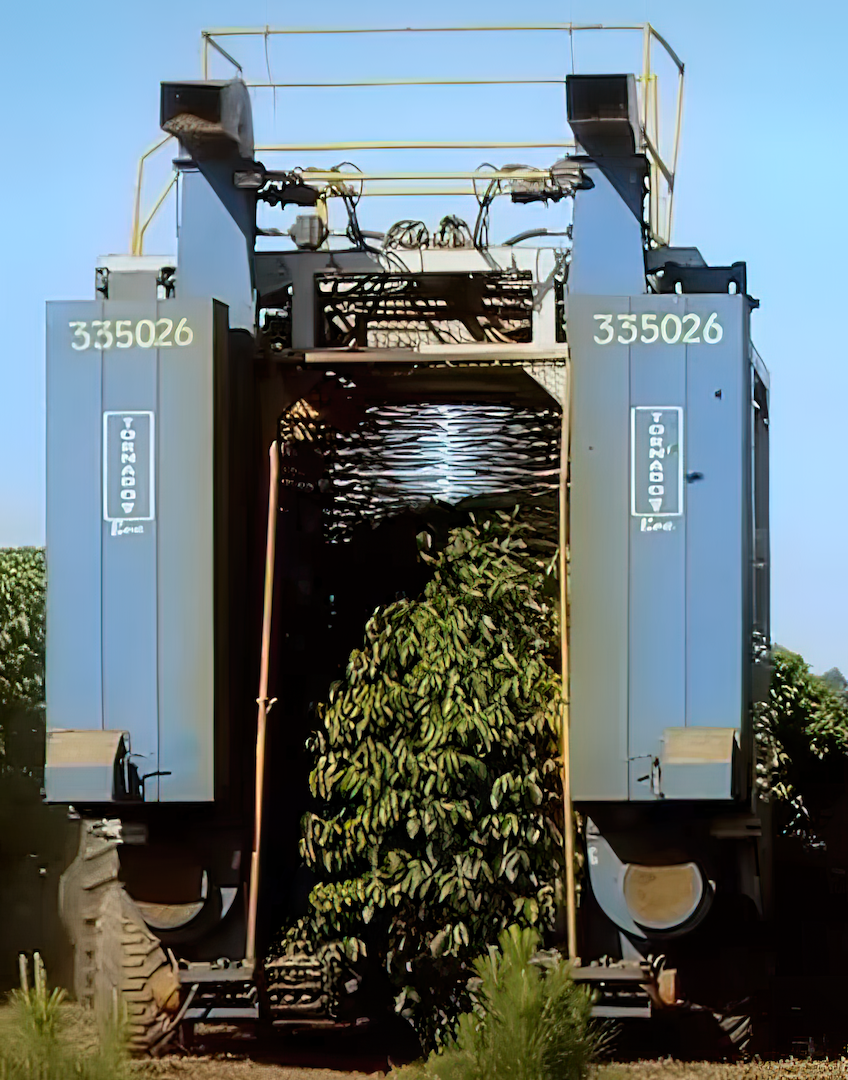
Moreover, Brazil’s flat topography has greatly facilitated the adoption of mechanized harvesting. When coffee cherries reach maturity, farmers typically use harvesters to collect the entire batch at once, significantly improving efficiency and reducing labor costs. However, this method can inadvertently include underripe cherries, affecting flavor consistency. As a result, some high-end farms have introduced harvesters equipped with intelligent color recognition systems that pick only fully red, ripe cherries, ensuring more stable quality.
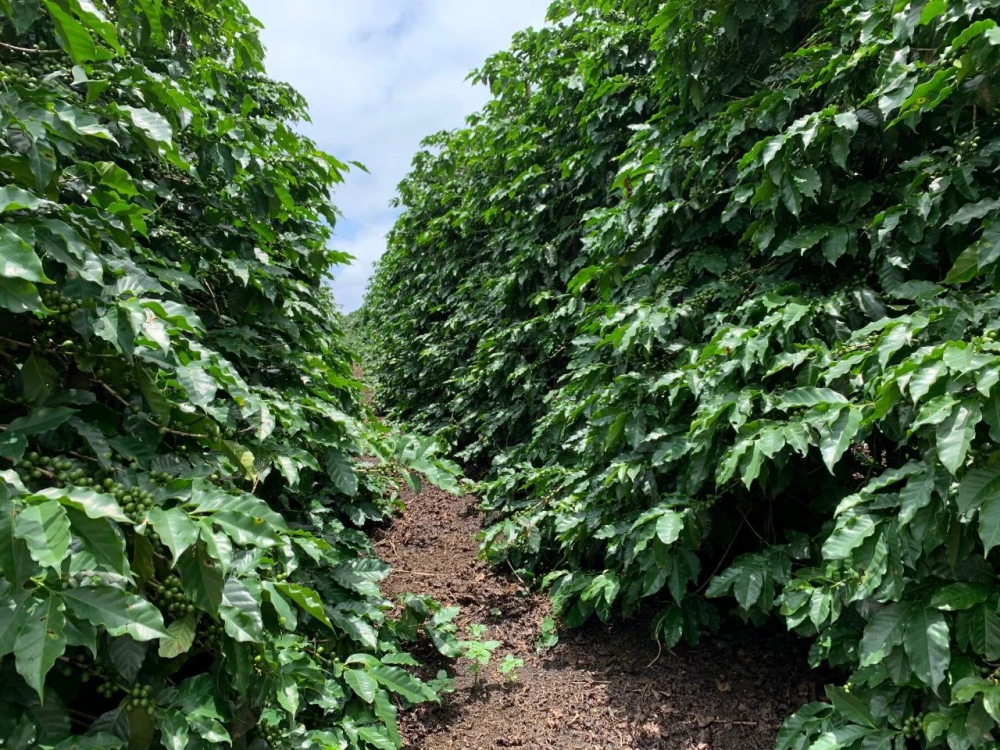
Among Brazil’s many coffee-growing regions, Cerrado is one of the first to receive “origin” certification. Located in the northwest of Minas Gerais, it comprises over 50 municipalities and is one of Brazil’s largest coffee-producing areas. With altitudes ranging between 800 and 1,300 meters, distinct wet and dry seasons—wet summers and dry winters—and mineral-rich soils, Cerrado produces coffee beans with intense and layered flavors. Cerrado coffee often features prominent notes of nuts, cream, and caramel, with a smooth mouthfeel and long-lasting aftertaste, making it a representative region of classic Brazilian flavor.
Brazilian Red Bourbon is one of the most popular coffee varieties in the country and belongs to the historic Bourbon family. Compared to the more common Typica, Bourbon offers greater fruit yield and better flavor potential, especially when grown at suitable altitudes and with careful cultivation, showcasing notable sweetness and complexity. The term “Red Bourbon” refers to coffee cherries that ripen to a bright red color, distinguishing them from the rarer Yellow or Pink Bourbon varieties. Generally, Red Bourbon cherries mature more uniformly and are easier to visually sort, helping improve the overall quality stability of the processed beans.
Brazil’s pulped natural processing method (Pulped Natural) is a hallmark of the country’s coffee industry. Widely promoted in the 1990s, it was developed to address the earthy taste and impurities often associated with earlier rough sun-drying methods. This technique involves removing the outer skin and part of the fruit pulp of the coffee cherry, leaving the mucilage layer intact, then directly drying the beans with the mucilage still attached. This process not only reduces water usage significantly but is also more labor-efficient than traditional washed methods, while preserving more sweetness and fruity notes. The result is a coffee with rich caramel, chocolate, and nut flavors.
Brazil’s grading system for green coffee beans is notably rigorous and unique, primarily based on three criteria: the ratio of defective beans, bean size, and cup quality. Common labels such as ‘NY.2 SC – 17/18 FC Cerrado’ indicate the following: NY.2 denotes a low defect rate, signifying high quality (with NY.1 being flawless but rare); SC stands for Strictly Soft, meaning the cup is extremely mild; 17/18 refers to the screen size, indicating medium to large beans; FC means Fine Cup, signifying excellent cupping quality. This system helps consumers and roasters more accurately assess bean quality and characteristics.
In terms of brewing and roasting, to fully highlight the mellow and low-acid characteristics of Brazilian coffee, many specialty roasters prefer medium-dark roasts to enhance caramelization and bring out nutty, chocolatey, and creamy aromas. For pour over preparation, it is recommended to use a KONO filter, with water temperature controlled at 87–88°C, a brew ratio of approximately 1:15, and a grind size in the medium-fine range (such as around 70% passing through a Chinese standard No. 20 sieve). The specific steps include: initially blooming with a small amount of hot water for about 30 seconds, followed by center-circle pouring in stages, with total extraction time around 2 minutes. This approach helps to draw out a full-bodied sweetness and smooth mouthfeel.
In summary, Brazilian specialty coffee holds an irreplaceable position in the global coffee market due to its stable production capacity, unique regional flavors, and diverse processing techniques. Whether you’re a coffee novice or a roaster seeking a reliable base bean, gaining a deeper understanding of Brazil’s producing regions, varieties, and processing methods will allow you to better appreciate the depth of flavor nurtured by this South American land.
The above content is compiled by CoffeeHunters, a coffee news website.


