







Introduction:Jamaican Blue Mountain coffee is renowned worldwide for its balanced and delicate flavors, yet few truly understand its varietal background, grading system, and precise brewing methods. This article delves into the Typica variety heritage of Blue Mountain coffee, its legally defined four-tier grading system, and the washed processing characteristics of the Clifton Estate, while also providing practical pour over parameters and flavor profiles to give you a comprehensive understanding of this top-tier coffee—from origin to cup.
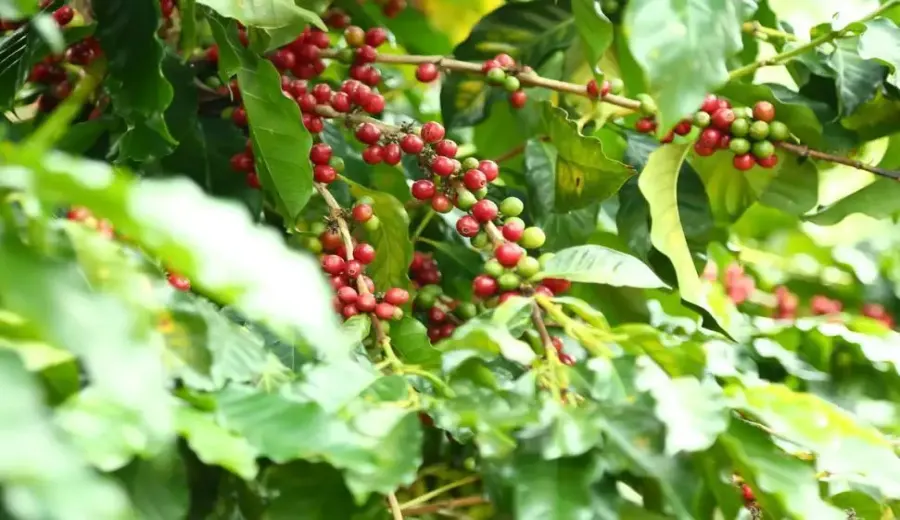
Blue Mountain coffee is the most representative specialty coffee of Jamaica, celebrated for its rich and layered flavors. This coffee is made from the ancient Typica variety, which has evolved over two hundred years in the unique microclimate and high-altitude environment of the Caribbean island. The Jamaican government has strict legal regulations on the growing regions, altitude, and green bean specifications of Blue Mountain coffee, which is why beans that can be legitimately called "Blue Mountain" are extremely rare.
The Typica variety of Blue Mountain coffee has a long cultivation history, with nearly all modern Arabica varieties originating from crosses between Typica and Bourbon. However, due to its fragile plants, low disease resistance, and limited yield, Typica has gradually been replaced by other high-yielding varieties. Nevertheless, in the Blue Mountain region of Jamaica, after more than two hundred years of adaptation, Typica has developed stronger disease resistance, particularly excelling in resisting coffee berry disease—an important reason why Blue Mountain coffee can deliver such clean and refined flavors.
According to Jamaica’s Coffee Industry Regulation Act, Blue Mountain coffee can only be grown in the four administrative parishes of Saint Andrew, Saint Thomas, Portland, and Saint Mary, and must be cultivated at altitudes between 910 and 1700 meters. These four regions cover a total area of about 6,000 hectares, only one-third of the suitable Blue Mountain cultivation area, with the rest mostly used for planting Jamaican High Mountain and Prime coffees. Less than 15% of the annual coffee production qualifies for the Blue Mountain grade, making it exceptionally precious.
The Jamaica Coffee Industry Board (CIB) divides Blue Mountain coffee into four grades: Blue Mountain No. 1, Blue Mountain No. 2, Blue Mountain No. 3, and Blue Mountain Peaberry. Among them, Blue Mountain No. 1 is the highest grade, requiring a bean size of 17 mesh or larger, a defect rate below 2%, a moisture content maintained at 10% to 12.5%, and a cup profile that exhibits a perfect balance of acidity, sweetness, bitterness, body, and aroma. To maintain green bean quality, Blue Mountain No. 1 to No. 3 grades are exported in handcrafted 70kg, 30kg, or 15kg wooden barrels, while other grades are packaged in common 60kg jute sacks.
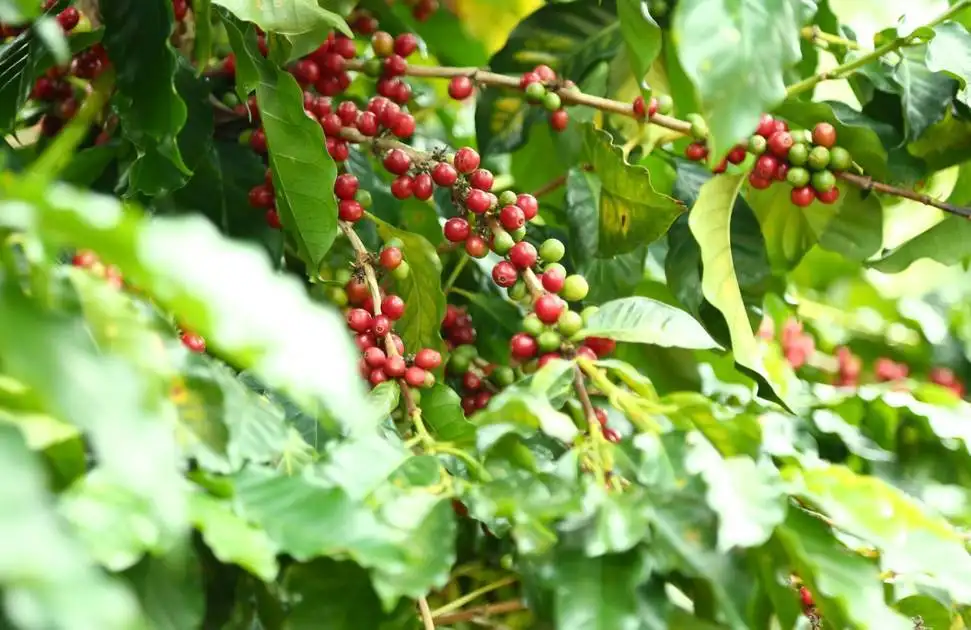
The Blue Mountain No. 1 coffee introduced by this brand comes from the Clifton Estate and is processed using traditional washed methods. Established in the late 18th century, the Clifton Estate is one of the oldest coffee farms in Jamaica and is also Rainforest Alliance certified, with its wooden barrels bearing the green Rainforest Frog logo. The estate is located in the Clifton Mountains at an altitude of approximately 1310 meters, where the high elevation results in significant day-night temperature variations that extend the ripening period of coffee cherries, aiding in the accumulation of flavor compounds.
During the washed processing at the Clifton Estate, harvested coffee cherries are first separated into ripe and unripe beans using the floatation method, then transported via water flow into a pulper to remove the skin. The depulped beans, still covered in mucilage and parchment, then undergo fermentation to remove residual mucilage, followed by washing and even drying to reach the target moisture content before storage. This processing method effectively reduces the defect rate, resulting in clearer flavors, higher cleanliness, and more stable quality.
In terms of roasting and brewing, the Jamaica Coffee Industry Board recommends a roast level that highlights the traditional flavors of Blue Mountain. The brand’s baristas often use a medium-to-dark roast to preserve the rich body of Blue Mountain No. 1 while still retaining gentle fruity acidity. To avoid over-extraction, it is recommended to use a medium grind size and slightly lower water temperature, with the optimal water temperature range being 87–88°C and the grind size referenced at 75% extraction through a 20-number standard sieve.
It is recommended to use a KONO filter cone for pour over brewing. Its rib design allows the filter paper to adhere closely to the cup wall, reducing air flow interference, extending the coffee extraction time, and creating a more uniform mouthfeel. Specific parameters are as follows: 15 grams of coffee grounds, a 1:15 coffee-to-water ratio, a grind size of EK43s scale 10.5 (approximately 75% extraction through a 20-number sieve), water temperature of 87–88°C, using a pulse pouring method.
Recommended brewing steps: Wet the filter paper and attach it tightly to the filter cone, then add coffee grounds and gently tap to level. The first pour injects 30 grams of water for a 30-second bloom; the second pour continues adding water up to 125 grams, maintaining a steady circular motion; when the water level drops by half, proceed with the final pour up to 225 grams, with a total extraction time of about 2 minutes. This method fully showcases the rich, round mouthfeel characteristics of Blue Mountain No. 1.
In terms of flavor, at high temperatures, the coffee offers intense black chocolate aromas, a full-bodied mouthfeel, and a distinct almond aftertaste. As the temperature cools, it gradually reveals the smooth sweetness of roasted hazelnuts and cream, accompanied by gentle acidity and caramel sweetness, with a long-lasting and captivating finish.
The above content is compiled by CoffeeHunters, a coffee news website.


