







Introduction:To master professional pour over techniques, you must understand the Golden Cup extraction theory. This article breaks down the definitions and calculation methods of extraction yield and concentration in an easy-to-understand way. Combined with the actual brewing process of Panama Elida Estate coffee beans, it will guide you step by step through setting the coffee-to-water ratio, controlling pouring rhythm, and using TDS instruments, helping you brew an ideal cup of coffee that aligns more closely with Golden Cup standards.
The flavor performance of pour over coffee is closely related to two key metrics: extraction yield and concentration. According to the Golden Cup standard proposed by the Specialty Coffee Association of America (SCAA), the ideal extraction yield should fall between 18% and 22%, with the corresponding coffee liquid concentration (TDS) ranging from 1.15% to 1.35%. The recommended coffee-to-water ratio is maintained between 1:12 and 1:15. This system originates from the systematic research of Dr. Ernest Lockhart, a chemical Ph.D. from MIT in the 1950s, who was the first to quantify coffee flavor and laid the foundation for modern pour over science.
What is coffee extraction yield?
Extraction yield refers to the percentage of soluble substances dissolved out of coffee grounds by water, relative to the total weight of the coffee grounds. For example, using 10 grams of coffee grounds, if 1.8 to 2.2 grams of soluble material are successfully extracted, the extraction yield is 18% to 22%. These extracted substances then dissolve into the coffee liquid at a certain ratio, forming the concentration we taste. Industry practitioners have found that to achieve a concentration within the Golden Cup range, the coffee-to-water ratio generally needs to be controlled between 1:12 and 1:15, which is a key factor that can be adjusted based on experience without instruments during home brewing.
The origin of the Golden Cup theory
Many people often confuse the concepts of "extraction yield" and "concentration". In reality, they are like twins — each has its own definition but are closely linked. After World War II, the National Coffee Association of the United States hired Dr. Lockhart in 1952 to establish the Coffee Brewing Institute, dedicated to researching the scientific principles of filter coffee and consumer preferences. Dr. Lockhart’s research found that only about 28% to 30% of substances in roasted coffee beans can be extracted by water, with the rest mostly being indissoluble fibers. His team conducted extensive surveys and summarized the extraction yield and concentration ranges generally preferred by American consumers, providing an important basis for the Golden Cup standard.
How to measure concentration and calculate extraction yield?
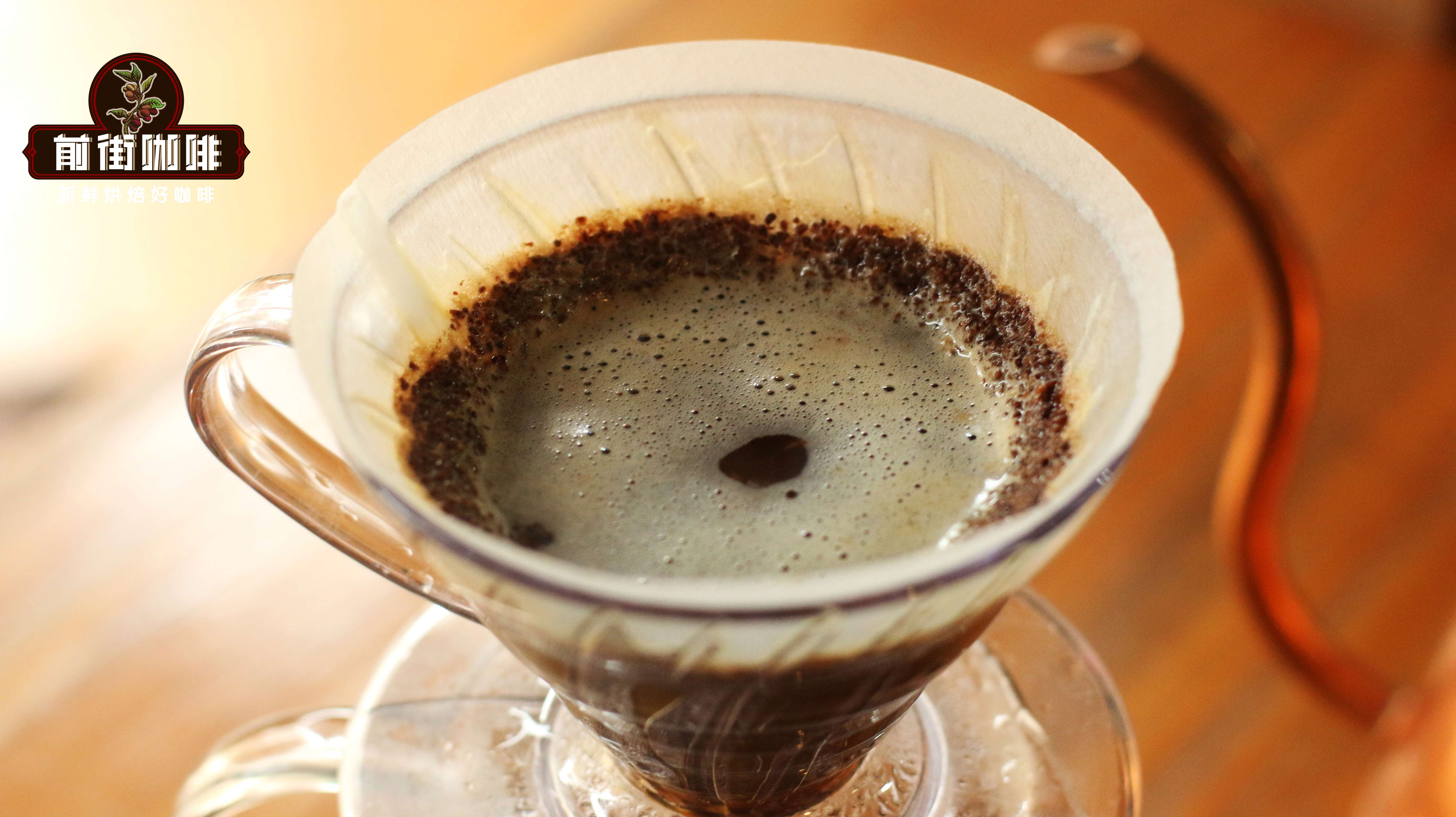
To accurately grasp the concentration of coffee, using a TDS concentration meter is the most direct method. Before measurement, calibrate the instrument with pure water, then stir the freshly brewed coffee evenly. Use a pipette to draw an appropriate amount of coffee liquid and drop it into the instrument. Press the measurement button and repeat several times until the value stabilizes. The formula for calculating extraction yield is: Extraction Yield (%) = Weight of dissolved substances extracted (grams) / Weight of coffee grounds (grams). Assuming a coffee grounds water absorption rate of 1:2, you can roughly estimate the coffee liquid volume as the total water poured minus the weight of the grounds multiplied by 2 — for example, subtracting 30 milliliters of absorbed water from 225 milliliters of water poured, resulting in approximately 195 grams of coffee liquid.
Pour over case study: Panama Elida Estate coffee
Take the Panama Boquete region’s Elida Estate Typica as an example. This sun-dried coffee bean, grown at an altitude of 1850 meters, offers rich fruit and fermentation flavors. A barista used the following parameters for a staged pour over: water temperature controlled at 90–91°C, using an EK43s grinder set to grind size 10 (close to the coarseness of fine sugar), with a coffee-to-water ratio of 1:15. The first step involved pouring water at twice the coffee grounds weight (about 30ml) in a circular motion for a 30-second bloom; the second stage involved slowly pouring with a small stream of water up to 125ml, taking about 1 minute; the third stage waited until the liquid level dropped to two-thirds of the coffee bed, then continued circular pouring up to 225ml, with a total extraction time of about 2 minutes, ending between 1 minute 45 seconds and 1 minute 50 seconds.
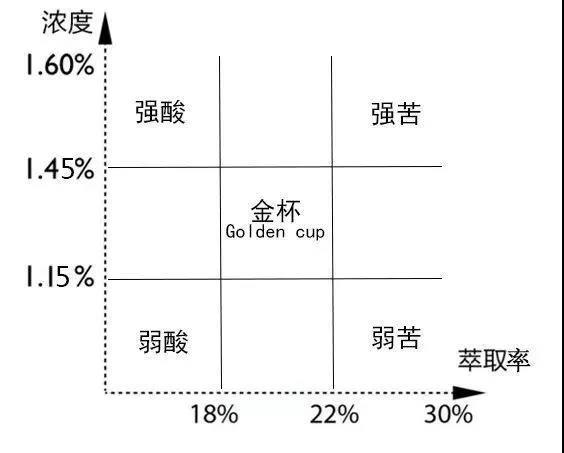
After brewing, the coffee liquid was shaken and measured with a concentration meter, yielding a TDS value of 1.34%. Plugging this into the formula, the calculated extraction yield for this brew was 17.42%. Although this value is slightly below the lower limit of the Golden Cup standard, the actual flavor performance was still outstanding: the wet aroma carried notes of peach and raisin fermentation, with clear orange flavors, gradually revealing sweet sensations of cane sugar and melon as it cooled, and finishing with grapefruit acidity and a green tea-like aftertaste, offering a rich and balanced overall profile.
Although the Golden Cup standard serves as an important industry reference, it is not the only criterion. It provides a scientifically quantified model for coffee brewing, aiding in guiding parameter settings and flavor adjustments. However, every barista and consumer has different taste preferences. Even if extraction parameters fall within the Golden Cup range, they may not necessarily match personal tastes. Therefore, understanding the logic behind the theory and flexibly adjusting based on actual brewing experience is the key to brewing an ideal cup of coffee.
The above content is compiled by CoffeeHunters, a coffee news website.


