







Introduction:Although Americano is simply made by adding water to espresso, it is a key beverage that showcases a barista's skill. This article delves into the historical background of Americano, the differences between Americano and Long Black, extraction ratios and step-by-step details, as well as analyzes the impact of crema on flavor. Whether you want to brew a smooth Americano at home or understand the logic behind professional practices, you’ll find practical advice in this guide.
Americano may seem like just a simple combination of espresso and water, but it is actually one of the most direct tests of a barista’s technique. Making a clean, balanced, and smooth Americano isn’t just about adding water — it involves extraction methods, ratio balancing, and attention to detail. Starting from its historical origins, this article explains the difference between the two methods, Americano and Long Black, and provides specific references for standard ratios and practical steps for both hot and iced Americano, helping you master the techniques for making this classic coffee.
The so-called "Americano" coffee, known as Americano in English and Caffe Americano in Italian, originally referred to black coffee made via drip filtration. This type of coffee typically takes four to five minutes to brew and has a relatively mild flavor with a more straightforward profile. Because it’s simple to make and doesn’t require complex equipment, it emphasizes convenience and the presentation of coffee’s inherent taste. However, the Americano commonly seen in restaurants or cafés nowadays is mostly made by diluting espresso with a large amount of hot water. The two mainstream methods today are Americano, where water is poured into espresso, and Long Black, where espresso is poured into water — the two differ slightly in appearance and taste.
The birth of Americano is closely tied to World War II. At the time, many American soldiers were stationed in Southern Europe and found it hard to adapt to the local habit of drinking strong espresso, so they diluted it with warm water to reduce its intensity. Since this way of drinking originated with American soldiers, it gradually came to be called "Americano." In addition, American households used to commonly use drip coffee makers, which produced coffee with a lighter flavor, also indirectly influencing the definition of Americano. Today, the global popularity of Americano is also largely thanks to Starbucks' promotion.
There are differing opinions in the industry regarding the method of making light-tasting coffee through long extraction times. Traditionalists believe that overly long extraction can lead to the release of off-flavors and an unnecessary increase in caffeine content, thus advising against such practices. However, in cafés in places like Australia, this method is quite common, with proponents noting that compared to methods like French press or siphon, such extraction times aren’t necessarily too long and can bring out different layers of flavor. Regardless of which method you prefer, it’s important to understand its impact on flavor and caffeine, and adjust according to your personal taste.
Although Americano is made up solely of espresso and water, and seems simple to prepare, it is extremely demanding on basic skills. Especially for baristas, the ability to consistently extract a balanced shot of espresso directly determines the final quality of the Americano. For example, the “Warm Sun Blend” beans used by some shops consist of 60% sherry cask-fermented beans and 40% sun-dried Yirgacheffe. Baristas will adjust parameters based on the beans’ daily condition, typically using 20 grams of coffee grounds to extract 40 grams of coffee liquid, with a time controlled between 27 to 28 seconds, to enhance the expression of winey and fruity notes.
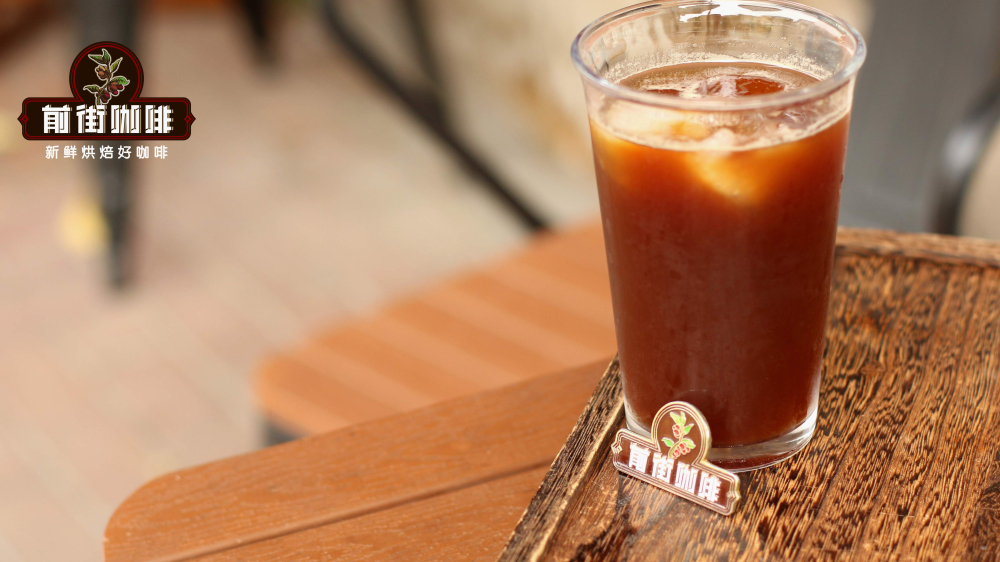
When making hot Americano, it’s recommended to preheat the cup with hot water first, then pour in the hot water followed by the extracted espresso. A common coffee-to-water ratio range is 1:6 to 1:8, and actual testing shows that 1:6 (i.e., 40 grams of coffee liquid with 240 grams of hot water) achieves a good balance between flavor and strength. For iced Americano, start by placing ice cubes to pre-chill the cup, then pour in water, and finally add the espresso. Considering the effect of ice melting, it’s suggested to set the ratio at 1:7, such as mixing 40 grams of coffee liquid with 280 grams of iced water mixture (about 180 grams of ice and 100 grams of water), helping maintain the overall taste’s freshness and balance.
Many people notice a golden layer of foam floating on top when making hot Americano — this is what’s known as coffee crema. Crema is primarily formed by the combination of carbon dioxide and oils from the coffee grounds under high pressure, and it’s an important component of espresso. Some baristas choose to scrape off this layer, and practical tests have found that removing the crema results in a cleaner, smoother Americano with clearer flavors, while retaining the crema adds body and richness. Taking the Warm Sun Blend as an example, both versions exhibit flavors of dark chocolate and subtle whiskey barrel notes, with gentle acidity, the main difference lying in the level of texture refinement. If you’re aiming for a refreshing and balanced profile, scraping off the crema is a worthwhile option to try.
The above content is compiled by CoffeeHunters, a coffee news website.


