







Introduction:Want to understand how the roast level of coffee beans affects flavor? This article is based on the professional Agtron color system, providing a detailed breakdown of the classification criteria and first crack timing across eight roast stages. It also analyzes real coffee varieties such as Yirgacheffe Guji Dingding and PWN Golden Mandheling — from roast profiles to pour over parameters — to help you master the full spectrum of knowledge from bean selection to extraction performance, enhancing your coffee tasting experience.
Have you ever felt puzzled when shopping for coffee beans and seeing labels like “light roast,” “medium roast,” or “dark roast”? Or maybe you’ve come across terms such as “cinnamon roast,” “city roast,” or “French roast” without really understanding the actual differences behind them? In fact, these names are all closely related to the roast level of the beans, and one key factor in determining roast level is the use of the color system jointly developed by the Specialty Coffee Association of America (SCAA) and Agtron.
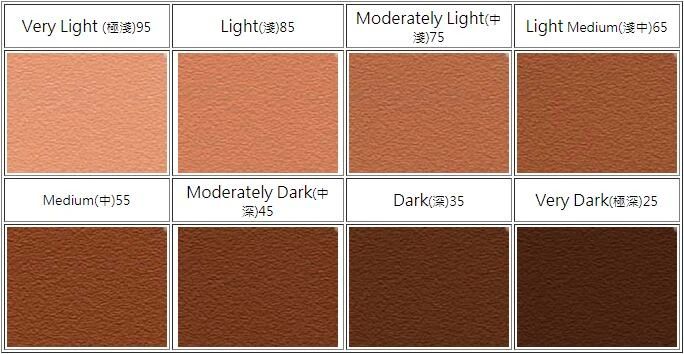
This system accurately measures the color of coffee beans using an infrared caramelization analyzer (commonly known as Agtron), and divides roast levels from light to dark into eight grades. Each grade has a corresponding Agtron color value and recommended first crack timing, making it an industry-recognized reference standard for roast degree.
Originally, there was no consistent global understanding of coffee roast levels. Since the main coffee-producing regions are located around the equator between the Tropic of Cancer and the Tropic of Capricorn, and green beans are mostly shipped to consuming countries for roasting, definitions of “light,” “medium,” and “dark” varied greatly from place to place, making effective communication difficult. To unify terminology and standards, SCAA introduced the Agtron color system, allowing roasters and consumers alike to make accurate judgments and communicate based on numerical values.
Below are the Agtron color values and suggested first crack timings for the eight main roast levels according to the SCAA standard:
Agtron color #95: Light Roast, drop the beans just as the first crack is about to end in its dense phase;Agtron color #85: Cinnamon Roast, drop time is around the end of the first crack;Agtron color #75: Medium Roast, drop after the first crack ends;Agtron color #65: High Roast, drop during the quiet period between the first and second cracks;Agtron color #55: City Roast, drop at the start of the second crack;Agtron color #45: Full City Roast, drop just before the second crack becomes dense;Agtron color #35: French Roast, drop during the dense phase of the second crack;Agtron color #25: Italian Roast, drop when oils begin to emerge on the bean surface.
These roast levels not only influence the appearance and color of the coffee, but also directly determine the final flavor profile. Generally, these eight grades can be grouped into four categories for a more intuitive understanding of their flavor tendencies.
First isLight Roast (including Light and Cinnamon Roasts). Coffees roasted to this level typically exhibit pronounced fruit and floral aromas, with bright and lively acidity, and a clean, refreshing mouthfeel — ideal for those who enjoy fresh and vibrant flavors.
Next isMedium Roast (including Medium and High Roasts). At this stage, the body of the coffee significantly increases, acidity becomes relatively more restrained, and the overall mouthfeel becomes fuller and more substantial, suitable for users who prefer balanced flavors.
Then comesMedium-Dark Roast (including City and Full City Roasts). Coffees roasted to this level show almost no noticeable acidity, replaced instead by rich, full-bodied flavors, and layers of bitterness with underlying sweetness.
Finally, there’sDark Roast (including French and Italian Roasts). At this stage, the coffee is full-bodied and heavy, with almost no acidity remaining, an oily mouthfeel, and an intensely deep flavor — a favorite among many dark roast enthusiasts and fans of espresso-based coffee.
To help readers better understand how these roast levels are applied to actual coffee beans, we take two representative beans — Yirgacheffe Guji Dingding and PWN Golden Mandheling — and detail their complete processes from roasting to pour over.
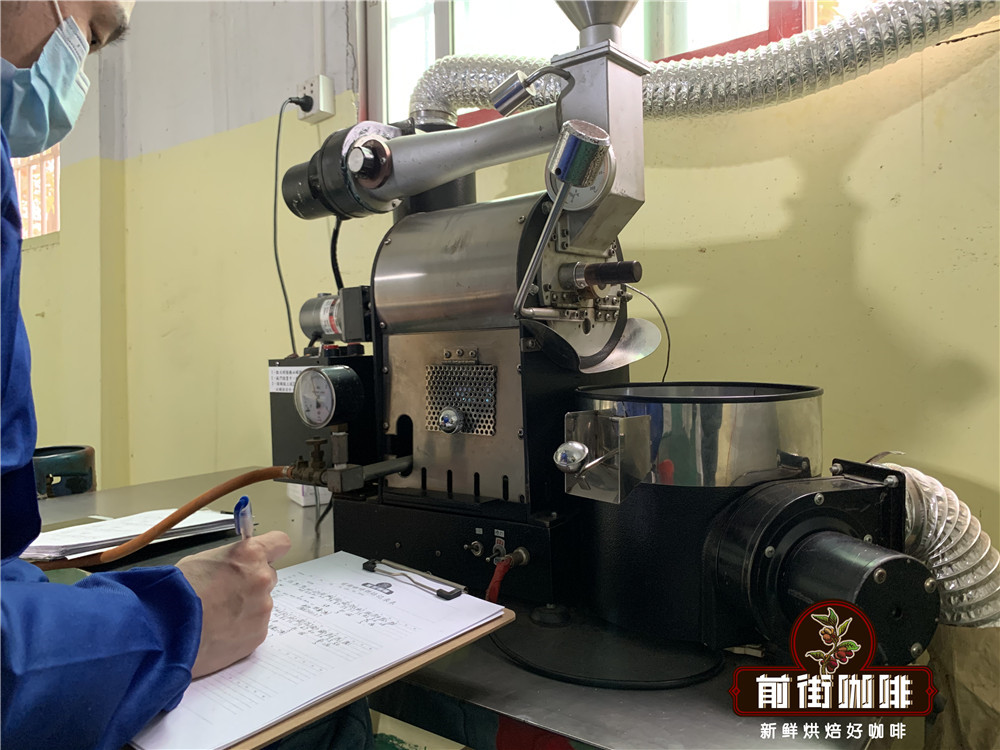
First up is the Guji Dingding Cooperative washed coffee from the Gedeo Zone of Yirgacheffe, Ethiopia. It’s a heirloom variety, grown at an altitude of 1900-2300 meters, graded G1. In this roaster’s approach, small fire is used to extend the drying phase in order to preserve its elegant fruity and floral notes. The charge temperature is 175°C, with an air damper setting of 3 and flame power at 120. The turnaround point occurs at 1 minute 32 seconds, after which flame power and air damper are gradually adjusted. At 8 minutes 28 seconds, wrinkles and black speckles appear, signaling that first crack is imminent. First crack finally begins at 9 minutes 38 seconds and continues to develop for 1 minute 30 seconds before dropping at 193.5°C. This falls into the range between typical Cinnamon Roast and Medium Roast.
For brewing, it is recommended to use a V60 dripper, with a water temperature of 91-92°C, 15g of coffee, a 1:15 brew ratio, and medium-fine grind (80% passing through a #20 sieve). Use a pulse pouring method: first bloom with 30g of water for 30 seconds, then pour in a circular motion to add 125g of water, and finally add 225g of water. Total brew time is about 2 minutes and 1 second, which fully highlights its citrus, black tea, cream, and caramel layered flavors.
The other coffee is PWN Golden Mandheling from Gayo Mountain, Aceh, Sumatra, Indonesia. It uses the Ateng variety and is processed via the wet-hulled (Giling Basah) method, grown at an altitude of 1100-1600 meters. This bean has higher moisture content, so special attention must be paid to the drying phase during roasting. The charge temperature is 200°C, with an air damper of 3 and flame power at 160. By 5 minutes 40 seconds, the bean surface turns yellow, then flame power and air damper are adjusted until first crack begins at 9 minutes 54 seconds. It is dropped at 204.5°C, placing it between Medium-Dark and Dark Roast.
For brewing, it is recommended to use a KONO dripper, with a water temperature of 86-88°C, 15g of coffee, a 1:15 brew ratio, and medium-coarse grind (65% passing through a #20 sieve). Use a combination of pulse blooming and circular pouring. Total brew time is about 2 minutes, which effectively brings out its sweet herbal, cinnamon spice, orange peel, and rich chocolate-like flavor characteristics.
The above content is compiled by CoffeeHunters, a coffee news website.


