







Introduction:As an important coffee-producing region in China, Yunnan’s small-bean coffee has gradually attracted international market attention in recent years. But is Yunnan coffee considered specialty grade? This article delves into the development history, variety characteristics, and five-tier grading standards of Yunnan coffee, while also exploring the new evaluation system introduced by YCE. Additionally, it introduces the unique flavor profiles of classic washed Yunnan beans and distinctive natural-processed beans, along with practical pour over parameters to help you more fully experience the neutral tone and layered expression of Yunnan coffee.
Yunnan coffee is one of the representatives of native Chinese coffee. Its small-bean variety belongs to the Arabica family, distinctly different from the commonly seen medium-bean Robusta. As early as 1904, French missionary Téodore Monod planted the first coffee tree in Zhugula Village, Binchuan, Yunnan, marking the beginning of coffee cultivation in this region. Truly commercial-scale planting began in 1937 when patriotic overseas Chinese Liang Jinshan introduced seeds from Myanmar and started nurseries around the Lugujiang Dam in Baoshan. By 1952, driven by agricultural experts, Yunnan coffee began large-scale cultivation, primarily supplying the Soviet market at the time.
The year 1988 was a turning point for Yunnan coffee. With the establishment of a Nestlé branch in the region, the disease-resistant and high-yield Catimor variety was introduced and purchased at international futures prices, greatly boosting farmers’ willingness to grow coffee. Subsequently, international brands such as Starbucks and Maxwell House also entered the market, leading to steady growth in both Yunnan coffee production and cultivation area. However, the Catimor variety, which contains 1/4 Robusta genetics, though advantageous for disease resistance and yield, is often considered inferior in flavor compared to pure Arabica—especially in the earlier stages when processing techniques were less refined. Most beans could only serve as commodities for instant coffee or low-cost blends.
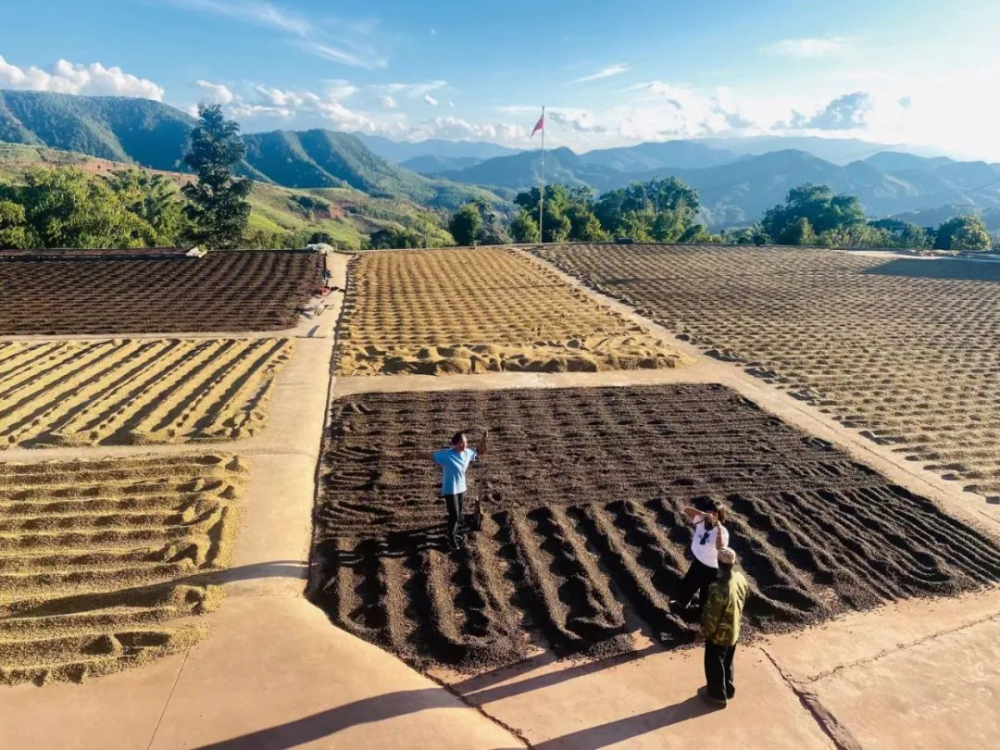
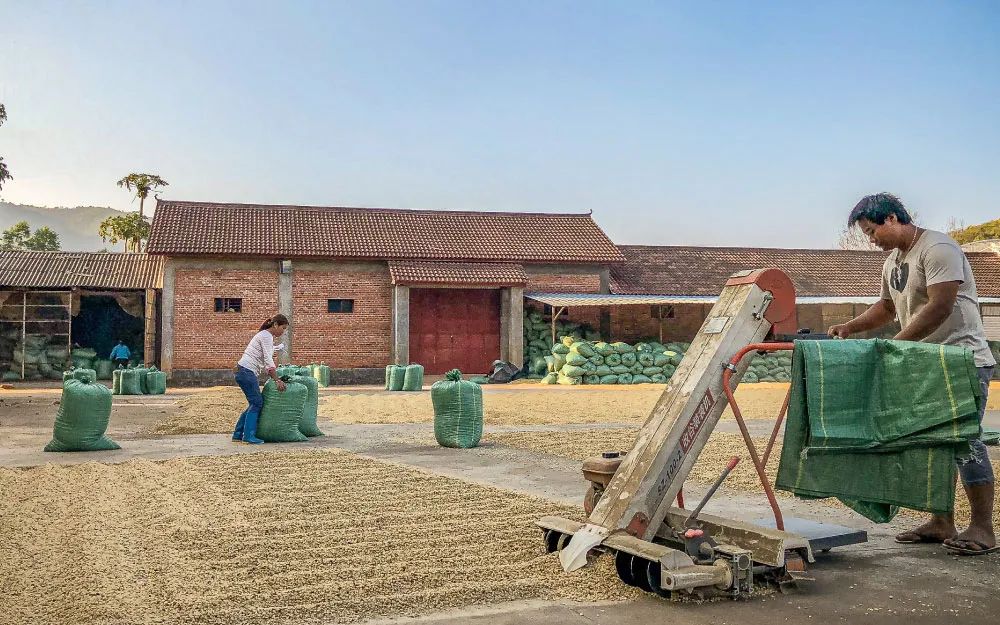
Currently, the majority of coffee beans grown in Yunnan are still Catimor. However, due to farmers generally employing traditional or even crude processing methods, overall quality is inconsistent. Only a small portion of beans that undergo careful processing and selection can meet specialty coffee standards. Therefore, if you ask, “Is Yunnan coffee considered specialty grade?” the answer is that some do meet the criteria, but overall, there is still a gap compared to internationally renowned specialty regions like Ethiopia or Panama, requiring greater technical investment and quality control.
When it comes to the grading of Yunnan coffee, there is not yet a unified and detailed international standard like those in Central and South America or Africa. Current practices mostly classify beans based on basic indicators such as screen size, bean color, cleanliness, aroma, and moisture content, divided into five grades:
Divided according to screen mesh diameters of 6.5, 6.0, 5.5, and 5.0 millimeters as follows:
Grade 1: Screen size above 6.5 mm, beans are full and have high integrity;
Grade 2: Screen size between 6.0 and 6.4 mm, beans are full and relatively uniform;
Grade 3: Screen size between 5.3 and 5.9 mm, beans are fairly full but slightly less uniform;
Grade 4: Screen size between 5.0 and 5.4 mm, beans may have defects, but the proportion of whole beans must be above 75%;
Grade 5: Screen size below 5.0 mm, the proportion of whole beans only needs to be above 30%, with noticeably more defective beans.
In terms of color, light blue, light green, light white, or light yellow with uniformity is preferred, while darker or mixed colors are rated lower; cleanliness requires the bean surface to be as free of impurities as possible, with high-quality beans having over 60% of their silver skin removed and no foreign matter; aroma-wise, fermentation odors, rancid smells, or other off-flavors will directly affect grading; moisture content must be controlled at 12% or belowto ensure storage stability.
To enhance the international competitiveness and market value of Yunnan coffee, the Yunnan International Coffee Exchange (YCE) established in Pu’er city introduced a new grading system in 2019. This system refers to international standards such as SCA (Specialty Coffee Association) and CQI (Coffee Quality Institute), and establishes more scientific evaluation criteria specifically for washed Yunnan small-bean coffee. It has now become an important reference for local farmers and enterprises in pricing and grading, helping to improve overall quality and market transparency.
If you want to explore the potential of Yunnan coffee more deeply, start with its washed products. The washed method removes the pulp layer, allowing the coffee to retain more of its inherent flavors before drying, presenting what is called the “taste of Yunnan”—a neutral tone with clear acidity yet a rich undertone. A certain brand’s classic washed Yunnan small-bean coffee is one representative of this flavor.
Additionally, a certain brand also offers a natural-processed bean named “2013,” sourced from the ancient Arabica variety Typica, which began cultivation in the Lincang region in 2013. Due to Typica’s weak disease resistance, its planting and management require extra care, and it wasn’t until 2020 that the first harvest occurred. This bean is processed using the natural method, allowing the pulp flavors to penetrate deeper into the bean core, bringing out intense tropical fruit and honey notes.
After cupping, a team found that “2013” exhibits complex aromas of plum, dried fruit, chocolate, and nuts, with a rich and balanced flavor profile. It is recommended to roast it at a light to medium or medium level to bring out its best qualities—preserving the vibrancy of the acidity while highlighting the rich aftertaste.
If you enjoy pour over brewing, you can refer to the following parameters: use a Hario V60 filter, with about 15 grams of coffee, water temperature controlled at 90°C, grind size preferably at 75% through a #20 sieve, and a coffee-to-water ratio of 1:15 suggested. For pouring, a three-stage method is advised: start with double the coffee weight in water (about 30 grams) for a 30-second bloom, then pour in small circles from the inside out until reaching 125 grams for the first pour; once the bed drops, pour up to 225 grams to complete extraction, with a total brew time of about 2 minutes. These parameters help fully showcase the delicate flavors and layered complexity of Yunnan coffee.
The above content is compiled by CoffeeHunters, a coffee news website.


