








Introduction:In the world of coffee, the term "mocha" encompasses three distinctly different elements: mocha coffee beans from Yemen, Italian-style mocha beverages that blend chocolate with coffee, and the moka pot commonly used in Italian households. Though these three share a similar name, each has its own unique historical background and brewing characteristics. This article will take you through their similarities and differences—from historical context and production methods to flavor profiles—to help you more accurately choose the coffee experience that suits you.
In coffee terminology, the word "mocha" often confuses beginners because it simultaneously refers to coffee beans from Yemen, Italian coffee with added chocolate, and a classic Italian home brewing device—the moka pot. These three elements known as "mocha" actually originate from different eras and regions, with a historical span that can even reach several centuries.
The earliest association with "mocha" is the port of Mocha in Yemen. Since the 15th century, the Port of Mocha was once the most important trade hub along the Red Sea, similar in status to today’s Shanghai Port, connecting the maritime Silk Road between Europe and the East. At that time, high-altitude coffee produced in the central mountainous regions of Yemen was transported to various parts of Europe through this port. Because people at the time only knew that coffee came from the "Port of Mocha," over time, these coffees came to be collectively referred to as "mocha coffee (beans)," a name that has continued to this day.

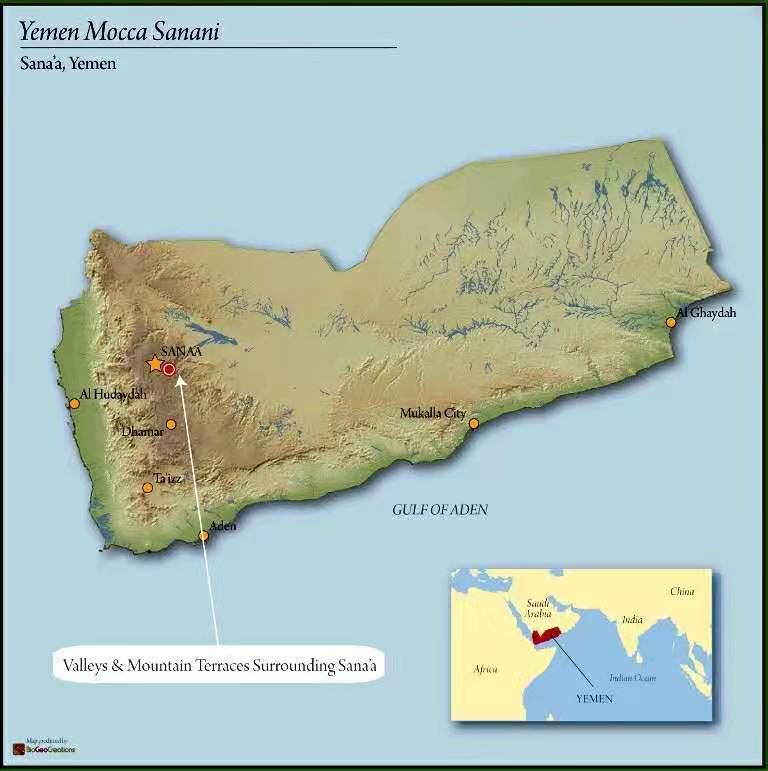
Today’s Yemeni mocha coffee is one of the rarest coffee varieties in the world. Affected by the recent Yemeni civil war, local coffee production has sharply declined, and even less is exported to international markets. For example, the well-known Mokha Mattari is produced in the Bani Mattar region of Yemen, and its packaging is also distinctive, using fine-mesh fabric similar to flour sack material rather than conventional burlap coffee sacks. Different growing regions of Yemeni mocha also showcase their own unique flavors—for instance, Mattari is known for its chocolate notes and pronounced acidity, while Sanani exhibits a bold and aromatic character. Overall, however, these coffees often carry a strong chocolatey base tone.
When it comes to "mocha coffee," many people first think of an Italian-style coffee beverage made with chocolate and milk foam. This drink is typically based on espresso, combined with milk and chocolate syrup (or powder, or chunks), offering both richness and sweetness, and is very popular among consumers. However, this beverage actually has no direct connection to the Yemeni Mocha Port or the coffee beans.
Regarding the origin of Italian mocha coffee, it is generally believed to have emerged in 18th-century Italy. At that time, due to the greatly reduced supply of coffee from the Mocha Port, and because mocha coffee beans were already known for their unique chocolate-like finish, Italians began adding chocolate to espresso to recreate a similar flavor, then paired it with steamed milk, creating a beverage with a flavor profile similar to that of mocha beans—what we now know as "mocha coffee."
As Italian coffee culture spread globally, this chocolate-and-coffee fusion drink gradually became a staple of Italian-style coffee and evolved into various variations, such as using different ratios of chocolate and milk foam, or even adding whipped cream for garnish, becoming a classic dessert coffee option in many cafés.
The last "mocha" is the well-known moka pot. This is an Italian home coffee brewing device born in 1933, invented by Alfonso Bialetti. The moka pot consists of three parts: the lower chamber holds water, the middle filter basket contains finely ground coffee, and the upper chamber collects the brewed coffee.
Its working principle is to heat the water in the lower chamber, generating steam pressure (about 1.5 to 2 bar), which pushes the hot water upward through the layer of coffee grounds in the middle, eventually collecting the extracted coffee in the upper chamber. Although its pressure is far lower than the 9 bar of professional espresso machines, it is still sufficient to extract rich coffee oils, resulting in a strong and layered taste.
As for why this pot is called a "moka pot," it is widely believed that since the 17th century, the term "mocha" had become widely synonymous with coffee in northern Italian regions such as Venice. Therefore, this device that allows you to easily brew strong coffee at home came to be called a "moka pot," though it is more akin to a home-use coffee machine.
For coffee enthusiasts using a moka pot, it is recommended to prioritize medium-roast coffee beans to achieve a balanced acidity and bitterness. If you prefer a rich and full-bodied taste, you might consider medium-roast beans such as Brazilian Cerrado or Colombian Huila; if you want pronounced fruitiness without excessive bitterness, you can also opt for light-to-medium roast beans with berry notes. Additionally, operating a moka pot requires attention to heat control and grind size—it is advised that beginners start with low to medium heat and use a grind slightly finer than pour over but slightly coarser than espresso to achieve the best extraction results.
The above content is compiled by CoffeeHunters, a coffee news website.


