







Introduction:The reason coffee beans can emit captivating aromas and rich layers of flavor lies in roasting. Raw, unroasted beans possess almost none of the familiar coffee flavors we know. It is only under high temperatures that the internal acids, sweetness, bitterness, and aromatic compounds transform and develop. This article not only delves into the impact of three major roast levels—light, medium, and dark—as well as eight subdivisions on flavor, but also handpicks three light-roasted single-origin beans ideal for pour over brewing: Ethiopia Yirgacheffe Natural Red Cherry, Kenya Little Tomato, and Panama Geisha Flower Butterfly. Practical V60 brewing parameters and techniques are also provided to help you easily replicate professional-grade flavors at home.
As we all know, the aromatic and varied flavors we typically enjoy in coffee do not come from the raw beans themselves. Freshly harvested and processed green coffee beans may look plump, but they emit almost no distinct coffee aroma. Instead, they carry faint scents of grass or grains. Brewing these beans directly—without roasting—results in flat flavors and may even come across as astringent. The key is that only through roasting do the various organic compounds within the coffee beans transform under heat, releasing the familiar aromas and flavor complexity we cherish.
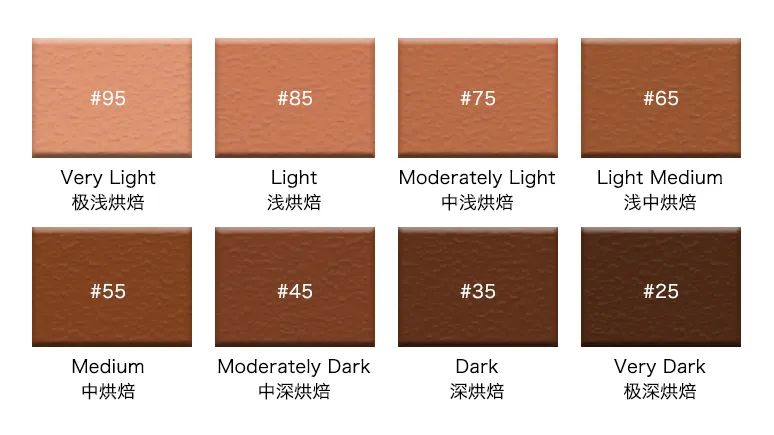
Roasting can be considered the sculptor of coffee flavor. Different roast levels influence the color, acidity, sweetness, and bitterness of the beans, ultimately determining the drinking quality. Based on roast depth, it is generally divided into three main categories: light roast, medium roast, and dark roast. Further subdivisions can even reach up to eight different roast levels—from Light Roast to Italian Roast—each with its own unique flavor characteristics and suitable scenarios.
Light roast (including Light Roast and Cinnamon Roast) is usually the top choice for coffee lovers who prefer fruity acidity and floral notes. The drop time for this type of roast occurs between the “start of first crack to the beginning of the first crack’s rolling phase.” At this stage, the beans exhibit a light cinnamon color, with grassy notes completely faded and replaced by bright fruit acidity and fresh floral aromas. This roast is ideal for pour over or filter brewing. Flavors often include citrus, lemon, honey, and a certain degree of fermented wine-like notes, with a refreshing taste and clear layering.
Moving into the medium roast range, which includes Medium Roast, High Roast, and City Roast, these roast levels make the coffee beans’ aromas and sweetness more rounded, while acidity becomes relatively softer. The drop timing is generally after the end of the first crack and before the start of the second crack. These beans have a light brown appearance, offering balanced flavors with harmonious acidity and bitterness—this is the "standard" roast style most consumers are familiar with. Suitable for daily drinking, it is also widely used across various brewing methods.
Finally, there is dark roast, including Full City Roast, French Roast, and Italian Roast. These roast levels are typically dropped during the later stages of the second crack or when the bean surface begins to oil and darken. This roasting method imparts a strong caramelized note along with intense bitter-sweet flavors, making it ideal for espresso preparation—especially popular in Italy. Dark roast beans have a heavy mouthfeel and bold aromas, often featuring chocolate, smoky, and charred notes.
If you prefer fresh fruity and floral notes, light roasting is definitely your best bet. Below are three highly-rated light-roasted single-origin beans recommended for pour over brewing:
The first is 【Ethiopia Yirgacheffe Natural Red Cherry】, a classic high-altitude naturally processed bean with a clear and layered overall flavor profile. Upon contact with hot water, it immediately releases distinct lemon, floral, and subtle fermented wine aromas. The cup is juicy, dominated by citrus and lemon acidity, with less prominent nuttiness, and a honey-like sweet finish.
The second, 【Kenya Little Tomato】, showcases strong tropical fruit characteristics. Its wet aroma carries ripe tomato and delicate floral notes, and when sipped, one can distinctly perceive the bright sour-sweetness of cherry tomatoes and black plums. The mouthfeel is solid, with a weightiness typical of African beans. The mid-palate highlights prominent sweetness, and the finish extends with berry and brown sugar sweetness, along with a hint of green tea freshness.
The third recommendation is 【Panama Geisha Flower Butterfly】, a blend that integrates the essence of multiple processing methods. It offers diverse flavors including floral, black tea, berries, and citrus. The overall mouthfeel is smooth with extremely low bitterness and well-balanced acidity—making it an excellent choice for beginners looking to experience various flavor layers. The finish carries a subtle nutty aroma that lingers pleasantly.
For the above light-roasted single-origin beans, it is recommended to use the following V60 brewing parameters to achieve optimal extraction:
Coffee dose: 15 grams
Brew ratio: 1:15
Water temperature: 91~93°C
Grind size: Medium-fine grind (recommended around 78% passing rate through a 20-mesh sieve)
Filter dripper: V60
Specifically, start by pouring 30 grams of water for a 30-second bloom to allow the coffee grounds to fully expand and release aromas. After the bloom, begin pouring water in a circular motion from the center outward. Pause pouring when the total water volume reaches 125 grams, wait for the water level to drop by about half, then continue pouring until you reach 225 grams to complete the extraction, with a total brew time controlled around 2 minutes. This method helps balance acidity and sweetness, extracting clean and layered flavors.
The above content is compiled by CoffeeHunters, a coffee news website.


