







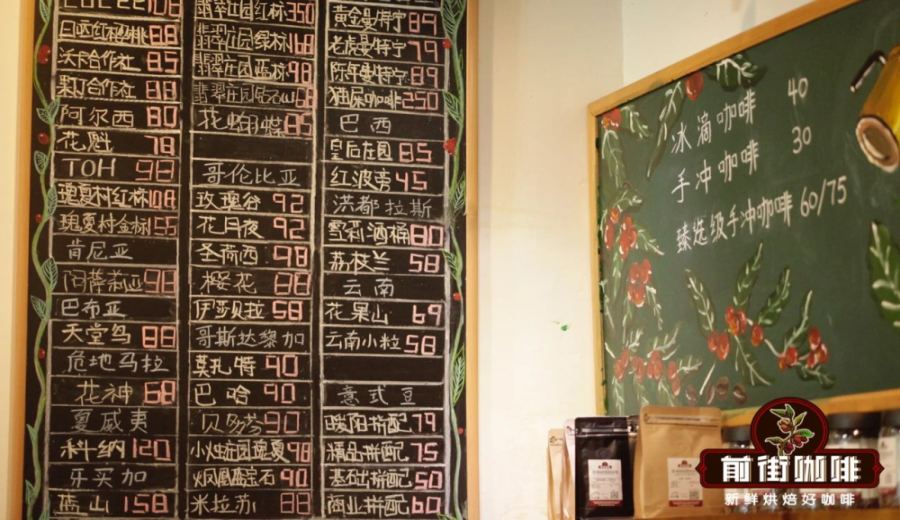
Introduction:Have you ever been puzzled by the seemingly complex coffee names on a café’s bean menu? From region names to competition titles, and even estate brands, the naming of single-origin coffee beans is actually quite nuanced. This article delves into the mainstream naming logic of single-origin coffee beans—how to understand origin, competition grade, and brand characteristics through the name—and deciphers the true meanings of common grade codes such as G1, AA, and SHB. This will help you make more informed judgments when selecting your coffee beans.
When you walk into a café and look at the dazzling array of coffee names on the menu, have you ever wondered: where do these seemingly random names come from? In fact, the naming of single-origin coffee beans carries a wealth of information—from region, competition honors, to estate branding and grade classifications—each name has its own logic and story behind it. Understanding these naming rules not only helps you choose your preferred flavors more accurately but also allows you to better appreciate the uniqueness of each coffee.
First, the most common naming method is by region, origin, or even producer. This approach allows consumers to intuitively know where the coffee comes from. For example, Yirgacheffe is a well-known region in Ethiopia, often followed by names like Diringa, Kochere, Biloya, or Worka—these are actually smaller processing mills or cooperative names within that region. In Central and South America, the naming style is slightly different, typically focusing on well-known estates or large regions, such as Huila and Cauca in Colombia, Antigua in Guatemala, or Jamaica Blue Mountain and Hawaii Kona. These names represent the unique characteristics and reputation of the regions themselves.
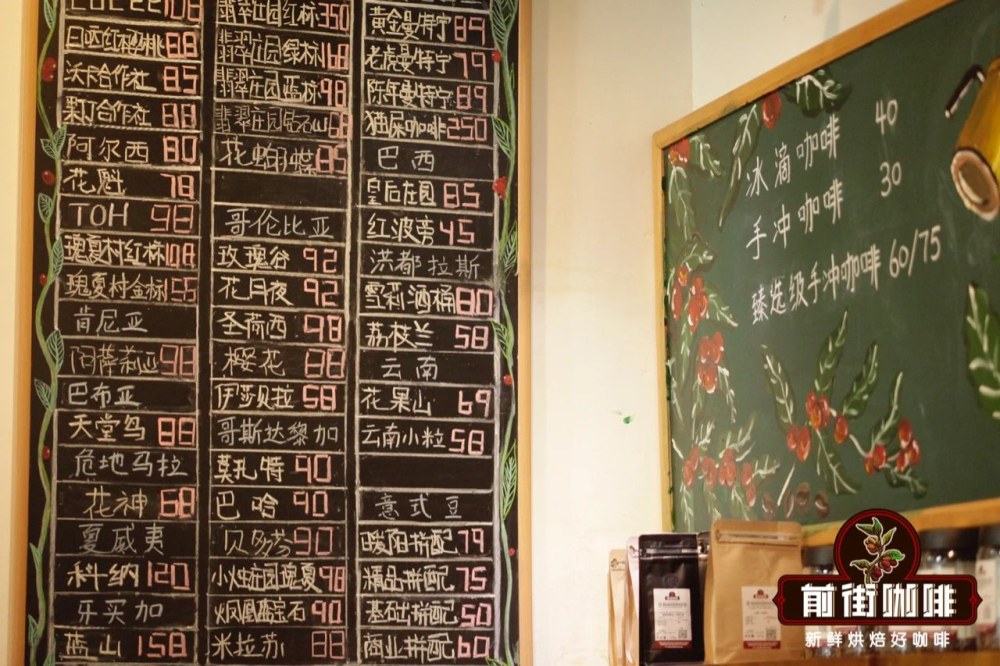
Beyond the region, many high-quality coffee beans are also named after the titles they’ve won in green bean competitions. Prestigious international competitions like TOH (The Cup Tasters Championship), COE (Cup of Excellence), and BOP (Best of Panama) are widely recognized in the industry. Coffee beans that win awards in these competitions often adopt their award ranking or honor as their name. For example, the 22nd-place batch of Ethiopian COE in 2020 or the 2017 TOH champion bean “Huā Kuí” (Flower Queen)—these names instantly convey their exceptional pedigree to consumers through their competition honors.
Some estates name their coffees based on the characteristics of their product lines. Especially when the bean variety is rare or the flavor is particularly outstanding, the naming often combines the estate name with the variety, such as Geisha, Pink Bourbon, or Pacamara. Many estates also have unique processing methods, giving their coffee beans vivid and poetic names, such as the Musician Series from Canet Estate, the Rose Valley from La Mula Estate, and the Sherry from Honduras Mocha Estate. Some brands further divide their coffees into different grades based on product positioning. For instance, Emerald Estate’s Jade Selection (Geisha Red Label), Private Reserve (Geisha Green Label), and Geisha 1500 (Geisha Blue Label), as well as Panama Geisha Butterflies and Golden Mandheling, are all clever categorizations based on brand strategy and market positioning.
Speaking of brands, the name “Mandheling” is rather unique. It is neither a region nor a variety but originates from the name of an indigenous tribe in Sumatra, Indonesia, which was originally transliterated as “Mandailing.” Nowadays, any Arabica coffee from North Sumatra is commonly referred to as Mandheling. Within the Mandheling category, further subdivisions can be made by origin, such as Lintong Mandheling, Gayo Mandheling, and Tawar Lake Mandheling; or by brand, such as the well-regarded Golden Mandheling and Tiger Mandheling in the market. Golden Mandheling, launched by Pawani, is distinguished by its extremely high selection standards: only beans larger than 18 mesh are used, and they undergo three rounds of manual sorting and one round of machine sorting, resulting in an exceptionally low defect rate, making it a standout among Mandheling coffees.
Tiger Mandheling uses beans from the area around Lake Tawar in Aceh, featuring a unique herbal aroma. Only beans larger than 17 mesh with a defect rate below 4% qualify to bear the “tiger” label. Additionally, there is a type of Mandheling that achieves distinctive flavors through special processing methods—for example, aged Mandheling, which involves storing wet-hulled processed coffee beans in a temperature-controlled warehouse for 2 to 3 years, transforming the originally pronounced fruit acidity into a smoother, richer mouthfeel, with deeper and more captivating flavor layers.
Finally, many coffee names end with codes like G1, G2, AA, AB, NO.1, or SHB. These are actually grading indicators used by different producing countries to classify coffee quality. Among them, G1 and G2 are graded based on defect rates, with G1 representing the fewest defects and highest quality, commonly seen in Ethiopian Yirgacheffe G1. Meanwhile, AA and AB are mostly graded by bean size, such as Kenya AA, which denotes the highest-grade coffee beans in the country. As for SHB (Strictly Hard Bean), it is a term commonly used in Central and South America, referring to “strictly hard beans,” usually grown at high altitudes and characterized by more intense flavors and higher acidity. It is one of the key indicators for evaluating a coffee’s potential.
The above content is compiled by CoffeeHunters, a coffee news website.


