







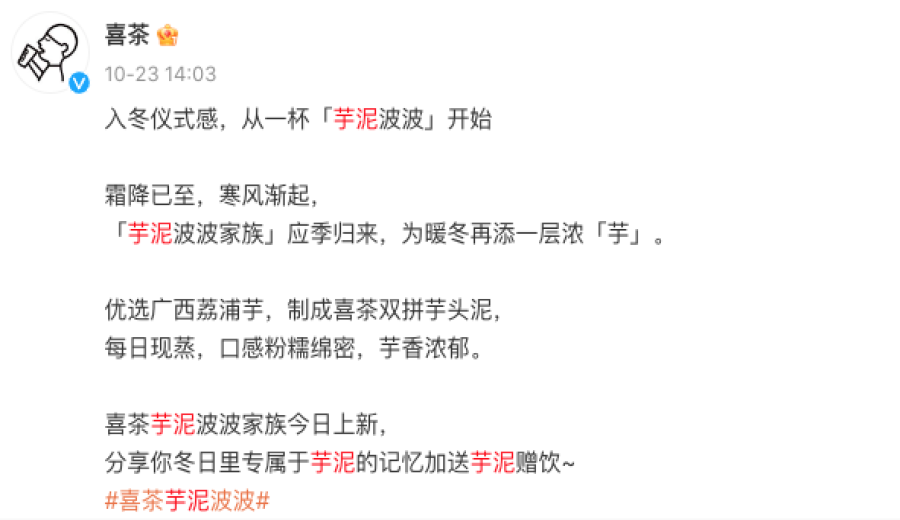
Introduction:Heytea has brought back its highly anticipated Taro Ball series this fall and winter, using taro from Guangxi’s Lipu to attract a wave of curious consumers. However, some customers discovered that the “Taro Ball True Milk Tea” had quietly undergone a formula change without prior notice — the drink now contains a large amount of sago, which not only affects the overall taste but has also sparked widespread discussion regarding product consistency and the brand's transparency in communication. This article will delve into the ins and outs of this formula alteration and how consumers can respond to similar situations.
As temperatures gradually drop after the first frost, many tea beverage brands have launched limited-edition products for the fall and winter season. Heytea also chose this time to bring back its signature Taro Ball series to the menu, featuring a double mix of taro made from Guangxi’s Lipu taro, emphasizing daily steaming to achieve a soft, powdery texture and rich taro aroma. The move successfully drew back many taro lovers for repeat purchases.
According to official information, the returning Taro Ball series includes three drinks: “Taro Ball Milk,” “Taro Ball True Milk Tea,” and “Tapioca True Milk Tea.” Among them, “Taro Ball Milk” uses daily-steamed taro made from Guangxi’s Lipu areca taro, paired with tapioca balls and 3.8 Yuanmu Select Milk, using 100% fresh milk and completely free of milk powder; “Taro Ball True Milk Tea” combines a double mix of taro, tapioca balls, and Crimson Red Milk Tea; while “Tapioca True Milk Tea” contains only tapioca balls and Crimson Red Milk Tea, offering a variety of choices.
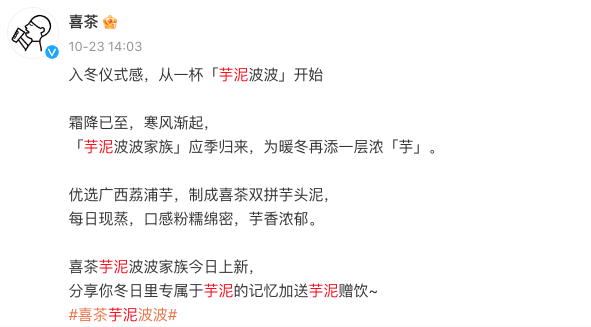
This classic comeback quickly attracted a large number of consumers. Those who prefer a milky flavor mostly opted for the “Taro Ball Milk,” while those who favor tea flavor leaned toward the “Taro Ball True Milk Tea.” Many consumers shared on social platforms that the taro in the “Taro Ball Milk” had a delicate, powdery texture and the milk was smooth without being greasy. The warm version of the “Taro Ball True Milk Tea,” which includes milk tea, offered a richer layering, with hot tapioca balls being soft yet chewy. However, even when choosing less sugar, some consumers reported that the overall sweetness was still high, possibly due to the natural sweetness of the tapioca balls and other toppings.
However, on October 27, a customer posted on social media claiming that their much-anticipated “Taro Ball True Milk Tea” formula had seemingly been changed without notice. The customer stated that they purchased the drink twice on October 23 and 25 without issue, but when they ordered it again via a delivery platform on the 27th, they found that the amount of milk tea in the cup had noticeably decreased, replaced by a large amount of sago, which occupied nearly one-third of the entire drink, making the overall texture porridge-like and severely affecting the original flavor and experience.
The customer initially thought it was a delivery mistake, but after confirming the order number, realized it was indeed their drink. Upon contacting the store, staff explained that “the formula had been urgently adjusted in the early hours of the morning, adding three extra scoops of sago and reducing the milk volume from the original 300 milliliters to about 200 milliliters.” They also suggested that customers who do not wish to consume sago could actively select the “no sago” option in the future. However, this move upset many customers, who felt it was highly unfair for the brand to alter a core ingredient without prior announcement, especially for those who were accustomed to the original taste or who dislike sago, leaving them feeling overlooked.
Some netizens bluntly stated that while no one expected the classic comeback to be exactly the same as before, if changes were to be made, they should be clearly indicated either in the product name or through options — for example, renaming it to “Taro Ball Sago True Milk Tea” or offering a choice to add sago during ordering. Instead, the default addition followed by requiring customers to manually opt out afterward is akin to “digging a trap for consumers.”
Regarding this incident, an anonymous Heytea employee revealed that the formula adjustment was decided urgently in the early hours of the morning. Not only were sago added, but the milk quantity was also reduced, leaving in-store staff unprepared to handle the influx of customer complaints and after-sales issues, feeling quite helpless. This situation also highlights that when adjusting products, in addition to altering the ingredients themselves, brands must pay greater attention to communication with consumers and managing expectations to maintain long-term trust and customer loyalty.
The above content is compiled by CoffeeHunters, a coffee news website.


