







Introduction:Traditional Chinese medicine (TCM) beverages have recently sparked a "food-as-medicine" trend in the beverage market, attracting many entrepreneurs eager to jump on the bandwagon. But what is the reality of running such a business? One Zhengzhou franchisee invested over 400,000 yuan but suffered monthly losses of 30,000 yuan. Challenges with both formula and taste made it difficult for the store to survive. This article delves into the business opportunities and risks behind TCM beverages, from market phenomena and product principles to consumer psychology and actual operational challenges, helping entrepreneurs make more informed decisions.
TCM milk tea, TCM fruit tea, TCM wellness tea... In recent years, the beverage industry has seen a trend of incorporating TCM elements into drinks, with almost "every drink becoming a candidate for TCM integration." Especially in the summer of 2024, this trend peaked, with emerging TCM beverage brands opening over 140 stores in just eight months, and related online topics garnering over 150 million views. But is this a blue ocean market worth investing in, or just a flash-in-the-pan marketing gimmick?
Take Mr. Zhou from Zhengzhou, Henan, for example. He was initially optimistic about the market potential of TCM beverages, especially given the strong local demand for sour plum soup and heat-clearing drinks during the summer. As a result, he decisively invested over 400,000 yuan to franchise a well-known TCM beverage brand, hoping to start a stable and profitable business. However, the actual operation after opening was far from his initial expectations.
The brand had promised to regularly provide beverage formulas developed by professional TCM pharmacies, adjusting the drink offerings according to the changing seasons. But in reality, after the store opened, Mr. Zhou never received the so-called "continuously updated formulas" from headquarters. He mentioned that at one point, he finally got a new product—red date and goji berry tea—but what arrived was red date and goji berry paste, which could not be used as a beverage at all. "How can such a product be called a TCM beverage?" Mr. Zhou said helplessly.
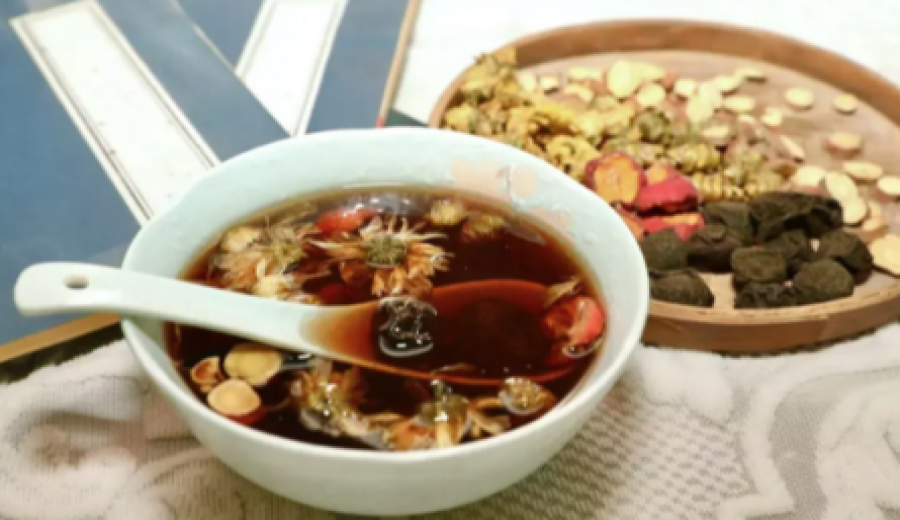
In fact, what is called TCM beverage, in traditional Chinese medicine concepts, is also known as "substituting tea with medicine." It is usually a combination of Chinese medicinal materials and tea leaves, or the grinding of medicinal materials into coarse or fine powder, which is then brewed by boiling or hot water infusion, with no fixed time for consumption. These beverages promote the concept of "food as medicine," integrating traditional tonic practices into modern drinks, allowing people to ingest herbal nutrients even in their daily hydration.
According to the regulations of the Food Safety Law of the People’s Republic of China, if Chinese medicinal materials are to be added to beverages, only ingredients that are explicitly classified as "food and medicine dual-use" in the Pharmacopoeia of the People’s Republic of China can be used—those that are "both food and Chinese medicinal materials," such as goji berries, red dates, and coix seeds, which are also readily available in regular supermarkets. However, the commonality of these ingredients does not mean they can be arbitrarily combined or that their efficacy can be freely claimed.
Nevertheless, according to market research, about 75.47% of consumers expressed interest in trying TCM beverages, showing a certain level of market acceptance. But at the same time, nearly half of the consumers are skeptical about their actual efficacy, with 47.94% of respondents worrying that "there is some toxicity in every medicine," believing that long-term consumption may bring unknown risks.
Professional physicians point out that even when using food-and-medicine dual-use TCM ingredients, businesses still need to fully understand the nature, flavor, function, compatibility taboos, and applicable constitutions of each material when developing beverages. For example, coix seeds and safflower are not suitable for pregnant women; and goji berries and certain tonic-class TCM ingredients may raise concerns about premature puberty in children. These are details that beverage brands must carefully evaluate when designing products.
Beyond controversies over formulas and efficacy, another major challenge for TCM beverages lies in "taste." Compared to common milk teas or fruit teas, most TCM ingredients themselves have a bitter or astringent flavor, and even with the addition of yellow rock sugar for seasoning, it is still hard to mask their distinctive herbal and medicinal taste. Many consumers say they tried it out of curiosity or following the trend, but ultimately, unable to accept its unique flavor, they returned to fruit teas or fresh milk teas.
After months of consecutive losses, Mr. Zhou eventually chose to close the store and look for new business opportunities. He stated that although this entrepreneurial venture did not meet expectations, he still sees potential in the future development of health-oriented beverage markets, though it requires more solid product R&D and market education. For entrepreneurs interested in entering the TCM beverage space, understanding real consumer needs, mastering compliant use of medicinal ingredients, and refining taste formulation are all key factors that determine success or failure.
The above content is compiled by CoffeeHunters, a coffee news website.


