








Introduction:A 13-year-old girl who drank a cup of bubble tea every day to stay alert ended up with severe tooth decay in 12 of her teeth, diagnosed as dental erosion. This article delves into how bubble tea erodes teeth, the early signs and long-term risks of dental erosion, and offers practical dental care tips to help coffee and bubble tea lovers enjoy their favorite drinks while effectively protecting their dental health.
Trendy phrases like "the first bubble tea of autumn" or "the first cup at the start of school" have led many young people to view bubble tea as a small daily joy—something that can chase away stress and boost energy with just one sip. However, if consumed excessively over a long period, this so-called “happy drink” may quietly damage your dental health.
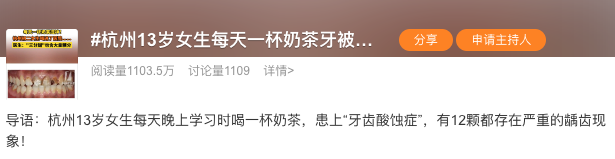
Recently, the story of a 13-year-old eighth-grade girl named Xiao Liu from Hangzhou has garnered widespread attention. Due to academic pressure, Xiao Liu developed the habit of drinking a cup of bubble tea every evening to stay alert. In just a short period, all 12 of her teeth suffered severe decay and were diagnosed with “dental erosion.” This not only affected her appearance but also posed a significant threat to her chewing function and overall oral health.
It is understood that Xiao Liu was usually tall and slender, and her parents originally thought drinking bubble tea would not cause obesity issues, so they didn’t interfere much with her nightly habit. Over time, however, changes began to appear in her teeth—their surfaces became uneven instead of smooth, and obvious yellow and black spots emerged. Alarmed, her parents took her to see a doctor, who found her teeth as fragile as plaster, with large white patches that easily flaked off. The situation was shocking.
After a detailed examination by dentists at the First People’s Hospital of Hangzhou, Xiao Liu was diagnosed with “dental erosion,” along with severe cavities in 12 of her teeth. The doctors explained that this condition is mainly caused by long-term consumption of acidic and high-sugar beverages, which damages the enamel—the outer layer of the teeth—leading to demineralization, eventual cavitation, and structural breakdown. Treatment involves multiple root canal procedures and dental crown restorations, a lengthy and complex process.
So-called “dental erosion,” also known as tooth erosion, refers to the wearing away of teeth due to exposure to acidic substances, resulting in the loss of minerals from the tooth’s surface. In the early stages, it often appears as chalky white spots on the teeth. If not addressed promptly, it can develop into brown or black cavities. Beyond the cosmetic changes, this condition can also lead to extreme sensitivity to hot, cold, sour, or sweet stimuli, difficulty chewing, and even serious consequences such as pulpitis, tooth fractures, and bite misalignment.
What’s puzzling is that Xiao Liu always opted for bubble tea with “one-third sugar,” believing it wasn’t too sweet—so why did it still cause such severe dental problems? Dentists explain that many people assume bubble tea is simply a mix of “milk” and “tea,” but in reality, commercial bubble tea often contains a large amount of hidden sugar. Even “one-third sugar” versions still contain considerable amounts of refined sugar. These sugars not only stimulate the brain to release dopamine for a sense of pleasure but also serve as the “optimal nourishment” for oral bacteria. The bacteria metabolize the sugar to produce acids that gradually erode the teeth.
In addition, the timing and manner of drinking bubble tea are also key factors. Doctors emphasize that, like Xiao Liu, sipping bubble tea slowly over long periods while studying doesn’t just expose the mouth to sugar and acid for extended durations—it also delays tooth brushing, thereby worsening the demineralization and erosion process. At first, it might just show as white spots or softening on the tooth surface, but without timely intervention, it can quickly progress to noticeable erosion and cavities.
For those who regularly consume bubble tea or other acidic drinks, dentists offer the following practical dental care advice: First, moderately control the frequency of consuming acidic and high-sugar drinks such as bubble tea, lemon juice, and carbonated beverages, and avoid making them a daily necessity. Second, after drinking bubble tea, rinse your mouth immediately with water to help dilute the residual acids in the mouth and reduce immediate damage to your teeth. Most importantly, wait at least 30 minutes before brushing your teeth properly with fluoride toothpaste. This not only minimizes damage from the brush to already weakened tooth surfaces but also promotes enamel remineralization, enhancing your teeth’s defense capabilities.
If you’re already experiencing tooth sensitivity, cavities, pulpitis, or even noticeable loss of tooth structure, it is advisable to consult a professional dentist as soon as possible to receive appropriate treatment and restoration, preventing the issue from worsening and affecting daily eating and quality of life.
The above content is compiled by CoffeeHunters, a coffee news website.


