







Introduction:Many coffee enthusiasts hold mixed opinions about American drip coffee makers—some praise their simplicity and affordability, while others find the flavor too bland to justify the investment. This article will delve into the historical background, working principles, and actual performance of drip coffee makers, offer recommended coffee beans tailored to different taste preferences, compare them with other brewing methods such as pour over, and help you make a more informed choice.
Among the many home coffee appliances, the American drip coffee maker has always received polarized reviews. Some users appreciate its intuitive operation and quick brewing, making it ideal for daily use; however, many criticize the resulting coffee as lacking in body and not offering good value for money. So, is this type of machine worth buying? We’ll explore its historical origins, technical principles, price positioning, usage scenarios, and compare it with other manual or semi-automatic coffee appliances, while also providing practical coffee bean pairing suggestions to help you evaluate whether it’s suitable for home use.
Many customers who purchase specialty coffee beans also often ask: are there any home coffee machines that are not complicated to operate and reasonably priced? In response to such questions, we usually recommend considering an American drip coffee maker. Although opinions on these machines vary in the home market, they indeed have a wide user base and certain practical value.
The history of drip coffee makers can be traced back to the period after World War II. At that time, the European market had gradually popularized espresso machines with pressurized functions, but many American soldiers found it hard to adapt to the intense flavor of espresso. As a result, they diluted a small amount of espresso with hot water to create a lighter-tasting beverage. This practice was initially looked down upon by Italians, who considered it an "American" way of doing things, and thus the term "Americano coffee" was born with a touch of irony.
By 1965, Philips launched the world’s first drip-style coffee machine, greatly improving the convenience of home brewing. Subsequently, these machines came to be known as drip coffee, brewed coffee, or filter coffee, gradually becoming a common sight on the breakfast tables of many households. Drip coffee makers are known for being simple, stable, and easy to operate, and to this day remain the top choice for many coffee beginners.
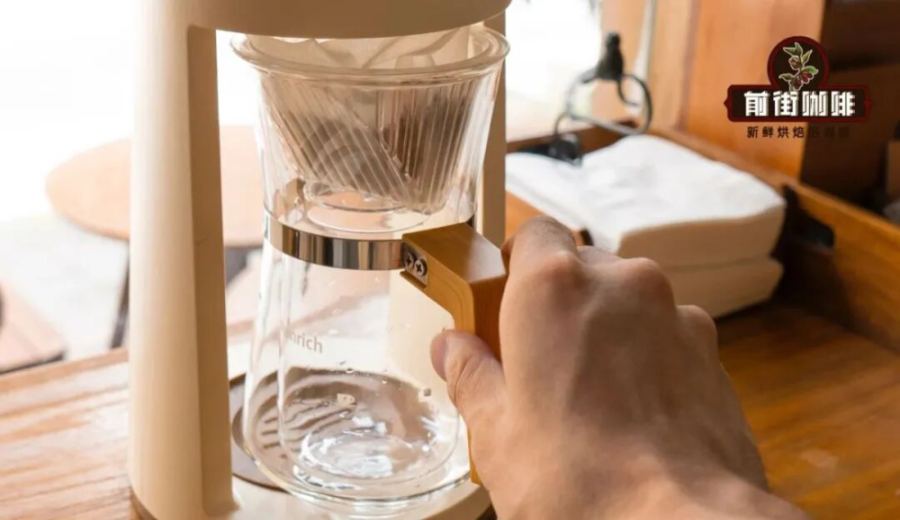
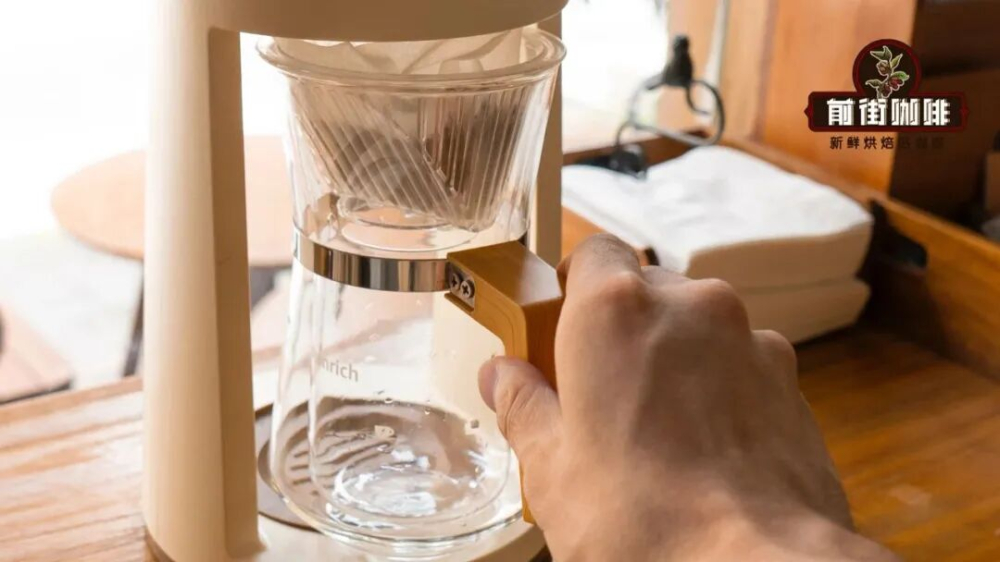
Currently, coffee machines on the market can be roughly divided into two main categories: one is the espresso machine capable of extracting espresso, commonly seen in cafés and chain brands; the other is the American coffee machine that uses drip extraction. The drip coffee machine (Drip Coffee Maker) works by evenly dripping hot water through a layer of coffee grounds, similar to pour over but more automated, which is why it is occasionally dubbed a "fake pour over." Its principle is to let hot water slowly seep through the coffee grounds, extracting flavor compounds, which are then filtered through a filter into the pot below.
The operation threshold for this type of machine is extremely low—most require only adding coffee grounds (or directly using the built-in grinder to put in whole beans), adding water, and pressing a button for the machine to automatically complete the brewing process. The entire process usually takes just a few minutes, making it highly suitable for users with fast-paced lives. Whether in offices, homes, or even some commercial spaces, it can be commonly found. If you prefer coffee with prominent floral notes and lower bitterness, you might try beans like Strawberry Candy, Hanayama, or Gran Reserva Geisha; if you want a more balanced flavor that is neither too acidic nor too bitter, PNG Paradise Bird or 2013 Yunnan Typica are good choices; for those more sensitive to acidity, PWN Golden Mandheling is recommended as a priority.
From a pricing perspective, basic models of drip coffee makers typically range from two to three hundred to five hundred yuan, which is sufficient to meet most everyday needs. In comparison, an entry-level espresso machine can easily cost several thousand yuan, with high-end models exceeding one hundred thousand yuan. If your budget is within one thousand yuan, it’s advisable to prioritize drip-style machines and focus your budget on the machine’s functionality and the quality of the coffee beans. After all, with the same budget, many affordable espresso machines may only offer basic features, and the resulting espresso often fails to meet ideal standards.
Many office workers follow the principle of "pour over when free, drip when busy," opting for the more efficient drip coffee maker when time is limited. Although both pour over and drip fall under the category of drip extraction, pour over involves more steps and techniques, requiring greater time investment and focus. If you wish to enjoy a cup of decent-tasting coffee with just a few simple steps in a short time, the drip coffee maker is undoubtedly a more practical choice.
However, drip coffee makers also have clear limitations. Due to their relatively single-function design, most models offer almost no adjustability in parameters such as water temperature, flow rate, and brewing time, leading to results that are often mediocre, with flatter flavor profiles and less aromatic richness compared to pour over. If using pre-ground coffee, the flavor performance is likely to be even more compromised. Additionally, some models have fixed brew basket capacities, meaning each brew must produce a full pot of coffee, which can lead to waste or machine idleness for individuals or small households. If your coffee consumption is low, hanging filters or single-serve capsule machines may be more flexible alternatives.
The above content is compiled by CoffeeHunters, a coffee news website.


