







Introduction:Yellow Bourbon coffee is renowned for its striking yellow fruit and distinctive sweet flavor profile, and is a prized variety originating from Red Bourbon. This article delves into the genetic origins, cultivation challenges, and cupping characteristics of Yellow Bourbon, while comparing it with Red Bourbon to help you understand the flavor profile and cultivation details of this popular high-end Brazilian coffee bean — from variety evolution to roasting applications, all in one go.
Among the many coffee varieties in Brazil, Yellow Bourbon stands out with its bright yellow fruit and captivating sweet flavor, capturing the attention of specialty coffee enthusiasts. Not only does its appearance contrast with the more common red Bourbon, but its flavor profile also showcases rich citrus acidity, nutty, and chocolatey notes, making it highly favored by roasters and consumers alike. How did this yellow variant from Brazil come into being, and how does it differ from or resemble the traditional Red Bourbon? Let’s start with its historical origins.
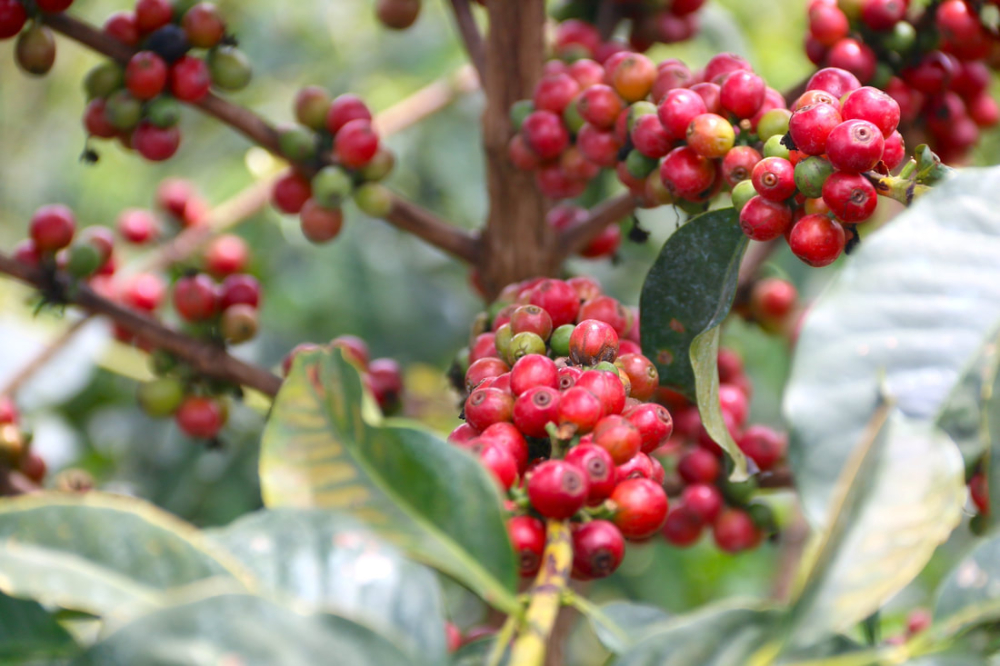
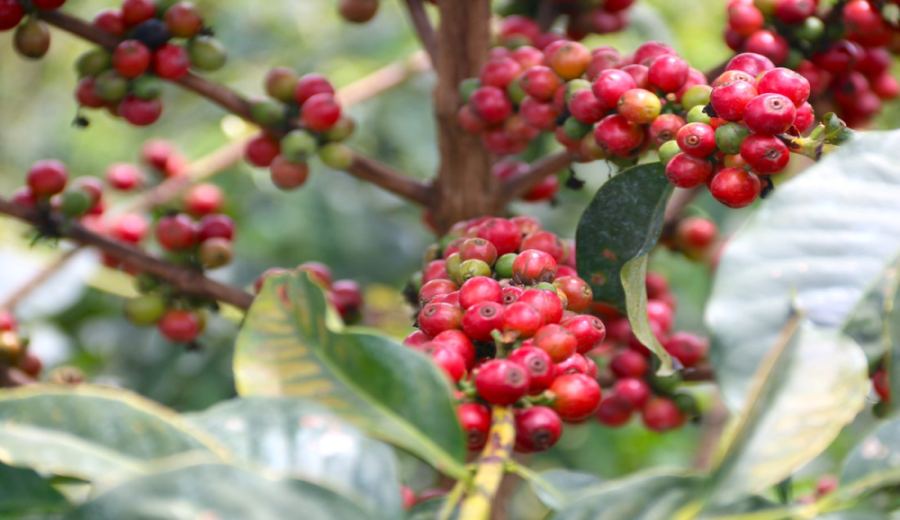
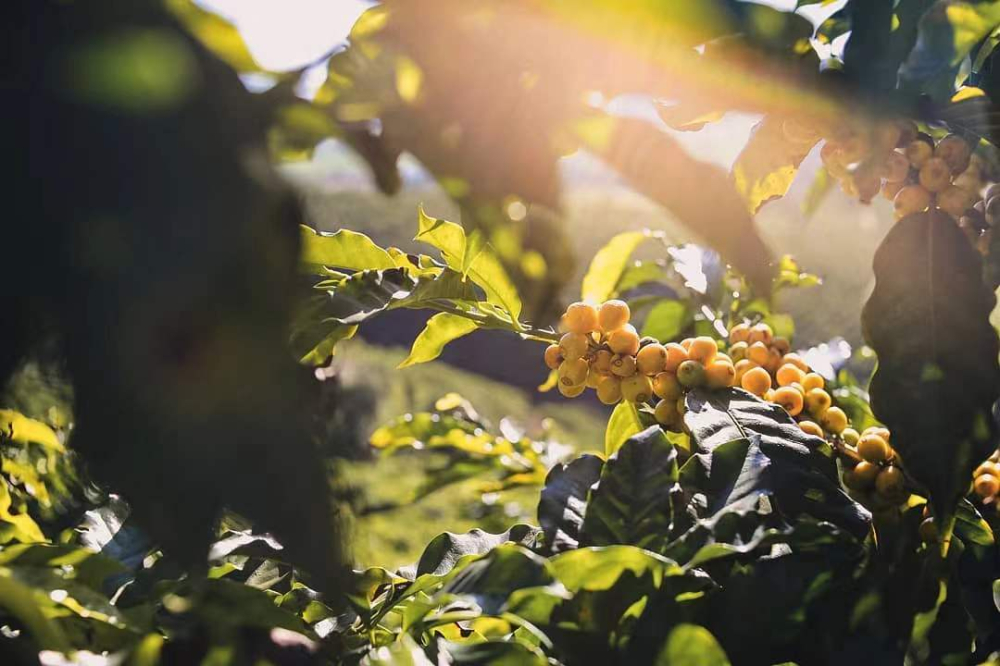
Generally speaking, most coffee varieties turn red when ripe, yet Yellow Bourbon distinguishes itself with its rare yellow fruit — especially precious in a production-oriented region like Brazil. In fact, Yellow Bourbon has been cultivated for nearly ninety years, but it wasn’t until the recent rise of the specialty coffee trend that its true value began to shine. All of this stems from its genetic background and the process of natural mutation.
To understand the origins of Yellow Bourbon, we must go back to Brazil’s coffee industry in the 1850s. At the time, Brazil was the world’s largest coffee producer, with Typica as the dominant variety. However, due to Typica’s relatively low yield per unit area, its export competitiveness was gradually affected. In the 1870s, a Brazilian introduced the Red Bourbon variety from Réunion Island, and this variety quickly spread across Brazil, becoming the primary choice for most coffee farms.
By the 1930s, on a farm in the Pederneiras region of São Paulo State that was growing Red Bourbon, a mutant plant with yellow fruit unexpectedly appeared. Many researchers speculate that this was likely the precursor to today’s Yellow Bourbon, resulting from natural crossbreeding between Red Bourbon and another unique variant at the time known as ‘Yellow Botucatu’. This mutation not only looked different, but subsequent studies also revealed greater yield potential.
In 1942, Carlos Arnaldo Krug, a researcher at the Campinas Agronomic Institute (IAC) in Brazil, conducted the first systematic study of this mutant variety and named it Yellow Bourbon. Based on observations over the next three years, Yellow Bourbon not only had yellow fruit, but its plant structure was very similar to Red Bourbon, although it performed even better in terms of yield. Furthermore, the variety demonstrated good adaptability to specific altitudes and climatic conditions.
The reason Yellow Bourbon’s fruit is yellow lies in a genetic factor called ‘Xanthocarpa’, derived from the Greek words ‘xanthus’ (yellow) and ‘carpus’ (fruit). This gene expression can be divided into three types: the dominant homozygote (XcXc) produces red fruit, the recessive homozygote (xcxc) produces yellow fruit, and the heterozygous state (Xcxc) occasionally yields orange fruit. The pigmentation in yellow fruit comes from luteolin, a type of flavonoid also found in plants like brazilian pepper and broccoli.
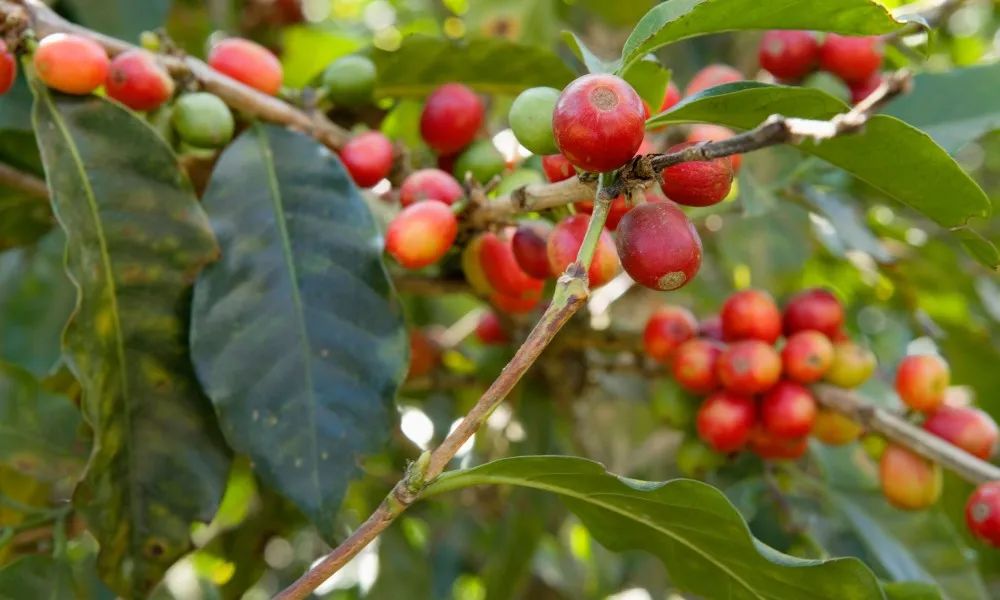
It’s worth noting that Yellow Bourbon trees can grow up to 2.8 meters tall, and they mature relatively quickly, but their cultivation difficulty should not be overlooked. Due to generally lower yields and weaker resistance to leaf rust, growing Yellow Bourbon requires more effort and management resources. Typically, this variety thrives at altitudes above 1,000 meters, and relies on meticulous harvesting and post-harvest processing procedures to fully express its potential flavors.
In terms of flavor, Yellow Bourbon is characterized by a prominent sweetness, bright acidity with citrus notes, and often accompanied by aromatic layers of ripe fruit, raisins, and nuts. Compared to Red Bourbon, its flavor profile is usually smoother and more layered, particularly under natural sun-drying processes, which further highlight its rich chocolate and caramel aftertaste. Research also indicates that the ratio of sugars, fats, and organic acids in Yellow Bourbon plays a key role in its final flavor expression.
Starting in 2005, IAC refocused on the cupping potential of Yellow Bourbon, re-evaluating 30 varieties studied in 1945 — among them, 16 scored over 85 points, and their lineage development has been continuously tracked. In 2017, a Brazilian Yellow Bourbon won an impressive 92.33 points in the Cup of Excellence competition with a natural (sun-dried) process, and was auctioned for $126 per pound, over a hundred times the futures price at the time, demonstrating its market potential and quality.
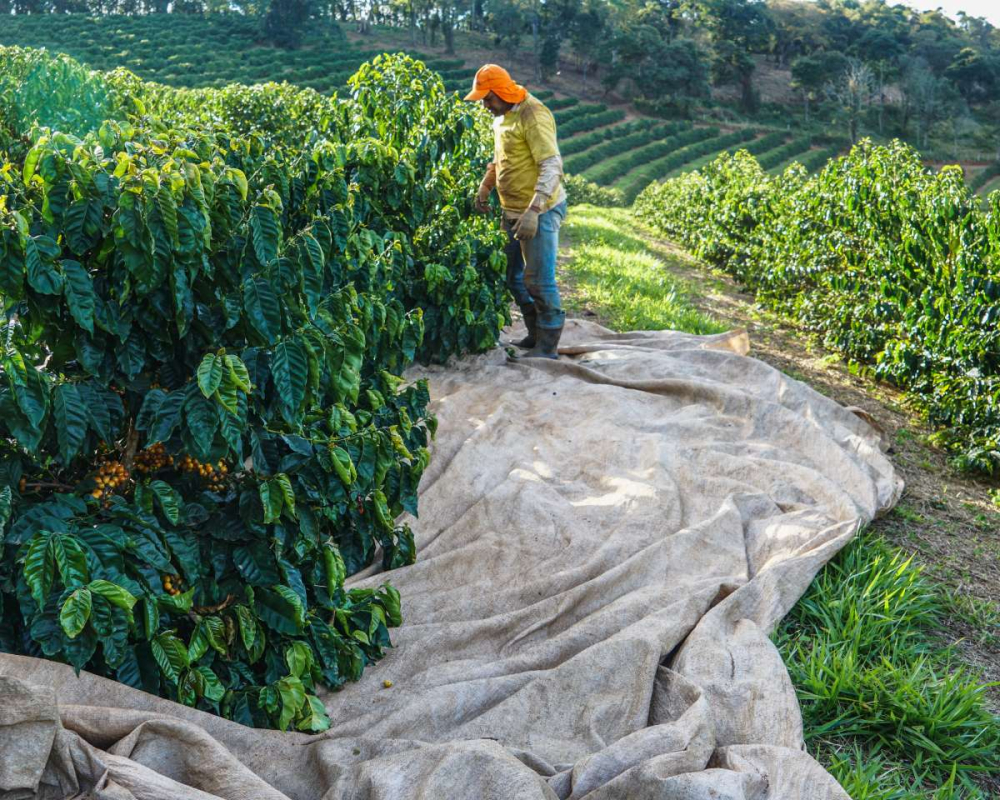
In actual production regions, Fazenda Rainha (Queen Estate) in the Mogiana region of São Paulo State is one of the well-known growers of Yellow Bourbon. The estate belongs to the Carvalho Dias family, who have long been dedicated to the refined production of specialty coffee. Unlike Brazil’s mainstream mechanized mass planting, Queen Estate covers only 280 acres, with 200 acres dedicated exclusively to Yellow Bourbon, and insists on hand-picking and small-batch, refined natural sun-drying processes, using African-style raised beds for careful turning and moisture control to ensure consistent quality of every coffee bean.
Having imported Yellow Bourbon from Queen Estate and conducted multiple roasting tests, the optimal roast was determined to extend two minutes of development time after the first crack. At this roast level, the coffee exhibits a distinct sweet base note, with a subtle background of lemon aroma, and mid-to-late tones revealing a rich dark chocolate character. The overall mouthfeel is round and well-layered, suiting those who prefer lower acidity. Whether brewed via pour over or drip filtration, the unique charm of Brazilian Yellow Bourbon can be fully appreciated.
In summary, Yellow Bourbon is not only a gem among Brazilian coffee varieties, but also an excellent case study for understanding coffee’s genetic evolution and flavor potential. From its origin as a natural mutation of Red Bourbon to its current standing in the specialty coffee market, the developmental journey of Yellow Bourbon is a perfect testament to the harmonious combination of coffee varietal diversity and regional terroir.
The above content is compiled by CoffeeHunters, a coffee news website.


