







Introduction:Mandheling and espresso may both appear as "black coffee" on the surface, but they actually belong to entirely different systems: one emphasizes regional flavor in single-origin beans, while the other focuses on extraction techniques in concentrated bases. This article delves into the fundamental differences between the two, guiding you through the unique characteristics of Sumatra Mandheling’s growing regions and its wet-hulling process. We’ll break down the science behind its bitterness, and provide professional-grade pour over parameters along with flavor profile insights, helping coffee enthusiasts grasp the core distinctions between single-origin and espresso-based coffees.
Many coffee beginners, upon their first taste, often mistake coffee for something burnt-tasting — akin to “dishwater from a scrubbed wok.” But in truth, the world of coffee is far more diverse than imagined. Among them, Mandheling and espresso represent two distinctly different categories: the former being a single-origin coffee that highlights the unique terroir of its origin, and the latter centered around espresso, extending into various specialty coffee drinks. This article will provide a detailed comparison of the differences between the two, decode the source of Mandheling’s bitterness, explore the characteristics of Sumatra’s growing regions and the influence of the wet-hulling process, while also sharing the flavor profiles and optimal brewing recommendations for two classic Mandheling beans, making it clearer what fundamentally sets single-origin coffee apart from espresso.
Many newcomers to coffee often form their first impression of it as something bitter and astringent — like “ash at the bottom of a pot.” But the truth is far more nuanced. Below, we’ll focus on the essential differences between Mandheling coffee and espresso.
Mandheling is part of the single-origin coffee family, ranking alongside renowned origins such as Blue Mountain. Its charm lies in its direct yet layered flavors. So-called single-origin coffee refers to beans sourced from a single origin and a single variety, usually without added sugar or milk, aiming to showcase the most authentic and original flavor characteristics of that particular batch. Mandheling is known for its rich, full-bodied mouthfeel. Beyond its intense aroma, it offers a balanced combination of bitterness, body, and sweetness, with acidity that tends to be soft and pleasant. Such coffee is typically roasted to medium-dark or dark levels, which not only brings out deeper aromas, but also uses bitterness to highlight the sweetness in the aftertaste — one of the reasons Mandheling is so well-loved.
However, to enhance the thick, robust texture unique to Mandheling, roasters often opt for a medium-dark or darker roast level. It's important to understand that the three primary flavor components in coffee beans — acidity, sweetness, and bitterness — vary in prominence depending on the roast degree: acidity typically peaks during mid-roast and then gradually declines; bitterness, on the other hand, accumulates continuously with increased roast time and temperature. Therefore, to achieve Mandheling’s signature richness and stable flavor profile, a medium-dark roast becomes the preferred choice, and bitterness will naturally emerge — but this is a "benign bitterness" that balances harmoniously with other flavors.
Espresso, on the other hand, is built upon the foundation of the espresso shot — a brewing method that uses high pressure and near-boiling water to extract through an extremely fine layer of coffee grounds in a very short time. All milk- or water-based specialty drinks, such as lattes, cappuccinos, and macchiatos, are based on espresso. For this reason, the quality of the espresso directly determines the final drink’s performance. Due to the high-pressure extraction, the resulting coffee liquid is highly concentrated and the aromas are tightly packed. First-time tasters often first perceive pronounced acidity and bitterness, which is why many beginners frown upon their first sip of espresso. However, once moderately diluted with milk or water, the overall flavor layers unfold and become much more approachable.
Depending on the mixing ratio of espresso with other liquids, espresso-based coffee can be further divided into various forms such as Americano, latte, cappuccino, and Ristretto (short shot), each with its own unique concentration and mouthfeel characteristics.
The term Mandheling coffee generally refers to Arabica coffee grown in Sumatra, Indonesia. The main cultivation areas are concentrated in two regions: Lake Toba in northern Sumatra and Lake Tawar in the Aceh region. Among them, Lake Toba is the world’s largest volcanic lake, with an average altitude of about 900 meters and year-round foggy, humid conditions, providing an ideal environment for coffee trees. Particularly in the Lin Tong area at around 1300 meters above sea level, where it is cultivated by the Mandailing and Batak ethnic farmers, it serves as the main production site for Mandheling coffee; whereas the Lake Tawar region is mostly cultivated by the Gayo people.
Interestingly, the name “Mandheling” actually originated from a linguistic misunderstanding, but this happy accident led to its great success in the Japanese market, eventually making it a globally recognized coffee variety. With its rich aroma and full-bodied taste, Mandheling has long been favored by Japanese coffee culture, indirectly boosting its international fame.
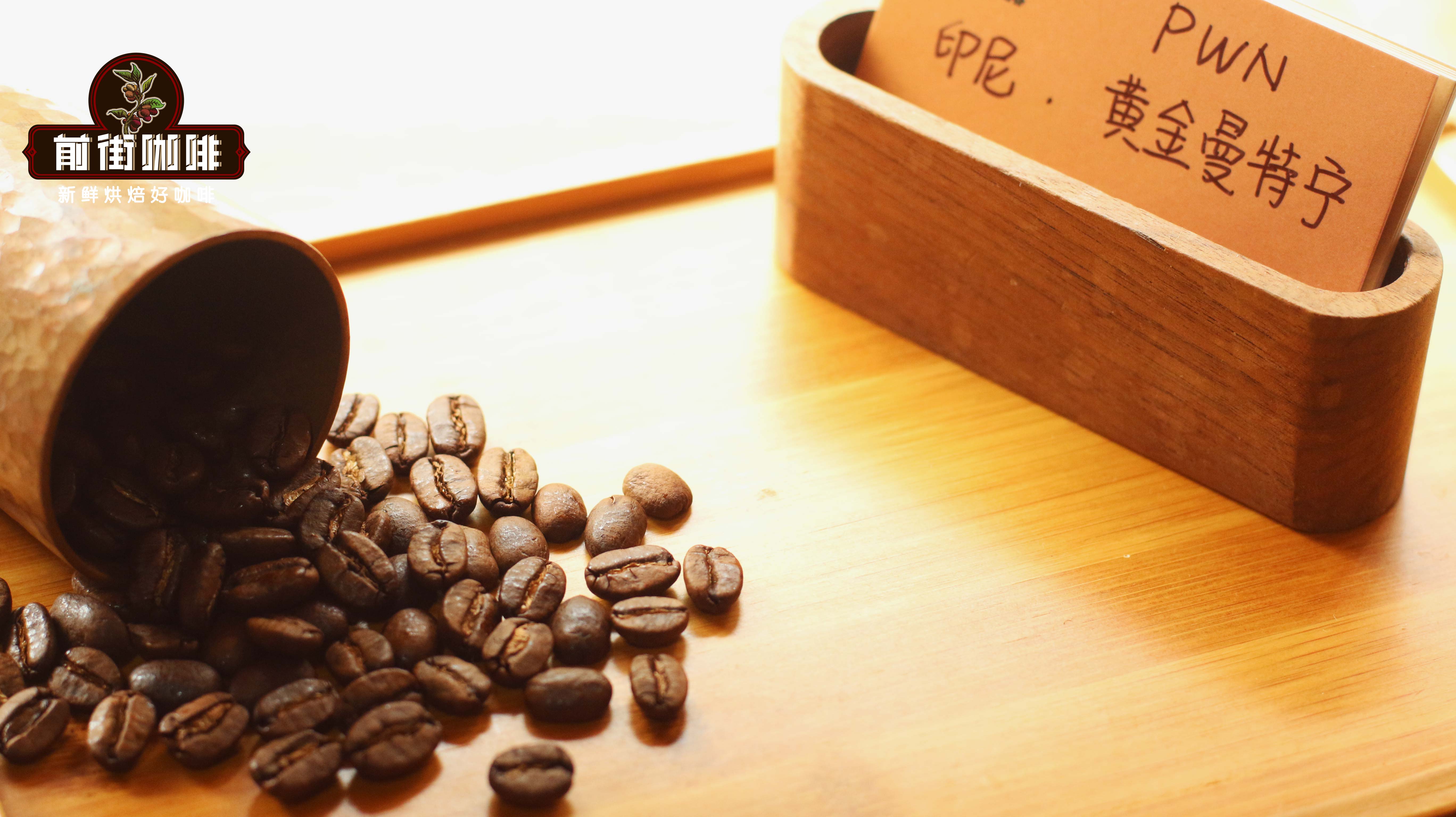
Currently, the most commonly seen Mandheling beans on the market include two representative products: an entry-level Lin Dong Mandheling, and a premium Golden Mandheling. Both types use Sumatra’s unique wet-hulling process, which is characterized by removing the parchment layer before the husked beans are fully dried, exposing the green beans directly to air for subsequent drying. This method imparts a distinctive deep-toned character to the coffee beans, often accompanied by herbal and spicy notes.
Region: Sumatra, Indonesia
Altitude: 1100m—1600m
Grade: G1, triple hand-picked
Variety: Ateng
Processing Method: Wet-Hulled
Golden Mandheling is produced by Indonesia’s renowned exporter PWN, which enforces extremely strict production standards — only selecting G1 grade beans larger than 18 mesh, and subjecting them to triple manual sorting to ensure both appearance and internal quality meet high benchmarks. As a result, the market price of PWN Golden Mandheling is relatively high. Some merchants on the market may select beans of similar specifications from the G1 grade, or even imitate the triple-sorting process, making them look similar to Golden Mandheling on the outside. But in actual cupping, the superiority of true PWN-produced Golden Mandheling in terms of flavor purity can still be distinguished.
To preserve Mandheling’s bold character while also showcasing its flavor complexity, one brand (example) employs a medium-dark roast and has designed a set of professional pour over parameters. It’s worth noting that as the roast level deepens, bitterness naturally increases — but if controlled properly, this bitterness often falls into the category of “quality bitterness,” meaning it is noticeable upon entry but dissipates quickly, bringing out the aroma and sweetness in the aftertaste. In contrast, poor-quality bitterness lingers unpleasantly on the tongue and in the throat. Most specialty coffees exhibit the former.
For actual brewing, it is recommended to use a KONO filter cone, with water temperature controlled at 88°C, and grind size benchmarked at 70% passing rate through a Chinese standard No. 20 sieve — falling within a medium-coarse to medium range. The specific steps are as follows: start with a 30g bloom using hot water for about 30 seconds; then slowly circle-pour from the center outward until reaching 125g; once the water level drops to just about to expose the coffee bed, continue circling-pouring until reaching 225g, with total extraction time kept around 2 minutes.

Mandheling coffee brewed with the above parameters delivers an entrance marked by intense nutty and caramel aromas, accompanied by the deep bitterness and lingering finish of dark chocolate. The overall mouthfeel is rich and full-bodied. As the temperature slightly drops, herbal and spicy notes gradually emerge, with clear sweetness and a long-lasting aftertaste — making it an excellent choice for experiencing the flavor layers of single-origin coffee.
The above content is compiled by CoffeeHunters, a coffee news website.


