







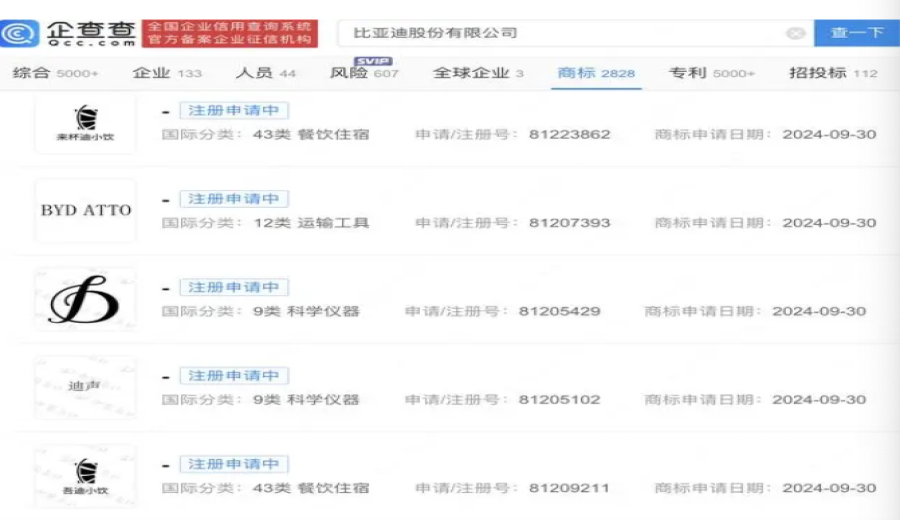
Introduction:BYD, a leading brand in new energy vehicles, is once again venturing into a new field. Recently, it applied for trademarks in the food and beverage category under the names "Wudi Xiaoyin" (Our BYD Little Drink) and "Lai Bei Di Xiao Yin" (Have a BYD Little Drink), sparking significant market interest in its cross-industry move into the coffee and casual dining sectors. From a themed restaurant in Singapore to domestic trademark reserves, BYD is gradually integrating coffee culture into its brand experience scenarios. This article analyzes the strategic motives behind BYD’s move and reviews its overseas market attempts, exploring how automakers can create new value through coffee.
In recent years, competition in the new energy vehicle market has intensified, with major brands seeking differentiated strategies, and coffee and casual dining have emerged as new carriers for brand experience. Leading new energy vehicle brand BYD recently submitted registration applications for two trademarks—"Wudi Xiaoyin" and "Lai Bei Di Xiao Yin"—to the China National Intellectual Property Administration, classified under the food and beverage and accommodation sector, and they are currently awaiting substantive examination. This trademark move is seen as an important signal of BYD’s efforts to further expand its brand boundaries and explore diverse service scenarios.
The two food and beverage trademarks applied for by BYD not only reflect the brand’s strategic intent to seek new growth curves but also reveal its market layout thinking aimed at combining "coffee + vehicle experience." Although specific operational plans have not yet been announced, the market generally expects that in the future, within BYD showrooms or service centers, customers may be able to enjoy a cup of "Di Xiaoyin" (BYD Little Drink) while waiting for vehicle maintenance or test drives, thus enjoying a more complete brand experience.
In fact, this is not BYD’s first foray into the dining and coffee sectors. As early as June 2023, BYD launched two themed restaurants in Singapore named "BYD by 1826," blending car displays with dining spaces to create a novel brand interaction model. Later that same year, August, the brand further established "BYD SUNTEC" in Singapore, which combines showroom and coffee functions, and has since successively added three more brand restaurants, gradually building a diverse service presence in overseas markets.
These restaurant spaces in Singapore are rich in BYD brand elements. Not only are the menus cleverly integrated with introductions to the brand’s car models, but the dining areas also display various vehicle models and brand merchandise, allowing customers to experience the appeal of BYD products up close while enjoying their meals. An industry observer noted: "Such spaces allow men to focus on admiring the cars while women can leisurely enjoy desserts and coffee, satisfying both parties’ needs simultaneously, effectively extending customer dwell time and enhancing brand loyalty."
Additionally, the planning of these restaurants is quite ingenious, with only about 25% of the space dedicated to food and beverage services, while the rest is used for vehicle displays. On-site, there are personnel to assist with test drives, and it is understood that even the restaurant staff have received basic training in brand and vehicle knowledge so they can provide preliminary answers when customers ask questions, creating a cross-departmental collaborative brand service experience.
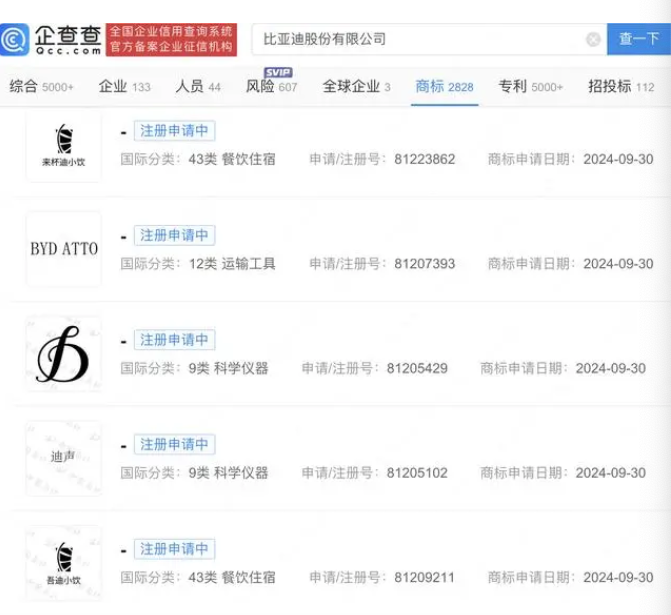
Although BYD has not yet announced how these new trademarks will be utilized, industry analysts generally believe this is an important attempt by the company to find new highlights in its brand value chain and enhance the user experience. In the future, when customers enter BYD stores, in addition to viewing cars and getting maintenance, they may also enjoy a branded co-branded coffee, further deepening the emotional connection between the brand and its customers.
As a key player in the global new energy vehicle market, BYD was founded in February 1995, with registered capital of approximately 2.911 billion RMB. Its major shareholders include HKSCC NOMINEES LIMITED, founder Wang Chuanfu, Lü Xiangyang, and Rongjie Investment Holding Group Co., Ltd., among others, with Wang Chuanfu also serving as the company’s chairman, executive director, and president. This trademark strategy once again demonstrates that BYD is not only focused on vehicle R&D and manufacturing but is also actively expanding its brand ecosystem, exploring more diverse consumer scenarios and business possibilities.
The above content is compiled by CoffeeHunters, a coffee news website.


