







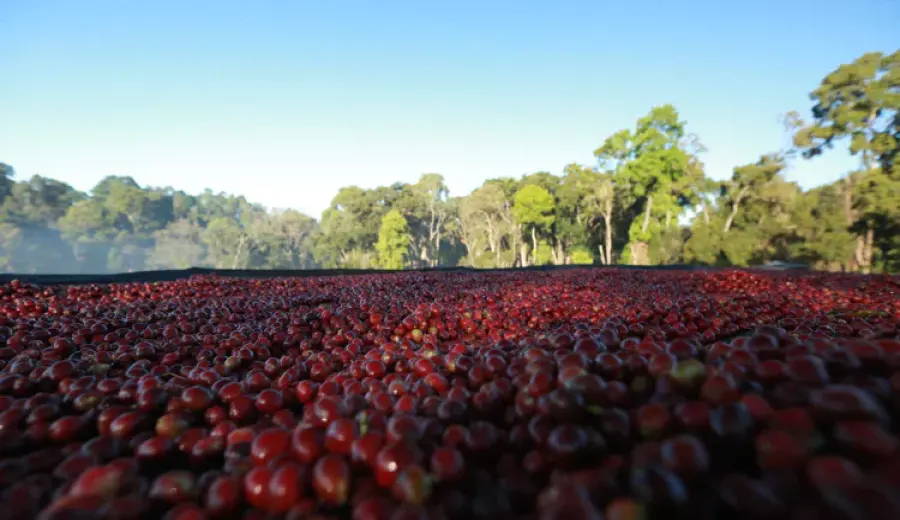
Introduction:This article delves into the sun-dried coffee beans from Banko Gotiti in the Gedeb region of Ethiopia — Gu Ding Ding — offering a detailed exploration of its growing region, bean variety characteristics, processing methods, and refined flavor profile. It also provides practical V60 pour over parameters and steps to help coffee enthusiasts master the brewing techniques for Yirgacheffe sun-dried beans, thereby elevating their home brewing experience.
Yirgacheffe, as one of Ethiopia’s most iconic specialty coffee regions, is renowned for its washed beans, celebrated for their delicate floral notes and citrusy tones. However, the "Gu Ding Ding" coffee beans introduced in this article come from the Banko Gotiti village in the Gedeb area of the same region and are processed using the natural (sun-dried) method. This imparts a distinctly different flavor profile — intense rose floral aromas, sweet strawberries, tropical pineapple, and a hint of blackberry tartness, showcasing the layered complexity and vibrant fruit explosion characteristic of sun-dried beans.
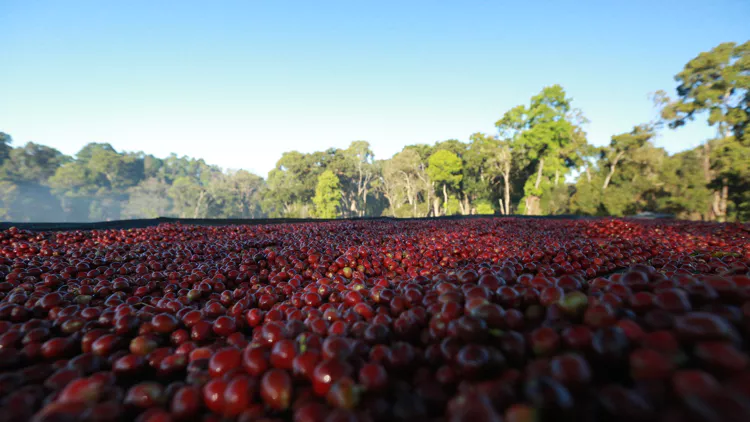
These coffee beans come from the processing facility under METED Agricultural Development PLC, cultivated at altitudes ranging between 1,600 and 2,300 meters — a typical high-altitude environment that allows the coffee cherries to ripen slowly, accumulating richer sugars and flavor compounds. In terms of variety, like the vast majority of Ethiopian coffees, it uses local landrace varieties (Heirloom), a collective term encompassing numerous ancient cultivars. Due to the wide variety and complex classification, the government typically does not disclose specific details to protect genetic resources, referring to them generally as Heirloom.
In Ethiopia, the coffee grading system is primarily established by the ECX (Ethiopian Commodity Exchange). Based on the defect rate of green beans, both washed and sun-dried beans are divided into two main grades: G1 and G2. For G1, the allowable number of defective beans is no more than 3 per 300 grams, while for G2, it ranges from 4 to 12. Additionally, the ECX further grades beans based on cupping results. Freshly harvested beans initially receive a preliminary score; those rated G1 to G3 are then further classified into Q1, Q2, and other specialty grades according to SCA standards, ensuring export quality.
This batch of Gu Ding Ding coffee beans is processed by the facility operated by METAD, a long-established family business whose origins date back to the Second World War, when the Emperor of Ethiopia granted land in the Guji and Sidama regions to the first female pilot, Muuemebet Emiru, and her mother. It is now led by Aman Adinew, who has held management positions in several multinational corporations. Upon returning to Ethiopia, he has been committed to improving his hometown's economy through agricultural development — not only creating employment and education opportunities but also facilitating the introduction of medical resources to remote areas. He also launched the “Outgrower” program, providing technical support and equipment sharing to benefit over 5,000 local farmers.
METAD is also the first company in Africa to partner with Ethiopia’s “Healthy Land” initiative to provide cervical cancer screening for women in coffee-growing regions. It also houses an SCAA-certified private coffee quality control laboratory, one of the few on the continent with international-standard quality testing and technical training capabilities. These credentials undoubtedly attest to the consistent quality of Gu Ding Ding coffee.
Regarding brewing, it is recommended to use a V60 dripper, with about 15 grams of coffee grounds, paired with 91°C hot water, using a 1:15 coffee-to-water ratio (i.e., a total of 225 grams of water). The grind size should be set to medium-fine, preferably using a #20 sieve with an 80% extraction rate, balancing water flow penetration and extraction efficiency.
The specific pour over steps are as follows: First, pour 30 grams of hot water for a 30-second bloom to activate the release of aromatic compounds from the coffee grounds. Then, pour water in small circles until the total water volume reaches 125 grams for the first pour. Wait for the water level to slightly drop and approach the point where the coffee bed is just visible before continuing to pour until you reach a total of 225 grams to complete the extraction. The entire process takes approximately 2 minutes, which fully highlights the bright acidity and fruity layers of Gu Ding Ding coffee — ideal for coffee lovers who enjoy pronounced fruit notes and vibrant flavors.
In summary, this sun-dried Gu Ding Ding coffee from Banko Gotiti in Ethiopia’s Gedeb region showcases a rich flavor spectrum ranging from rose, strawberry, and pineapple to blackberry, reflecting the unique charm of the Yirgacheffe region under high-altitude cultivation and sun-dried processing. By understanding the story of the region, the details of the processing, and pairing it with precise V60 pour over parameters, you too can brew professional-grade Ethiopian sun-dried specialty coffee at home with ease.
The above content is compiled by CoffeeHunters, a coffee news website.


