







Introduction:Kenyan coffee is renowned worldwide for its bright acidity and clean flavor profile. What exactly creates such a distinctive flavor wheel? This article delves into the advantages of high-altitude volcanic soil cultivation, the rigorous grading system inherited from the colonial era that continues to this day, and introduces you to the microclimates of ten major producing regions such as Nyeri and Kirinyaga. It also includes an in-depth analysis of professional-grade washed processing techniques, as well as practical pour-over parameter recommendations — covering everything from beginner to advanced levels in one go.
When discussing Africa’s most iconic specialty coffees, Kenyan beans always rank at the top. Their astonishingly bright acidity, paired with a wine-like rich aftertaste, has made many coffee enthusiasts instantly hooked. What kind of environment and craftsmanship gives rise to such a uniquely distinctive flavor profile? Let’s start with the growing conditions and gradually unveil the mystery of Kenyan coffee.
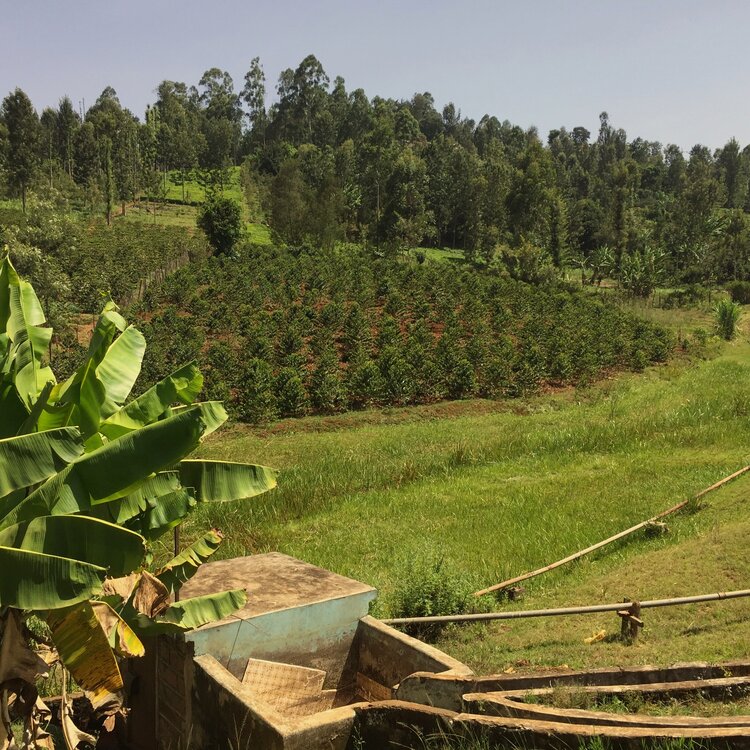
Kenya is located in the equatorial region of East Africa, traversed by the East African Rift Valley, with plateau terrain accounting for over seventy percent of the country’s area and an average altitude of 1,500 meters. Among them, Mount Kenya (also known as Mount Kirinyaga), the second highest peak in Africa, stands at 5,199 meters above sea level. The snow-capped summit brings abundant rainfall and significant diurnal temperature variations to the surrounding producing areas. This unique geographical environment extends the maturation period of coffee cherries, aiding the accumulation of flavor compounds, especially precursors to bright acids such as citric acid and malic acid.
Kenya’s coffee cultivation history dates back to the late 19th century. In 1893, missionaries introduced the Bourbon variety from Brazil, and subsequently, during the British colonial period (1895–1963), a complete production and sales system was established. The Coffee Board founded in the 1930s and the Marketing Board operating since 1947 laid the foundation for its strict quality control tradition. Even after the dissolution of the Marketing Board in 1971, local cooperatives continued to uphold high production standards.
The country’s main coffee-producing regions are concentrated in volcanic soil zones at altitudes of 1,600–2,100 meters, totaling ten core areas:Nyeri(Central Region, 1,200–2,300m),Murang’a(Central Province, 1,350–1,940m),Kirinyaga(east of Nyeri, 1,300–1,900m),Embu(around Mount Kenya, 1,300–1,900m),Meru(Nyambene Hills, 1,300–1,950m),Kiambu(Central Region, 1,500–2,200m),Machakos(Central Region, 1,400–1,850m),Nakuru(central high-altitude area, 1,850–2,200m),Kisii(southwestern region, 1,450–1,800m). Among these, Nyeri is dominated by cooperatives, while Kirinyaga is known for smallholder precision farming.
Kenya’s grading system is considered one of the most sophisticated in the world, primarily based on bean size, shape, and processing method:
• E Grade (Elephant Bean): Peaberry beans over 18 mesh, rare in production
• AA Grade: 17–18 mesh, the mainstay of top-tier commercial beans
• AB Grade: 15–16 mesh (a mix of Grade A at 6.8mm and Grade B at 6.3mm and above)
• PB Grade (Peaberry): Accounts for about 10% of total production, often with more concentrated flavors
• TT Grade: Lighter beans sorted from AA/AB via air classification
• C/T/HE: Followed by mid-to-low grades and defective beans
There are alsoUG(ungraded) and traditionalMBUNI natural beans(divided into MH heavy beans and L light beans). Exporters often additionally label unofficial grades such as TOP/PLUS/FAQ.
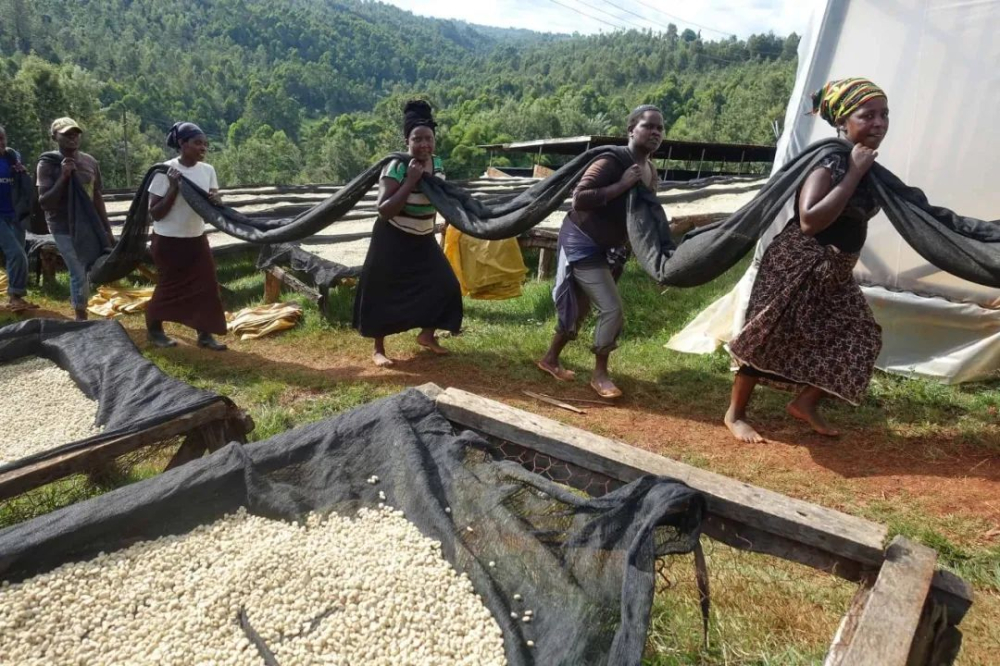
The key to Kenya’s washed processing method lies in its unique 72-hour long fermentation process. Parchment beans undergo initial processing in fermentation tanks for 30–48 hours, then are soaked in clean water for another 24 hours. This step enhances the clarity of acidity and the complexity of aroma. Compared to the common 36-hour fermentation in Central and South America, the longer duration gives Kenyan beans their signature black plum and berry tonality while maintaining a full body.
For actual tasting, it is recommended to choose beans processed by washing stations primarily featuringSL28 and SL34 varieties, such as Asali from the Thika region. Suggested pour-over parameters:
— Filter: Hario V60
— Dose: 15g
— Coffee-to-water ratio: 1:15
— Water temperature: 90°C
— Grind size: EK43s#10 (80% passing through a #20 sieve)
— Brew time: 30g bloom for 30 seconds → 125g first pour → 225g second pour, total brew time 2 minutes
These parameters highlight its layered flavor profile of black plum, cherry tomato, and pear, with a sweet aftertaste of brown sugar and plum.
The above content is compiled by CoffeeHunters, a coffee news website.


