







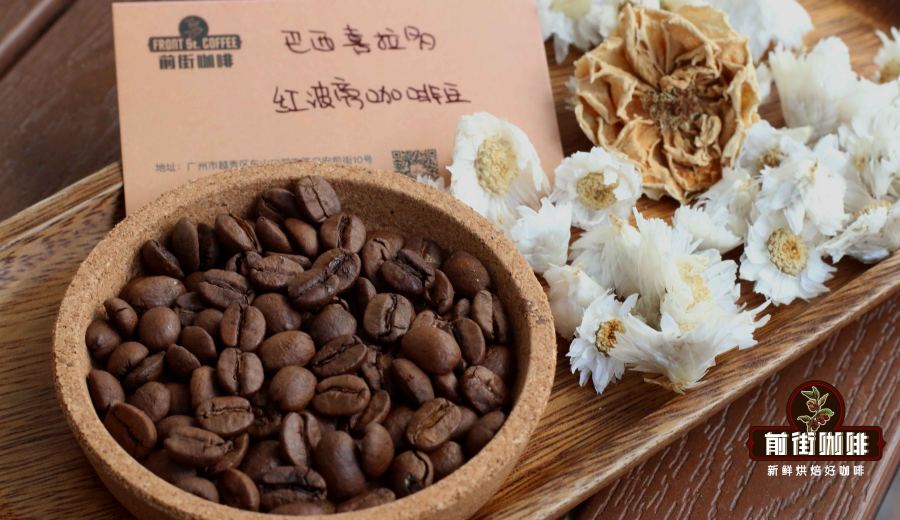
Introduction:Brazil is the world’s largest producer of Arabica coffee, renowned for its rich, full-bodied flavors with low acidity. This article delves into the evolution of Brazilian coffee cultivation, explores the flavor differences between Red Bourbon and Yellow Bourbon, and explains the region’s unique semi-washed processing method. It also provides practical brewing parameters to help coffee enthusiasts master the optimal extraction for these beans, experiencing their luscious, creamy-smooth texture paired with nutty and chocolatey notes.
As the country with the highest Arabica coffee output in the world, Brazilian coffee is beloved by global consumers for its rich, low-acid, and multi-layered flavor profile. Among the many producing regions and varieties, Red Bourbon and Yellow Bourbon are two highly representative types, while semi-washed processing—one of the common methods—imparts a bold yet refreshing character to these beans.
The rise of Brazilian coffee can be traced back to the early 18th century. It is said that in 1727, a Portuguese officer brought coffee seeds to Brazil. Initial trials had limited success until 1774, when the beans began to grow steadily in the warmer southern regions of the country. The early introduction of Typica, though adaptable to certain environments, suffered from genetic uniformity, making it susceptible to pests and diseases, with relatively low yields. By the 1860s, Round Bourbon was introduced from Bourbon Island and gradually replaced Typica, ushering in new development opportunities for Brazilian coffee.
Subsequently, coffee cultivation expanded from northern Brazil to the southeastern and southern regions, but frequent winter frosts remained a challenge. To avoid this issue, during the 1970s and 1980s, farmers gradually shifted to Minas Gerais (in the northern part of São Paulo State), Bahia, and parts of São Paulo. These areas have a warmer climate and no frost in winter, becoming key regions for high-quality Brazilian specialty coffee today.
In terms of variety, Brazil primarily grows Bourbon-type cultivars, including Red Bourbon, Yellow Bourbon, and Caturra. Among them, Red Bourbon produces red-colored ripe cherries, has broad leaves, and yields higher than Typica, though it still falls within the medium-low yield range for a two-year crop. In cupping, Red Bourbon often exhibits soft fermented fruit acidity, good sweetness, along with notes of nuts and caramel. Yellow Bourbon is a natural mutation of Red Bourbon that occurred in São Paulo State, Brazil, with orange-yellow ripe cherries and is found only in that region. The flavor profile of Yellow Bourbon is typically cleaner, with softer and more balanced acidity, brighter sweetness, and light, non-harsh bitterness. The overall drinking experience is refreshing, vibrant, and full of energy.
In processing, Brazil has developed a unique semi-washed method due to its dry climate. This technique skips the water fermentation and extensive rinsing steps, instead controlling the degree of sun exposure during the mucilage stage to regulate fermentation levels and flavor development. This method often results in coffee beans with intense flavors, low acidity, and a creamy, silky texture—key characteristics that define the unique profile of Brazilian coffee.
Below are detailed profiles of two representative Brazilian coffee beans:
Red Bourbon (Region: South Minas, Altitude: ~1000 meters) — Processed using the semi-washed method, it shows its best flavors of nuts, chocolate, cream, peanuts, and caramel when roasted to a medium to medium-dark level. For pour over brewing, a medium-coarse grind is recommended. Start with a 30ml bloom for 30 seconds, then pour in 100ml in a circular motion. Once the water level drops slightly, add another 95ml. Total brew time is around 2 minutes. This bean typically delivers notable sweetness and a full body, making it ideal for those who enjoy nutty and chocolatey profiles.
Yellow Bourbon (Region: Queen Farm, São Paulo State, Altitude: 1400–1950 meters) — May be processed using either semi-washed or natural methods, showcasing complex layers brought by high altitude. Common flavor notes include nuts, cream, peanuts, as well as sweet tones of fermented fruits and cane sugar. Its mouthfeel is bright and clean, with soft and balanced acidity, extremely mild bitterness, and a long-lasting finish that features rich chocolate and nut aromas. Brewing recommendations are similar: opt for a medium-dark roast with a medium-coarse grind. Water temperature and pouring rhythm can be adjusted according to personal taste preferences.
Additionally, a coffee bean from Brazil’s Cerrado region is also worth mentioning. It delivers an upfront sweetness upon entry, accompanied by subtle lemon aroma, followed by intense nuttiness, and finishes with a deep dark chocolate note. The overall mouthfeel is round and full-bodied, making it especially popular among fans of medium roasts.
In summary, Brazilian coffee holds a solid position in the global market thanks to its stable production, unique geographic environment, and highly adaptable varieties. The differences between Red Bourbon and Yellow Bourbon are not only reflected in appearance but also in the nuanced variations of their flavor profiles. The semi-washed processing method plays a crucial role in shaping its low acidity, full body, and silky texture. With appropriate roast levels and precise brewing techniques, the multi-layered flavor potential of these beans can be fully unlocked, offering great satisfaction for both everyday drinking and professional tasting.
The above content is compiled by CoffeeHunters, a coffee news website.


