








Introduction:The Sigri Estate in Papua New Guinea produces a premium Arabica coffee named after the country’s national bird, the "Bird of Paradise." It inherits the Typica lineage of Jamaican Blue Mountain and is grown in the Wahgi Valley at altitudes of 1500–1700 meters. This article delves into its triple-washed fermentation process, rigorous AA-grade green bean grading standards, and offers pour over parameters along with a flavor profile, helping you understand this Pacific micro-lot specialty bean that blends floral notes, bright fruit acidity, and a rich finish.
Amid the highland mists of Papua New Guinea grows a premium coffee named after the national bird — the Bird of Paradise (Sigri Estate). This Arabica bean from the Wahgi Valley in the Western Highlands inherits the superior Typica lineage of Jamaican Blue Mountain, developing unique flavors in the cool environment at elevations of 1500 to 1700 meters.Since the 1950s, Sigri Estate has adhered to stringent standards such as hand-picking only red cherries, daily cupping, and a zero-pesticide policy.These practices have resulted in a Pacific micro-lot masterpiece that balances bright fruit acidity with a lingering sweetness.

Although Papua New Guinea is known as the “Emerald Isle,” its coffee industry is truly exceptional.Ninety percent of the country’s coffee is grown by smallholders.Among them, the Western Highlands is a key region for specialty beans. The Wahgi Valley, where Sigri Estate is located, shares similar altitude and temperature variation conditions with Costa Rica’s Tarrazú.The average annual temperature remains between 18–22°C.Coupled with abundant rainfall and volcanic soils, these conditions provide an ideal growing environment for the Typica variety.
Established in 1950, this estate primarily cultivates three Arabica varieties: Arusha, Bourbon, and Typica.The Typica lineage originates from Jamaica’s native coffee seedlings that were transplanted here.The plants are grown at elevations of 1300–1800 meters, creating delicate flavor characteristics reminiscent of Blue Mountain.The estate strictly follows three management principles: hand-picking only red cherries, daily cupping, and zero chemical inputs.It also preserves habitats for nearly 90 bird species, including Papua New Guinea’s national bird — the Bird of Paradise.
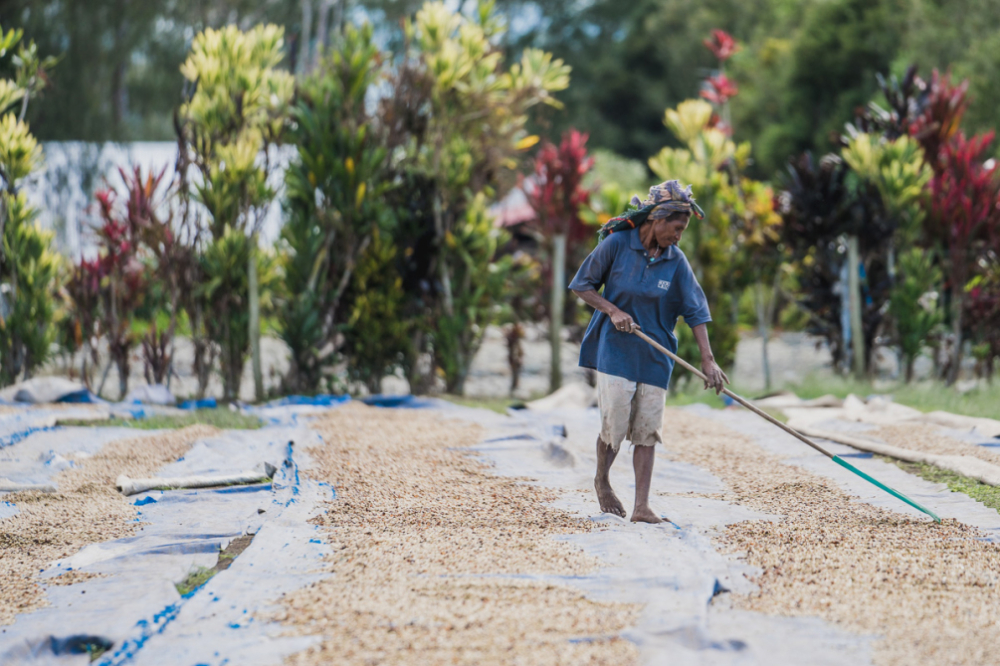
Regarding processing, Sigri employs a uniquetriple-washed fermentation system.Each soaking lasts 24 hours with fresh water changes, and through precise control of microbial activity, it imparts bright lemony acidity and clarity to the coffee.After fermentation, the beans are depulped and then undergo prolonged sun drying until the moisture content stabilizes at 11–12%.This process helps retain abundant sugars in the beans while minimizing the risk of over-fermentation. Compared to single-washed methods, triple fermentation effectively enhances fruit aroma purity and extends flavor longevity.
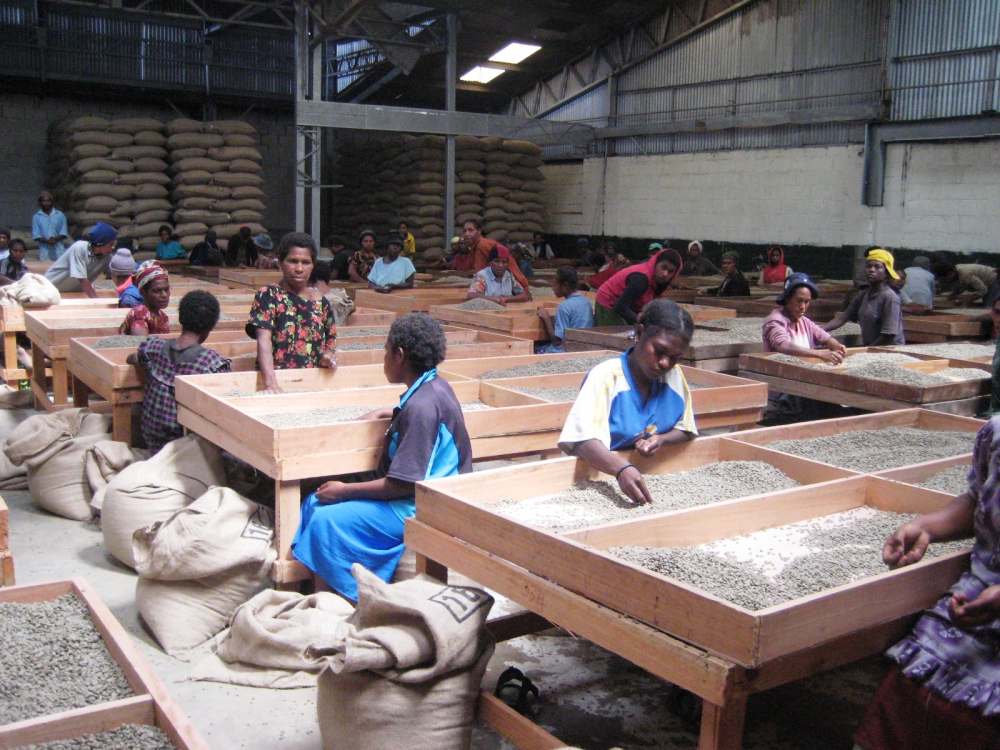
Papua New Guinea’s coffee grading system is truly distinctive.It uses a 12-grade defect scoring system.For specialty-grade AA beans, requirements include bean size larger than 18 mesh (approximately 8mm in diameter), no more than 10 defects per kilogram, and a distinctive bluish-greenish raw bean color.This batch of Sigri Estate AA beans meets these strict criteria.Packed in 60-kilogram jute sacks, their flavor profile showcases the classic traits of Blue Mountain-type Typica — a soft acidity akin to red wine vinegar, and a finish with honey-like sweetness and subtle spice notes.
In terms of roasting application,due to its lower density, the Typica variety is recommended for medium-light to medium roasts.Taking the Yangjia 800N roaster as an example, load 550 grams of green beans, set the initial temperature at 200°C, and control the drying phase through a three-stage heat adjustment (160°C → 115°C → steady 152°C). Once the bean surface turns uniformly yellow (around 5 minutes 35 seconds), monitor the first crack (initiating around 8 minutes 40 seconds) and drop the beans at 191.3°C. These parameters highlight origin characteristics such as lemongrass and white floral notes, while avoiding overly sharp acidity caused by over-extraction.
In terms of cupping performance, the medium-roasted Bird of Paradise beans exhibit a three-phase flavor progression:The dry aroma carries a complex note of nuts and pepper.The wet aroma transitions into sugarcane sweetness and toasted bread notes; upon tasting, there’s initially a bright citrus acidity, followed by a balanced sweetness of hazelnut and maple syrup.The finish lingers with spicy sweetness and a subtle tea-like sensation, creating a unique aftertaste.The overall mouthfeel is exceptionally clean, devoid of the herbal off-notes often found in Indonesian beans. It suits drinkers who enjoy the acidity of African beans but prefer the body and depth of Asian beans.
The above content is compiled by CoffeeHunters, a coffee news website.


