







Introduction:Kenyan coffee is renowned for its bright berry acidity and crisp, juice-like flavor, but what do the AA, AB, or PB grades commonly seen on coffee bags mean? This article explains in detail the grading systems used by both the Kenyan government and the industry, from traditional bean size classifications to secondary cupping-based evaluations, helping you understand the definitions, distinguishing criteria, and actual flavor profiles of each grade. It also includes practical brewing recommendations to help you choose and appreciate Kenyan specialty coffee more wisely.
Kenyan coffee holds a unique place in the global specialty coffee market thanks to its distinctive berry acidity, sugarcane-like sweetness, and rich juice-like mouthfeel. Consumers often see letter labels such as “AA,” “AB,” or “PB” on the packaging. What do these grades actually signify? This article provides a comprehensive breakdown of the Kenyan coffee grading logic — from the traditional system based on bean size, appearance, and density, to the secondary quality assessment criteria promoted by coffee research institutions. We delve into the specific definitions and classification standards for AA, AB, PB, C, E, TT, and T grades, while also explaining the origins and cupping score ranges of secondary grading terms like TOP, Plus (+), and FAQ. In addition, we offer practical extraction suggestions and typical flavor profiles to help coffee enthusiasts master the key points of evaluating Kenyan beans.
Kenyan coffee stands out primarily due to its pronounced yet pleasant high acidity, balanced sweetness, and nuanced mouthfeel. However, when selecting Kenyan coffee beans, it’s not uncommon to come across grade codes such as AA — for example, Kenya · Assaliya AA TOP from a well-known producing area. So, what kind of information do these grade labels actually convey?
First, “AA” is one of the highest grades in Kenya’s traditional grading system, representing the physical characteristics of the coffee beans rather than their flavor quality alone. Since coffee beans are agricultural products, they naturally vary in size, appearance, and density. Therefore, producing countries usually establish grading standards based on these quantifiable traits to facilitate commercial categorization and pricing. Kenya has maintained a well-established coffee auction system since 1934, where centralized bidding directly links coffee quality with price. Each year, beans collected by numerous smallholder farmers through cooperatives are transported to the central auction center in the capital, Nairobi. Before formal trading, these green beans undergo rigorous grading inspections.
Both domestic and export coffee in Kenya follow a unified official grading system, primarily based on bean size (measured in screen sizes), shape, color uniformity, and green bean density. Among these, bean size and overall quality are the core indicators, and based on them, coffee beans are categorized into multiple grades including AA, AB, PB, C, E, TT, and T — each with clear selection criteria.
AA Grade: This is the top grade in Kenya’s official grading system. The beans fall within screen sizes 17 to 18, exhibiting excellent density. AA is generally considered to offer the most outstanding and consistent flavor performance in the country, making it highly favored by international buyers.
AB Grade: With screen sizes between 16 and 17, AB beans are slightly smaller than AA but still maintain good overall quality and are more affordable. This grade accounts for the highest proportion of Kenyan coffee exports, making up about 40% of the total production.
PB Grade: Stands for Peaberry, or round beans. Normally, a coffee cherry contains two flat beans, but occasionally only one round seed develops — this is known as a PB. These beans make up only about 5% of Kenyan coffee and are classified not based on flavor or weight, but purely by their unique round shape.
C Grade: With screen sizes around 12 to 14, these beans are noticeably smaller and are generally not considered part of the specialty coffee category.
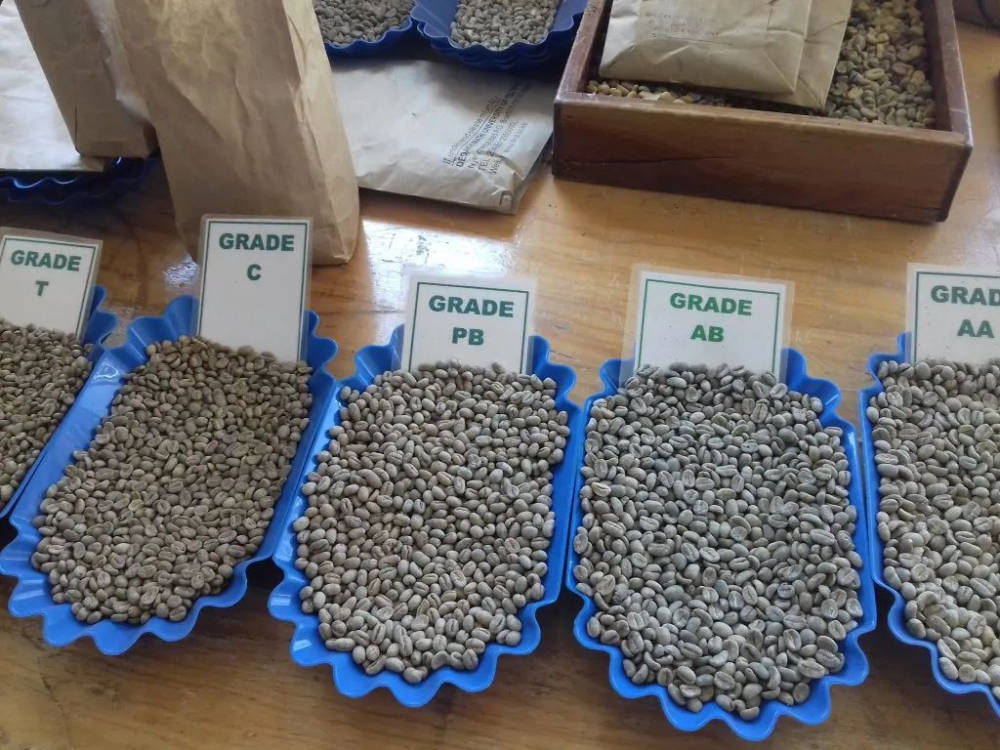
E Grade: Also known as Elephant Grade, this is a rare grade consisting of abnormally developed beans where two coffee beans in the fruit become intertwined, resulting in a large single bean with a screen size exceeding 21. Production is extremely limited.
TT Grade: These are lightweight beans that are removed via air classification from the E, AA, and AB grades. Their screen sizes generally range from 16 to 20, and although they retain a certain size, they are graded here due to insufficient density or weight.
T Grade: Composed of broken beans, visibly defective beans, and very small beans further sorted from the C grade. Their screen sizes are typically below 12.
MH/ML Grade: These are lower-quality beans, mostly processed using the natural (sun-dried) method, and are mainly supplied to the local Kenyan market, not for export.
From the above, it’s clear that Kenya’s traditional grading is primarily based on bean size and physical conditions, with AA being the highest grade. However, bean size is not the sole determinant of flavor performance. Factors such as growing altitude, microclimate, processing method, and variety are the decisive elements that influence the final flavor. Therefore, in addition to the official size-based grading, Kenyan coffee research institutions and international green coffee traders also employ an additional quality evaluation mechanism to perform a secondary grading of exported coffee.
This secondary grading system is called the “Kenyan Classification Procedure by Quality Assessment,” established by the Kenyan Coffee Research Institute. It primarily divides coffee into TOP, Plus (+), and FAQ grades based on cupping results. These are usually appended to the original size grades (such as AA, AB) as further references for flavor performance.
TOP Grade: Requires a cupping score of 86 or above, representing exceptional flavor performance and a high-scoring choice in the market.
Plus (+) Grade: Scores between 84 and 86, indicating good flavor performance with a solid standard.
FAQ Grade: Scores around 83 to 84, classified as a general commercial grade, yet still maintaining a certain quality foundation.
It’s important to note that this secondary grading is not a mandatory Kenyan government standard. As a result, most Kenyan coffee beans available on the market still use the traditional size-based grading (such as AA, AB) as the main identifier.
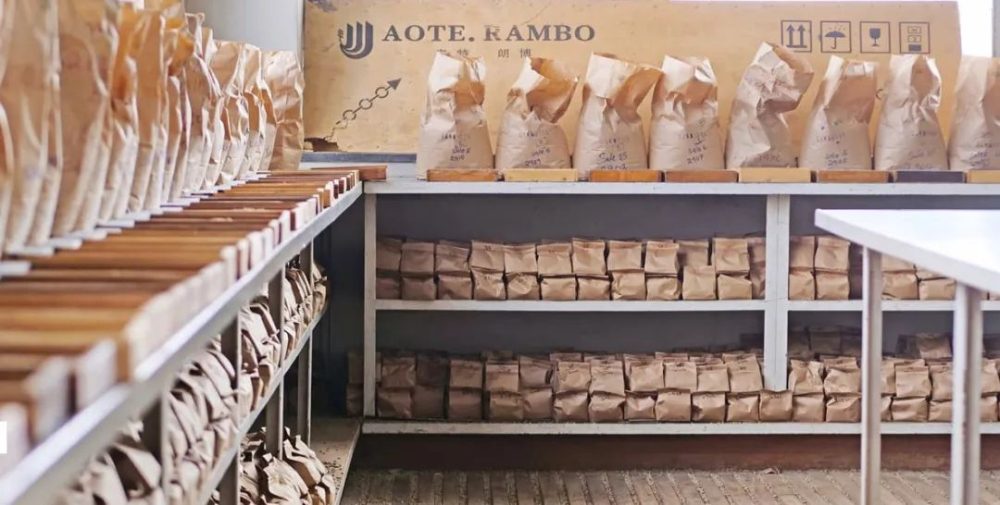
Currently, the Kenyan coffee industry generally adopts a comprehensive grading procedure established by the official research institutions. This procedure evaluates coffee from three main aspects: the appearance quality of green beans, the processing quality of roasted beans, and cupping performance. The specifics include:
・ Green Bean Quality: Assessment of the appearance size, color uniformity, and defect ratio of green beans.
・ Roasted Bean Quality: Evaluation of the central crack condition, overall roasted bean appearance, and the ratio of defective beans.
・ Cupping Quality: Quantitative scoring based on acidity, body, flavor complexity, and negative characteristics (such as off-flavors or over-fermentation).
Based on the combined scores of these three metrics, Kenyan coffee is further divided into grades 1 to 10, with grade 1 being the highest quality and grade 10 the lowest.
In summary, the main differences among the AA, AB, and PB grades lie in bean size. Generally speaking, beans with larger screen sizes tend to have lower defect rates and purer, clearer flavors, which is why they often command higher market prices. However, regardless of the grade, brewing parameter choices and processing methods can significantly affect the final extraction and flavor expression.
For commonly medium-to-light roasted Kenyan beans, it’s recommended to use a higher water temperature paired with a fast-flowing filter (such as a V60) to highlight their bright acidity and clear fruity notes, while avoiding the risk of over-extraction. In practice, you may refer to parameters such as a 1:15 coffee-to-water ratio, a water temperature of 91°C, and a grind size close to that of fine sugar (e.g., EK43s at setting 10, about 80% passing through a #20 sieve), and control the extraction rhythm through pulse pouring to fully showcase the layered vibrancy unique to Kenyan coffee.
The above content is compiled by CoffeeHunters, a coffee news website.


