








Introduction:As one of the few specialty coffee farms in Ethiopia to practice large-scale, single-variety cultivation with strict grading, Gesha Village’s Gold Label Gesha accounts for just 5% of its annual production but delivers an exceptional quality on par with auction lots. This article delves into Gesha Village’s four-tier grading system, highlighting the genetic background of Gold Label Gesha, the details of its natural processing, and providing professional roasting profiles and V60 pour over parameters—helping you understand how this high-altitude Gesha, grown at nearly 2,000 meters, exhibits layers of citrus, tea-like notes, and juicy complexity.
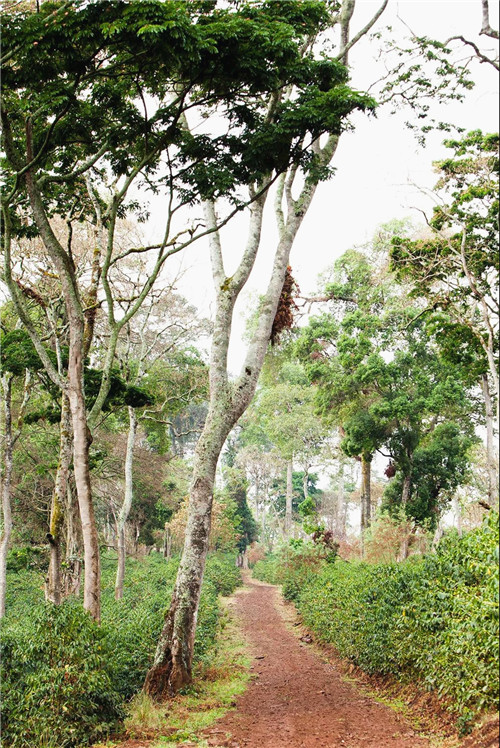
Deep in the Kaffa forest of southern Ethiopia, Gesha Village breaks from the local cooperative-dominated tradition with its unique business model. Spanning 500 hectares, this large-scale farm is one of the few in the world focused exclusively on cultivating the Gesha variety, and it has established a systematic grading system modeled after Panama’s Hacienda La Esmeralda. Among its offerings, the Gold Label batch—representing just 5% of annual output—not only matches the complexity of auction-grade coffees but has also become the top choice for international barista competition competitors and premium roasters.
The Grading Logic and Market Positioning of Gesha Village
Gesha Village currently offers five grades: Auction, Gold Label, Red Label, Green Label, and Chaka. The Auction grade accounts for only 3.7% of annual production and must be obtained through global auctions. Its cupping scores in 2018 ranged from 88.15 to 92.67, including two categories: Champion Selection and Estate Selection.Though comprising just 5% of production, the Gold Label batch is considered “near-auction grade.”It features full traceability and high flavor expression, frequently chosen by WBC competitors and other elite baristas—for example, the 2018 Dutch WBC champion used this grade in competition.
The Red Label batch retains the classic Gesha flavor profile, with slightly lower intensity than Gold Label but excellent value; the Green Label (SINGLE-TERROIR) emphasizes the uniqueness of individual farm plots, with each batch traceable to a specific farm, variety, and processing date. Chaka is a blend of three varieties (including Gori Gesha, Gesha 1931, and the disease-resistant Illubabor), ideal for consumers who prefer a balanced, blended profile.

Varietal and Processing Details of Gold Label Gesha
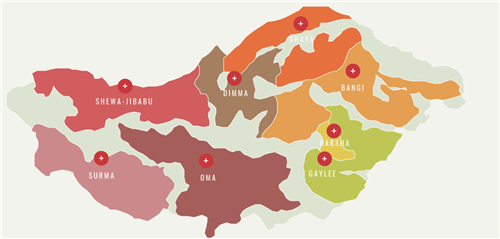
The sample analyzed here is the Gesha Village Omna 114 batch Gold Label, made using the Gesha 1931 variety and processed via 32-day natural drying. This variety was selected from diverse forest genetic resources, and its plant morphology, bean size, and cupping flavors closely resemble those of Panamanian Gesha.During the natural process, the coffee cherries first undergo floatation to remove impurities, then are placed on African-style raised beds in thin layers.Plastic sheeting is used to help regulate temperature. Throughout drying, insect-damaged or underripe beans are continuously sorted out. The total drying period lasts 18 to 30 days, resulting in pronounced sweetness and mild acidity, along with a complex fruity aroma.
Roasting and Pour Over Parameters in Practice
For this batch of Gold Label Gesha (Gesha 1931, grown at Baminka Jimma at 1,931–2,040 meters), a medium-light roast is recommended to preserve floral and fruity notes. In a practical roasting case, a Yangjia 800N machine was used with a charge weight of 300g. Initial drum temperature was 160°C, dropping to 142°C at the 1 minute 40 second turnaround point, after which the air vent was adjusted to 4 and the heat increased to 150. When the beans turned yellow (around 7 minutes 20 seconds), the heat was reduced to 120. At approximately 8 minutes 25 seconds, when ugly wrinkles and black spots appeared (indicating first crack), the air vent was set to 5 and development continued for 1 minute 45 seconds, with the batch dropped at 197.5°C.
For pour over, a V60 #01 filter cone is recommended, using 15g of coffee at a 1:15 ratio (225g total water). Grind size should be medium-fine (78% passing through a #20 sieve), with water temperature controlled at 91°C.Note that freshly roasted beans (ideally used within 5 days of roasting) benefit from a 4–7 day rest periodfor optimal flavor expression. In practice, start with a 30-second bloom using 30g of water, then pour in small circles to reach 125g. When the water level is about to expose the coffee bed, continue pouring to 225g. Total extraction time is around 1 minute 55 seconds. Stir well before enjoying.
In terms of flavor, this Gold Label Gesha showcases bright citrus notes, a smooth creamy body, distinct fermentation aromas, and a tea-like finish. It tastes as refreshing as juice with high clarity and perfectly expresses the refined complexity of high-altitude Gesha.
The above content is compiled by CoffeeHunters, a coffee news website.


