







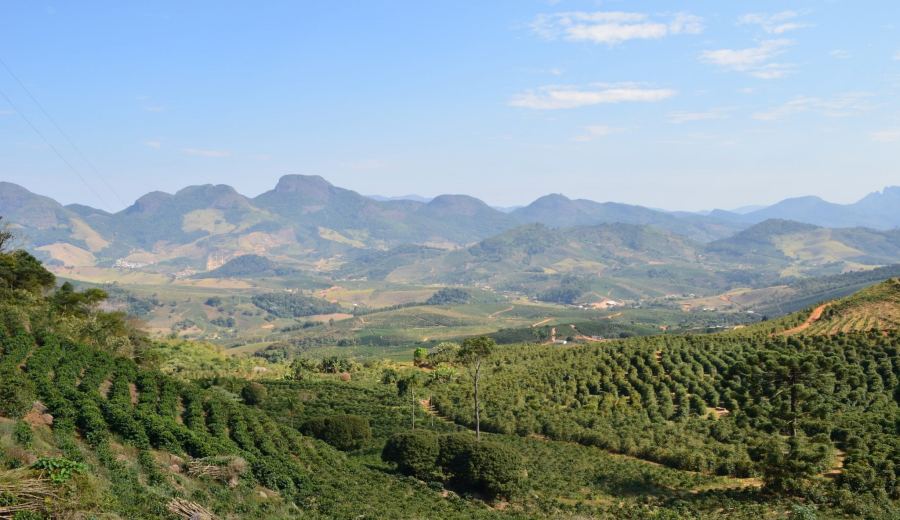
Introduction:As the world’s largest producer of Arabica coffee, Brazil is renowned for its beans’ consistently balanced flavors, making them especially suitable for those new to single-origin coffee. This article delves into the distinctive characteristics of Brazil’s coffee-growing regions, the distribution of coffee varieties, and the official grading standards. It also provides a detailed analysis of the flavor profiles and pour-over brewing recommendations for two popular single-origin beans, helping you fully appreciate the unique charm of Brazilian coffee from bean variety to brewing.
Brazil is not only the world’s top producer of Arabica coffee, but its flat terrain and widespread volcanic soil also contribute to highly efficient and economically advantageous coffee cultivation and harvesting, which in turn influence global coffee market prices. Most Brazilian coffee-growing areas are located at altitudes between 400 and 1,600 meters. Compared to high-altitude regions in Central America, Brazilian beans generally have slightly lower density and tend toward softer, more balanced flavors, with nutty and chocolatey notes as the main profile, while acidity and bitterness are relatively restrained.
Through multiple cuppings, it has been found that whether as a single-origin pour-over or as the base for an espresso blend, Brazilian coffee consistently delivers a rich, comforting mouthfeel reminiscent of a liquid nut pie. This article will guide readers through the main variety structure of Brazilian coffee, the official grading system, and feature two single-origin beans from renowned Brazilian regions, complete with pour-over parameters and flavor descriptions, offering a multi-dimensional understanding of this classic coffee origin.
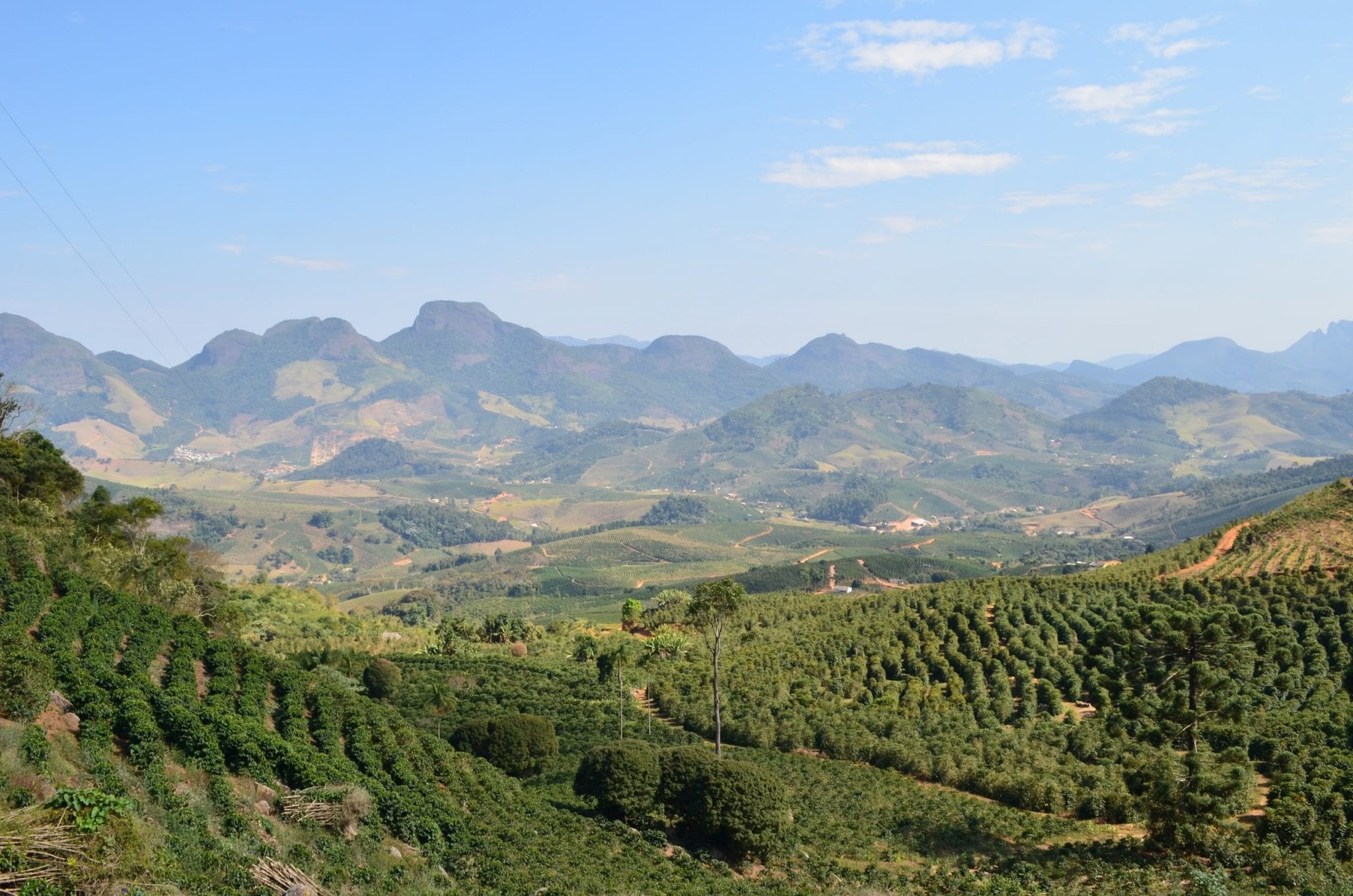
Brazilian coffee-growing regions are mostly distributed across plateaus or plains, characterized by a tropical savanna climate with an average annual temperature of around 20°C. Thanks to nearby volcanic activity, the local soil is nutrient-rich, and when combined with the vast, flat terrain, it creates an ideal foundation for large-scale coffee cultivation. This geography also makes mechanical harvesting the norm, significantly reducing production costs and giving Brazilian coffee a notable advantage in price competitiveness. It also serves as an important reference point for Arabica stock in the international futures market.
In terms of flavor, Brazilian coffee is primarily grown at medium to low altitudes, resulting in beans with less density compared to those from high-altitude regions. Consequently, its aroma complexity and layering are relatively more subdued. However, it is precisely these qualities—low acidity, full body, and a warm-toned profile—that make it a “reliable and stable” favorite among many coffee enthusiasts. Regular drinkers will notice that Brazilian coffee, when brewed as a single-origin pour-over, often exhibits pronounced nutty aromas and soft chocolatey aftertastes, sometimes even described as akin to sipping a liquid nut pie.
Brazil cultivates a diverse range of coffee varieties, with the current mainstream including Red Bourbon, Yellow Bourbon, and Catuai. Others such as Caturra, Acaia, Obatã, Aramosa, and Yellow Bourbon also see limited cultivation and research. Among these, Catuai is a hybrid of Yellow Caturra and Mundo Novo (also known as New World), classified as a dwarf coffee tree with wide adaptability, especially excelling at altitudes above 800 meters, and can be divided into red and yellow fruit types.
The Bourbon variety is a natural mutation of Typica, sharing the same long cultivation history as the original Typica. Its green fruits ripen into bright red, and it typically exhibits richer aromas and brighter acidity in high-altitude environments. Red Bourbon refers to fully ripe Bourbon fruits, while Yellow Bourbon is a naturally evolved variant of Bourbon in São Paulo state, Brazil, where the fruits ripen into an orange-yellow hue. Cupping observations suggest that Yellow Bourbon often delivers a smoother overall profile, with more pronounced sweetness and a cleaner, crisper mouthfeel compared to Red Bourbon.
Brazil has its own dedicated coffee bean grading system, with the NY (New York) grading method being one of the primary standards. It’s worth noting that Brazilian authorities consider “completely flawless” beans to be extremely rare, so the highest official grade is actually NY.2. During grading, in addition to assessing the number of defective beans, beans are also categorized based on size and cupping performance. Common grading criteria include:
1. Bean size (e.g., 17/18 mesh)
2. Defect rate
3. Cup quality, classified as Fine Cup (FC), Fine, Good Cup (GC), Fair Cup, Poor Cup, Bad Cup
For example, a bean labeled as Brazil Cerrado NY-2 SC-17/18 FC indicates it is from the Brazilian Cerrado region, graded as NY level 2, with bean size between 17 and 18 mesh, and a cup quality rated as Fine Cup (excellent flavor).
For consumers, we’ve selected two popular single-origin coffee beans from renowned Brazilian regions. To fully highlight the rich yet low-acid essence of Brazilian coffee, both beans are medium-dark roasted and shipped within 5 days of roasting completion, ensuring the freshest coffee experience possible.
The first is the “Brazil Cerrado Red Bourbon Coffee Bean,” grown in the South Minas region at an altitude of about 1,000 meters, using the Red Bourbon variety and a semi-washed processing method. Its flavor profile includes nuts, chocolate, cream, peanuts, and caramel, delivering a rounded and layered taste overall, ideal for those who enjoy warm, mellow flavor profiles.
The second is the “Brazil Queen’s Estate Coffee Bean,” produced in the highlands of São Paulo state at elevations between 1,400 and 1,950 meters, sourced from the renowned Queen’s Estate. It uses the Yellow Bourbon variety and employs both semi-washed and natural sun-dried processing methods. Its flavor features a base of nuts, cream, and peanuts, complemented by sweet, fermented fruit and cane sugar notes in the finish, showcasing a level of delicacy and aromatic intensity rarely seen in Brazilian high-altitude beans.
For brewing, since both beans exemplify the classic traits of Brazilian coffee, we recommend consistent pour-over parameters. Use 15 grams of coffee, a 1:15 brew ratio, water temperature at 88°C, and a grind size that allows about 75% of particles to pass through a #20 sieve. The Kono filter can effectively balance flow rate and extraction uniformity. For specific technique, employ a three-pour method: start with a 30 ml bloom for 30 seconds; then pour 100 ml in a circular motion from the center outward; once the water level drops slightly, add the final 95 ml. Total brew time should be around 2 minutes to achieve a well-balanced, rich, and smooth Brazilian single-origin pour-over coffee.
The above content is compiled by CoffeeHunters, a coffee news website.


