







Introduction:Sumatra in Indonesia is a holy grail for deep roast enthusiasts worldwide, and Mandheling is the classic among classics. From the G1 grade standard of PWN Golden Mandheling to the unique wet-hulling processing method, this article will take an in-depth look at the history, regional characteristics, and processing techniques of Indonesian coffee. It will guide you through the origins of Mandheling’s flavors and provide practical brewing parameters and suggestions to help you better understand this classic bean full of spice and dark chocolate charm.
As one of the world’s major coffee-producing regions, Indonesia’s diverse geography and unique processing methods have given rise to many distinctive coffees. Among them, Sumatran Mandheling is considered the representative of Indonesian coffee, celebrated for its rich, full-bodied flavor and unique herbal and dark chocolate aromas, attracting countless deep roast and specialty coffee lovers. This article will start with the historical background of Indonesian coffee, delve into the origins of Sumatran Mandheling, the G1 grading system of PWN Golden Mandheling, the steps and impact of the wet-hulling process, and supplement it with practical tasting and extraction recommendations.

The history of Indonesian coffee dates back to the late 17th century. In 1699, under the initiative of the Dutch East India Company (VOC), the first batch of Arabica coffee seedlings was introduced to Indonesia from the Arabian region, primarily planted in what was then Batavia (now Jakarta). Subsequently, areas such as East Java, Central Java, West Java, Sumatra, and Sulawesi gradually expanded their coffee cultivation, making Indonesia one of the earliest regions in the world to achieve large-scale Arabica coffee cultivation after Arabia and Ethiopia. Between 1725 and 1780, the VOC monopolized nearly the entire global coffee trade.
Entering the 19th century, coffee leaf rust broke out on a large scale in Indonesia in 1876, leading to the near extinction of the previously dominant Typica variety. To address the disaster, starting in 1900, the more disease-resistant Robusta variety began to be promoted in low-altitude areas of East Java. After Indonesia gained independence from Dutch rule, smallholder farming became the mainstream and still accounts for over 90% of the country’s coffee production today, with an average farming area of just about one hectare per household.
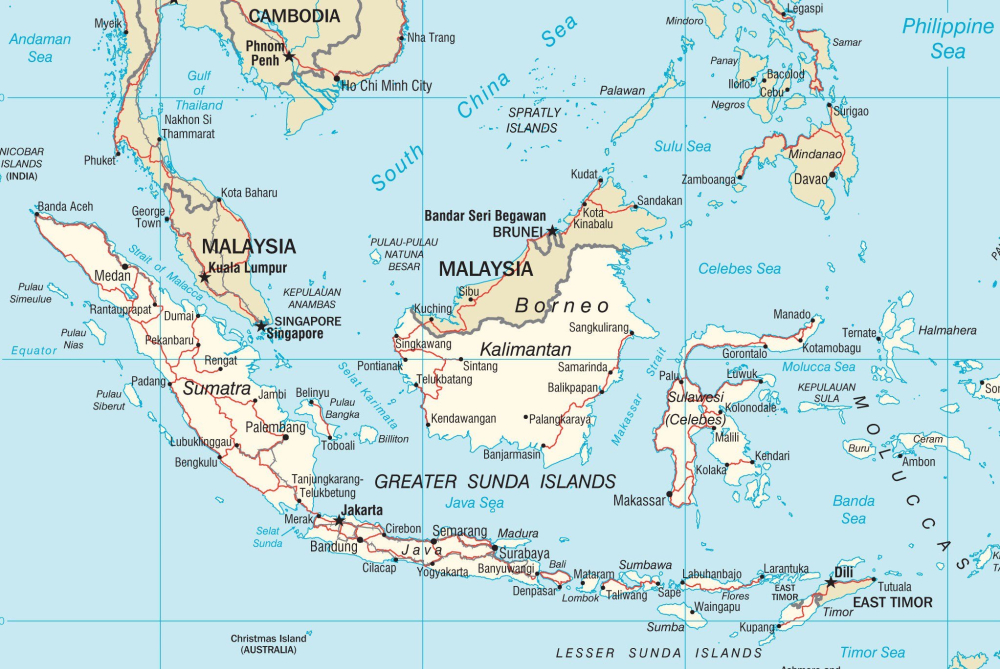
Sumatra is the largest island in Indonesia and the sixth-largest in the world. It is also the region in the country that enters the coffee harvest season earliest, typically from November each year to March of the following year. Mandheling coffee from Sumatra is known for its low acidity, rich, and layered flavors, often exhibiting earthy notes, spices, herbs, and dark chocolate. These characteristics are inseparable from the region’s volcanic soil and the unique “wet-hulling” processing technique.
In Sumatra, the most notable specialty Mandheling producing regions include the Lake Toba area near Lingtong and the Gayo Mountains in the Aceh region. These two areas not only have moderate altitudes but also benefit from climate and microclimate conditions, producing coffee with distinct flavors and stable quality. Among the common flavor profiles, Lingtong Mandheling often showcases notes of toasted bread, nuts, caramel, pine, and herbs, while the PWN-selected Golden Mandheling is distinguished by deeper spice, nut, dark chocolate, and rich caramel aromas, offering a more complex flavor profile.
As for the origin of the name “Mandheling,” it actually stems from an interesting historical misunderstanding. During World War II, a Japanese soldier in Sumatra asked locals about the origin of the coffee, who mistakenly thought he was asking about their ethnic group and answered “Mandheling.” After the war, the soldier returned to his country and sought that uniquely flavored coffee again. In 1968, the Japanese Nomura Trading Company imported 15,000 kilograms of Sumatran Mandheling from Indonesia’s N.V. Pawani Medan Company (abbreviated as PWN), which subsequently popularized the name.
PWN is a well-known Indonesian coffee bean purchaser and processor, with extremely strict quality control. The so-called “Golden Mandheling” is its registered trademark, specifically referring to Mandheling coffee beans that have been carefully selected and processed by PWN and meet Indonesia’s highest G1 grade standard. The G1 grade requires that coffee beans pass one mechanical screening and three manual hand-pickings, eliminating beans that do not meet size requirements (must be 18 mesh or above) or have an excessively high defect rate, ensuring the purity and consistency of each batch. Notably, to distinguish it from regular Mandheling, PWN independently named this premium product “Golden Mandheling,” making it a high-value item in the market.
When discussing the unique flavors of Sumatran Mandheling, one cannot overlook its distinctive “wet-hulling” method (also called giling basah, meaning wet hulling). This is a processing method distinctly different from the common washed or natural processes, and its steps are roughly as follows:
- First, the fruit skin and pulp of the coffee cherry are removed, leaving the parchment and mucilage layer.
- Then, pond fermentation is carried out to remove part of the mucilage.
- After washing off the remaining mucilage, the parchment-covered coffee beans are sun-dried for about 2 to 3 days, during which the moisture content is reduced to 20%–24%.
- Next, the parchment is removed, and the green beans continue to dry until the moisture content reaches about 12%–13%, finally meeting export standards.
Because this processing method removes the parchment before the beans are fully dry, it significantly shortens the drying time but can also easily lead to bean deformation under pressure and a higher defect rate. To overcome this issue, high-quality processors like PWN arrange multiple rounds of manual hand-picking, including second (DP) and third (TP) screenings, effectively reducing the defect rate and ensuring optimal final flavor. The wet-hulling method often results in coffee with low acidity, full body, and earthy, smoky, and chocolatey notes, while PWN Golden Mandheling, due to its strict selection, showcases more elegant herbal aromas, distinct caramel sweetness, and delicate spice layers.
If you want to brew Sumatran Mandheling at home, here is a set of practical parameter suggestions: use a Kono filter, control the water temperature at 88–89°C, use about 15 grams of coffee grounds, with a coffee-to-water ratio of 1:15, and a grind size recommended as medium-coarse (using a Chinese No. 20 standard sieve, with a sieve percentage of about 70%). The reason for choosing the Kono filter is that its rib design is concentrated at the bottom, which reduces airflow exchange and extends the contact time between water and coffee grounds, helping to enhance the full-bodied mouthfeel and flavor extraction.
Specifically, it is recommended to first pour 30 grams of water for a 30-second bloom, then pour water in small circles up to 125 grams for the first pour. When the water level is about to expose the coffee bed, pour again up to 225 grams and stop. After all the water has dripped through, remove the filter. The total extraction time is recommended to be around 2 minutes. These parameters can fully bring out the richness and sweetness of Mandheling while balancing its characteristic low acidity.
The above content is compiled by CoffeeHunters, a coffee news website.


