







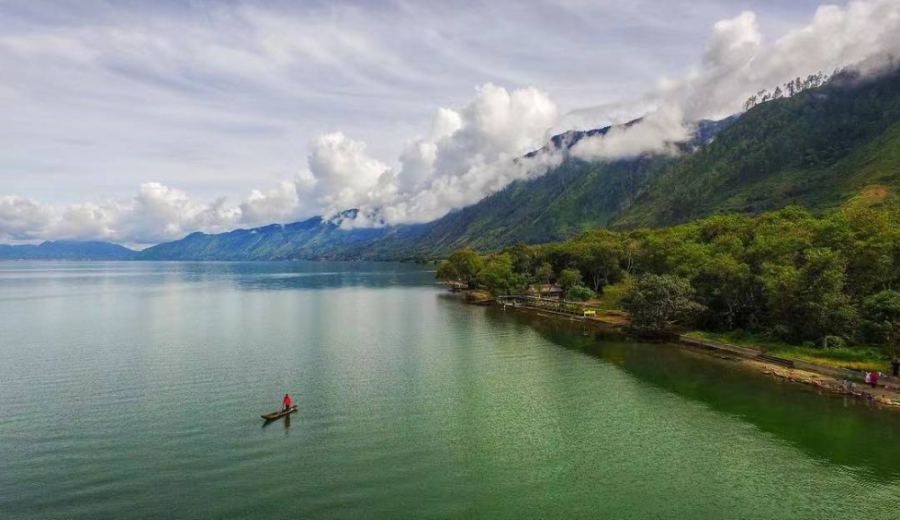
Introduction:Sumatra Mandheling is renowned for its rich, full-bodied flavor, which stems from its unique geographical environment and the wet-hulling processing method. This article delves into the story of Mandheling’s growing regions, its processing techniques, and offers professional pour over brewing recommendations — including filter choice, water temperature, grind size, and multi-stage extraction parameters — to help you master the brewing essentials and easily brew a specialty coffee with notes of spice, wood, and chocolate.
As Indonesia’s largest coffee-growing region, Sumatra’s naturally gifted volcanic soil and tropical rainforest climate produce Mandheling coffee with rich and layered flavors. From the early introduction of Typica, to later switching to disease-resistant hybrid varieties due to leaf rust, and now to the high-quality beans produced around the two major lakes in Aceh and North Sumatra provinces, the history of Mandheling is essentially one of adaptation and evolution. Among these, Indonesia’s uniquely humid and rainy weather gave rise to the globally distinctive wet-hulling process, endowing Mandheling with its unforgettable woody tones and spicy aroma. This article will guide you through the region’s environment, processing methods, and practical pour over techniques, to help you fully understand how to brew a well-rounded, bold, and sweet-aftertaste Mandheling at home.
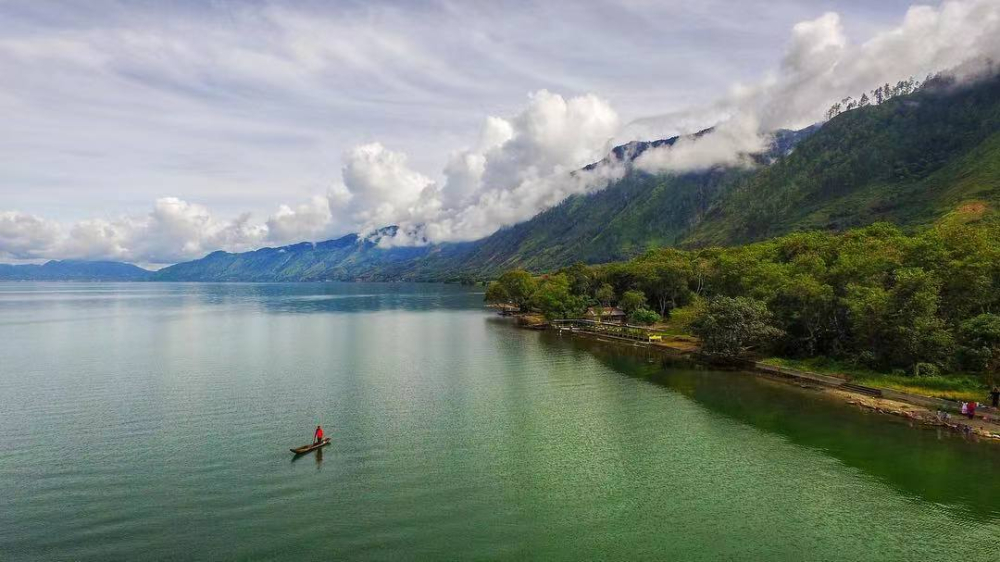
Sumatra is not only Indonesia’s largest island but also lies within the Pacific Ring of Fire, dotted with volcanoes that form mineral-rich volcanic ash soil — ideal for coffee cultivation. The region is crossed by the equator, enjoying warm temperatures and abundant rainfall. Coupled with mountainous areas often shrouded in mist and higher altitudes, it provides an optimal environment for coffee trees, especially around elevations of approximately 1400 meters, where coffee quality is particularly outstanding.
The history of coffee cultivation in Indonesia dates back to the late 17th century. At that time, Dutch colonists occupied Java Island, established the Dutch East India Company, and introduced the first Typica seedlings for trial planting. Subsequently, coffee cultivation gradually expanded to islands such as Sumatra, Sulawesi, and Timor. However, by the late 1860s, a severe outbreak of leaf rust devastated the region, killing a large number of Typica plants and dealing a catastrophic blow to the coffee industry.
To recover losses, Indonesia introduced the more disease-resistant Robusta variety from Africa, which remains the country’s primary coffee crop to this day. To improve survival rates and yields, a variety of disease-resistant hybrid cultivars were subsequently introduced, including Tim Tim, Bor Bor, and the Catimor series (Ateng), among others. These varieties not only adapted to Sumatra’s humid conditions but also featured high productivity. They gradually replaced the original Typica and became mainstream. Among them, the most prestigious specialty coffee representative is Mandheling from Aceh and North Sumatra provinces.
Mandheling is primarily grown around Lake Toba in Aceh Province and Lake Tawar in North Sumatra Province. Lake Toba, the world’s largest volcanic highland lake, sits at an altitude of about 1400 meters, with a rainy and humid climate and an average annual temperature of around 22°C. The mountainous area is often enshrouded in mist, making it highly suitable for coffee cultivation. Local farmers mostly plant on slopes surrounded by dense vegetation, eliminating the need for additional shading — the natural environment already provides excellent conditions for coffee growth.
Meanwhile, the Lake Tawar area in the Gayo Mountains offers yet another unique microclimate. This region ranges in elevation from 1200 to 1800 meters, remains perpetually foggy year-round, experiences significant diurnal temperature variations, and has soil rich in organic matter and minerals. Fallen coffee cherries naturally decompose into natural fertilizer, and the coffee trees grow in an almost organic environment, resulting in particularly outstanding quality. The Mandheling from this area is known for its delicate flavor profile and stable yield, making it highly favored by both domestic and international green bean traders.
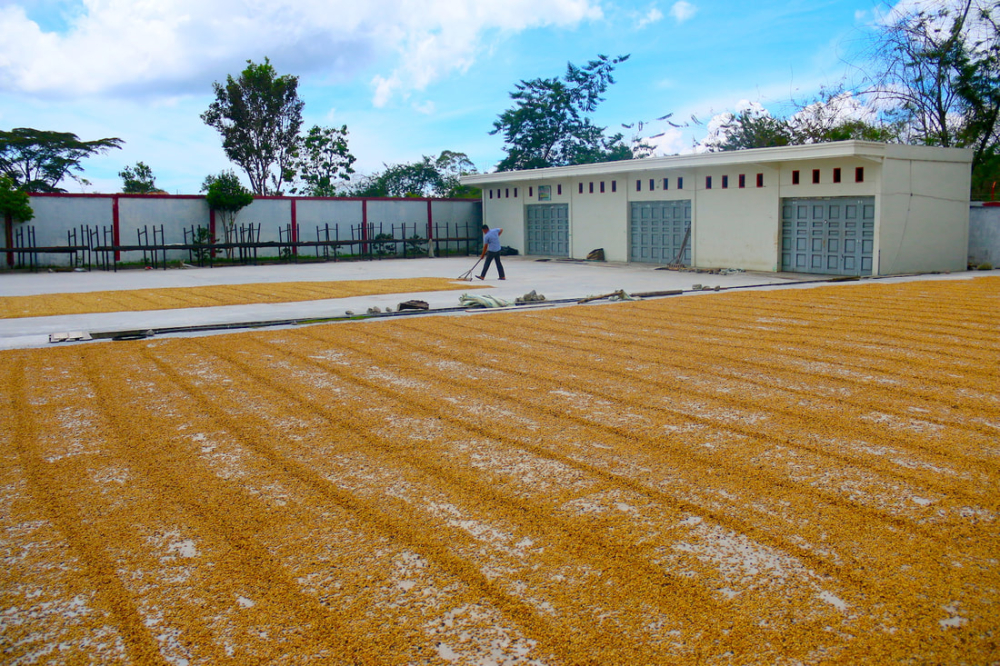
Most parts of Indonesia experience high humidity year-round, with rainfall exceeding 2000 mm, humidity levels between 70% to 90%, and frequent typhoons — all of which make traditional sun-drying and washed processing methods difficult to execute. To effectively process coffee under such extreme weather conditions, Indonesian farmers developed the unique “wet-hulling” method. The process involves removing the coffee cherry’s skin and pulp, followed by a short fermentation to remove the mucilage, then washing with clean water. The parchment-covered beans are then dried to only 30% to 40% moisture content before being hulled prematurely.
During hulling, due to high friction, the parchment layer is prone to cracking, releasing white or greenish sticky liquid. This causes the green beans to remain in a moist and sticky state for extended periods, affecting their structural integrity and flavor development. This special processing gives Mandheling its hallmark low acidity, intense woody tones, and herbal and spicy notes — becoming its most celebrated flavor characteristics, commonly referred to as the “Mandheling taste.”
For coffee enthusiasts who prefer pour over brewing, mastering several key elements is essential when brewing Mandheling. First, it’s recommended to use freshly ground beans to preserve optimal aroma and flavor; if the beans are already ground, they should be used as soon as possible to avoid aroma loss. In terms of equipment, the KONO filter cone is recommended by many baristas for its ability to bring out a round and full-bodied mouthfeel, though its rib design limits exhaust efficiency, so attention to brew flow rate control is needed during brewing.
The recommended brewing parameters are as follows: water temperature controlled at88-89°C, coffee-to-water ratio of1:15, grind size suggested asmedium-fine grind (75% passing rate through a Chinese standard No. 20 sieve). During pour over, a multi-stage extraction can be employed: start by pouring roughlytwice the amount of water as coffee grounds (for example, 30 grams of coffee with 30 grams of water)for a bloom period of about25 seconds, then continue pouring in small circles until reaching125 gramsfor the first pour, followed by adding more water up to225 gramsbefore stopping. The total extraction time should be kept to around2 minutes. Once dripping from the filter cone has finished, remove the cone, gently swirl the coffee, and it’s ready to enjoy.
Mandheling has a distinct and layered flavor profile. For instance, Lintong Mandheling often presents a balanced taste of herbs, chocolate, and caramel, while Golden Mandheling showcases a smooth and clean profile of nuts, spices, licorice, and chocolate. Each variant offers its own unique charm, suiting the preferences of different coffee drinkers.
The above content is compiled by CoffeeHunters, a coffee news website.


