







Introduction:This article delves into the historical background of Ethiopia as the birthplace of specialty coffee, with a particular focus on the country’s trademark litigation with Starbucks, as well as the geographic distribution, processing evolution, and flavor profiles of its nine major coffee regions. Combining practical cupping experiences, it analyzes the processing differences and brewing recommendations for renowned beans from regions such as Yirgacheffe and Huakuai (Hambella), making it a comprehensive beginner’s guide to understanding Ethiopian coffee—from origin to cup.
Ethiopia is not only Africa’s largest coffee producer but also one of the cradles of global specialty coffee culture. From its indispensable role in traditional ceremonies to its current status as a globally sought-after specialty bean, Ethiopian coffee has deeply embedded itself in the hearts of enthusiasts worldwide. This article begins with the trademark dispute between Ethiopia and Starbucks, guiding you through how the country has fought for fairer rights for coffee farmers through legal and brand strategies. It also systematically introduces the terroir characteristics, processing evolutions, and representative flavors of the nine major producing regions, enabling you to fully grasp the essence of Ethiopian coffee from region to cup.
Background on Ethiopian Coffee Culture and Trademark Disputes
In Ethiopia, coffee is more than just a beverage—it is a cultural symbol. Whether at weddings, religious ceremonies, or everyday gatherings, coffee always plays an important role. For example, at weddings, coffee beans are often mixed with fruit pulp or herbs to bless or ward off evil spirits. This deep-rooted coffee culture has fostered strong emotional ties among locals. However, in the international market, the value of Ethiopian coffee has long been undervalued. Statistics show that while about 60% of Ethiopia’s coffee is exported, the rest is consumed domestically, yet there remains a huge gap between export prices and the actual income of farmers. Around 2006, Starbucks marketed its coffee using the narrative of the “origin of coffee,” yet provided insufficient commercial returns to the origin, sparking strong dissatisfaction from the Ethiopian government.
In 2006, the Ethiopian government formally applied to the United States Patent and Trademark Office to register the regional names "Sidamo," "Harar," and "Yirgacheffe" as geographical trademarks, aiming to enhance bargaining power and secure more reasonable returns for coffee farmers. However, this move was opposed by international brands including Starbucks. At the time, Starbucks purchased Ethiopian coffee beans at around $0.75 per pound, while retail prices soared to $13, creating a profit disparity as high as 34 times. After multiple negotiations, the two sides finally reached an agreement in May 2007, with Starbucks agreeing to respect the proprietary names of Ethiopian coffee in its products, thus ending the trademark dispute.
Ethiopia’s Nine Major Coffee Regions and Flavor Profiles
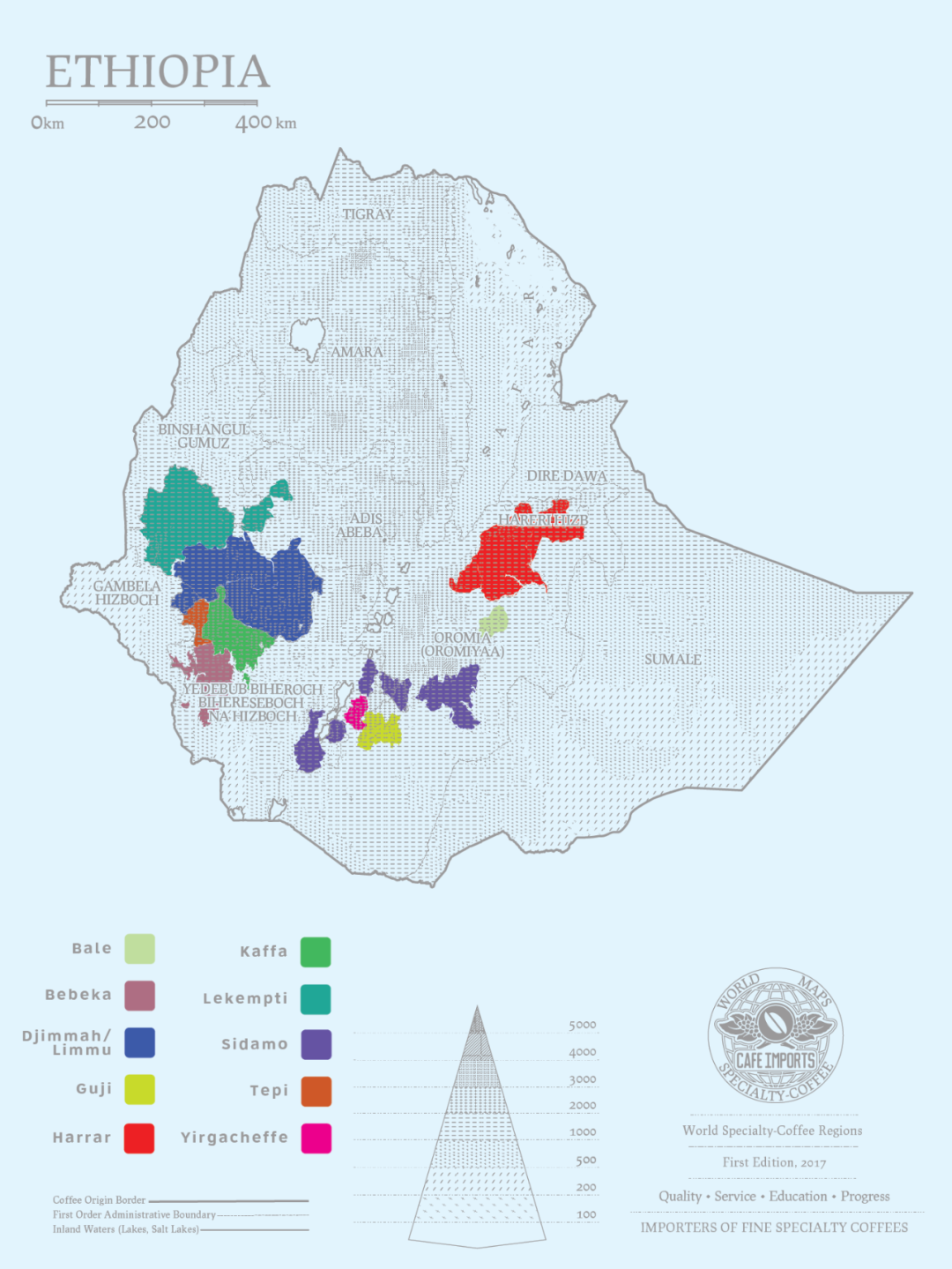
Ethiopian coffee cultivation is primarily concentrated in the western and southern highlands, with over 90% of coffee grown by smallholder families, averaging less than 4 hectares per household, and altitudes mostly ranging between 1,000 and 2,300 meters. Based on farming systems, it can be categorized into forest, semi-forest, garden, and plantation types, with garden coffee accounting for the highest proportion, about 50–55%.
1. Yirgacheffe | The Classic Representative of Floral and Citrus Notes
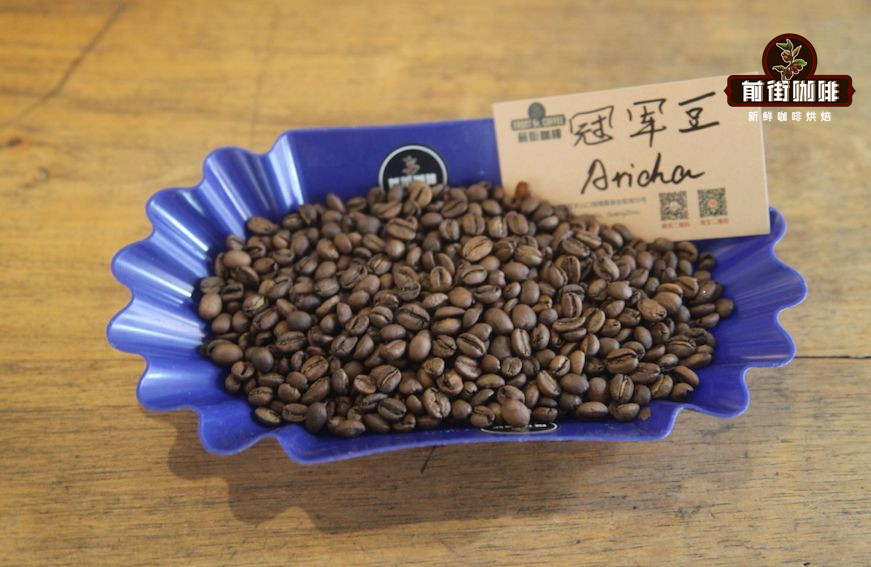
Although originally part of Sidamo, Yirgacheffe was separated due to its unique flavor profile and has become synonymous with Ethiopian specialty coffee. It is mainly cultivated at elevations of 1,800–2,000 meters under the garden coffee system. The coffee here is known for its bright acidity, citrus notes, and floral aromas, often described as “a burst of flowers.” Traditionally processed via natural (sun-dried) methods, the introduction of washed processing in 1972 further highlighted its clean and distinct citrus and jasmine notes. Today, the natural process is making a comeback, with improved techniques giving rise to notable lots such as Aricha and Idido Misty Valley. A certain shop’s natural Yirgacheffe features fermented wine-like aromas and citrus sweetness, while the washed version offers a crisp acidity with a black tea-like finish.
2. Sidama | The Classic of Berry and Fruit Profiles
Sidama lies at elevations between 1,400–2,200 meters, sharing similar varieties with Yirgacheffe but offering even more diverse flavors. Its renowned sub-region, Hambella, produces the Huakuai (Hambella) coffee, which gained recognition in the TOH competition and ranks alongside Geisha in top-tier flavors. The Huakuai series, from versions 1.0 to 4.0, spans flavors from intense berries to the delicate aromatics akin to Geisha, making it an excellent subject for cupping enthusiasts. A certain shop’s natural Huakuai 4.0 showcases rich berry fullness and creamy sweetness, which, when brewed with a V60 at a light roast level, can fully express its layered complexity.
3. Limu | Flavors of Brown Sugar and Herbal Notes
The Limu region sits at elevations of 1,200–2,000 meters and primarily exports to Europe and America, making it relatively rare in Taiwan. Processing methods here include washed, natural, and semi-washed, with flavors characterized by brown sugar sweetness and herbal notes. Acidity is less pronounced, but the mouthfeel is smooth, with slightly lower body compared to Yirgacheffe and Sidama.
4. Harar | Upholding the Tradition of Funky and Ancient Flavors
Located in eastern Ethiopia at elevations of 1,500–2,400 meters, Harar is famed for its full natural (sun-dried) processing method. Due to low annual rainfall, its coffee flavors carry a distinctive “funkiness,” reminiscent of the ancient flavor profiles in early coffee flavor wheels. When selected carefully, it can exhibit berry and fermented aromas, but quality can vary significantly, so cupping beforehand is recommended.
5. Jimma | The Balanced Choice Among Commercial Beans
Jimma is Ethiopia’s largest coffee-producing region, accounting for one-third of its exports. Sourced from the Kaffa Forest, it features a wide variety of cultivars often processed together, resulting in more balanced flavors with a clean base and Central American-like characteristics. Washed Jimma is suitable as a blend component, offering affordability and good value.
6. Illubabor and Other Commercial Regions
Including Illubabor, Gimbi, and Teppi, these regions mainly produce commercial-grade beans, with processing methods including both washed and natural. Flavors tend to be balanced and mild, with lower acidity, often used in blends to harmonize taste profiles.
7. Lake Tana Region | A Source of Religious and Mystical Flavors
With production under 10 tons, this region is known for monastery-surrounded forest-grown coffee. The trees grow naturally in lakeside forests, imparting a unique “divine” character, making it a distinctive and lesser-known producing area.

Processing Methods, Varieties, and Grading Systems
Ethiopian coffee is predominantly processed via natural and washed methods. Washed processing highlights clear acidity and floral-fruity notes, while natural processing adds sweetness and fermentation layers. In terms of varieties, nearly 2,000 types have been recorded nationwide, the vast majority of which are heirloom varieties, hence many commercially sold beans are labeled as “heirloom.” In recent COE competitions, numbered varieties such as 74110 and 74158 have emerged, reflecting a trend toward more refined variety selection.
The ECX (Ethiopian Commodity Exchange) classifies coffee into Grade 1 and Grade 2, based on defect counts of below 3 and 4–12 per 300 grams, respectively. Flavor scores follow SCA standards, with 85+ points classified as Q1, and 80–84.75 points as Q2, providing buyers with additional quality references.
Practical Recommendations: Brewing Parameters for Yirgacheffe and Sidama
For consumers trying Ethiopian coffee for the first time, it is recommended to start with a lightly roasted, washed Yirgacheffe. Use a V60 dripper, water temperature around 90°C, a 1:15 coffee-to-water ratio, and grind size close to 80% passing through a Chinese No. 20 sieve (fine sugar level). A certain shop suggests the following brewing method: 30g water for a 30-second bloom, followed by slow pouring to 125g, then a second pour to 225g to complete extraction, with a total brew time of about 2 minutes. These parameters effectively highlight its bright acidity and fruity notes.

In summary, the diversity of Ethiopian coffee is unparalleled—from highlands to valleys, from traditional to innovative processing methods, each region holds a unique flavor story. Whether you’re a beginner or an experienced cupper, gaining a deeper understanding of these nine regions and the history and processing logic behind them will allow you to experience a richer flavor connection and cultural significance in every cup of Ethiopian coffee.


The above content is compiled by CoffeeHunters, a coffee news website.


