







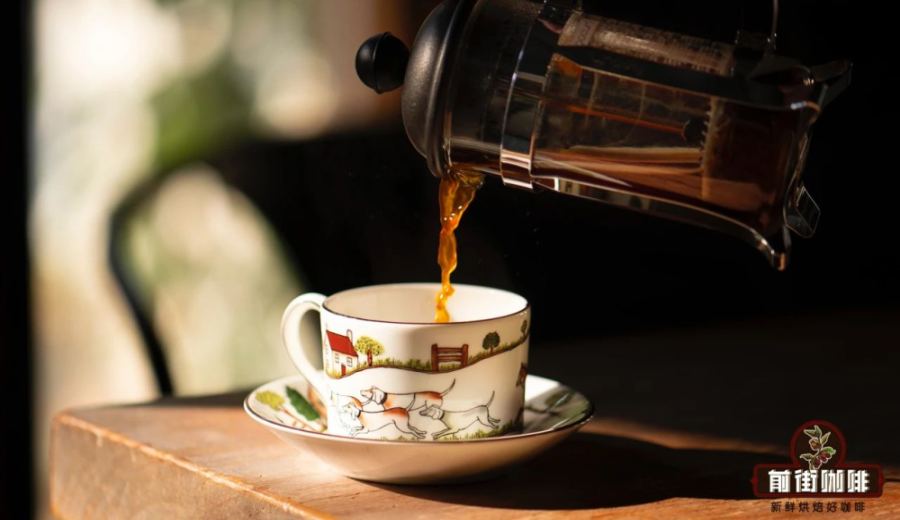
Introduction:The French press is the go-to brewing device for many coffee beginners due to its simple operation and ability to produce rich, well-balanced coffee. This article takes an in-depth look at the structure and brewing principles of the French press, providing precise parameters for grind size, water temperature, coffee-to-water ratio, and steeping time. It also recommends suitable medium-to-dark roasted and fruity bean varieties to help you brew a layered cup of coffee at home.
The French press, or cafetière, has become a favorite among many households and coffee novices thanks to its ease of use and bold flavor. Originating from France, this device has a very intuitive design: a cylindrical carafe paired with a movable metal filter. By steeping coffee grounds in hot water and then pressing down the filter, it effectively separates the grounds from the liquid. Not only can it brew multiple servings at once, but it also retains the natural oils in the coffee, giving the drink a richer mouthfeel.
To brew great coffee with a French press, the key lies in mastering the correct extraction parameters. It is generally recommended to use a coarse grind with a “70% passing rate through a standard No. 20 Chinese sieve,” with particle size similar to coarse sugar. This grind size not only reduces the chance of producing overly fine particles—which can negatively affect smoothness—but also improves overall extraction stability. It’s important to note that the metal filter of a French press has pores ranging from about 80 to 300 microns. If the grind is too fine, fine particles can pass through the filter, resulting in a cloudy coffee liquid.
Steeping time is another crucial factor influencing flavor expression. For medium-to-light roasted beans, a steeping time of around 4 minutes is recommended to fully bring out bright notes such as fruit acidity and floral aromas. For medium-to-dark roasted beans, which tend to have bolder and more roasted flavors, it’s advisable to shorten the time to around 3 minutes and 30 seconds to avoid bitterness and woody off-flavors caused by over-extraction. This time range helps balance the layers and smoothness of the coffee.
Water temperature is equally important. Since the French press uses a one-time pour and static extraction, the water temperature gradually decreases over time, so the starting temperature should be slightly higher than that used for pour over. When brewing medium-to-light roasted beans with prominent acidity, it’s recommended to use water at 92–94°C. For medium-to-dark roasted beans with more pronounced bitterness, the water temperature should be controlled at 89–90°C. In colder autumn and winter environments, preheating the carafe with hot water can help reduce heat loss and ensure consistent extraction.
In terms of concentration, a coffee-to-water ratio of 1:16 is recommended—for example, 15 grams of coffee grounds to 240 milliliters of water—resulting in a coffee strength of approximately 1.1% to 1.2%, offering a refreshing taste without being too weak. If you prefer a stronger flavor, you can adjust the ratio to 1:15, tailoring it according to personal taste.
When it comes to bean selection, almost all coffee beans suitable for pour over can also be brewed using a French press. However, due to its static steeping characteristic, it better highlights the richness and balance of medium-to-dark roasted beans. It’s recommended to try medium-to-dark roasted beans such as Golden Mandheling, Queen Estate, Bird of Paradise, and Huilan, which often carry aromas of dark chocolate, nuts, and caramel—perfectly complementing the French press brewing method. If you enjoy coffee with fruity acidity and fresh notes, you can also opt for medium-roasted beans such as Strawberry Candy, Mozart, or Sidamo. The French press can still bring out their rich fruitiness and layered profiles.
Finally, the cleaning process after using a French press is crucial. The metal filter tends to absorb coffee oils, and if not cleaned promptly, the residual oils can oxidize, affecting the flavor of your next brew and even producing off-odors. After each use, it’s recommended to disassemble the filter and plunger and other metal parts, clean them thoroughly with a neutral detergent, and ensure they are completely dry before storing to maintain hygiene and preserve the original flavor of the coffee.
The above content is compiled by CoffeeHunters, a coffee news website.


