








Introduction:The Typica coffee beans from Heaven Bird Estate in Papua New Guinea, processed through washed methods, showcase a clean and delicate flavor profile, earning them the nickname 'Little Blue Mountain.' This article delves into its regional background, varietal evolution, processing techniques, and provides professional pour over recommendations along with actual flavor notes to help you better understand the unique charm of this high-altitude island bean.
Papua New Guinea, an island nation located in the southwest Pacific, boasts an exceptionally favorable geographical environment—high altitude, fertile volcanic soil, and stable rainfall—all of which contribute to Arabica coffee with clear flavors and balanced layers. Among them, Heaven Bird coffee beans are based on the Typica variety and processed using the washed method, presenting a complex aroma of hazelnuts, toasted bread, sugarcane, and caramel, with gentle acidity. The overall profile is clean yet rich, leading many coffee enthusiasts to hail it as the 'Little Blue Mountain.'

Situated just south of the equator at approximately 6 degrees south latitude, Papua New Guinea is closer to the equator than Jamaica’s Blue Mountain. However, thanks to the cool climate of its high-altitude mountainous regions, its coffee still maintains bright acidity and a well-balanced sweetness. The country’s main coffee-growing areas are concentrated between altitudes of 1500 and 1900 meters. The climate resembles an island-type microclimate, with abundant rainfall and mineral-rich volcanic soils that provide an almost ideal environment for coffee tree growth.
Interestingly, the history of coffee cultivation in Papua New Guinea is relatively recent. Prior to the 20th century, there was no commercial coffee planting in the region. It wasn’t until 1931 that the first batch of Typica seeds was introduced from Jamaica—these very seeds are the varietal source of Blue Mountain coffee. Since then, the coffee industry in Papua New Guinea has gradually taken off and, due to its high altitude and refined processing methods, has steadily emerged in the global specialty coffee market.
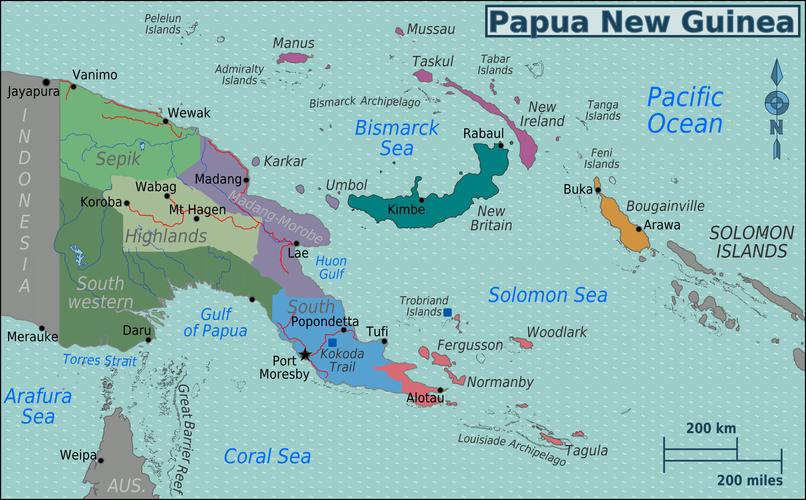
Papua New Guinea’s coffee industry is dominated by smallholder farmers, with over two million people relying on coffee for their livelihoods. Coffee production accounts for about 40% of the country’s total agricultural output. The main growing areas are concentrated in the Waghi Valley of the Western Highlands, which is not only a vital production base but also home to the country’s national bird—the Bird of Paradise. The region enjoys high ecological diversity and environmental conditions that are highly suitable for cultivating premium-quality coffee.
When talking about Heaven Bird coffee beans, one cannot overlook their origin—the Sigri Heaven Bird Estate, established in the 1950s and one of the oldest coffee estates in the area. Located in the Waghi Valley, the estate sits at an altitude between 1600 and 1800 meters. Its climate conditions are similar to those of Jamaica’s Blue Mountain, but its slightly closer proximity to the equator gives its coffee, in addition to the nutty and chocolatey notes commonly associated with Blue Mountain, more layers of tartness from dark berries.
These Heaven Bird coffee beans, known as the 'Little Blue Mountain,' are graded as AA—this is a common grading system used in Papua New Guinea, Kenya, Tanzania, and other East African and Oceanian producing regions, primarily evaluating coffee bean size and external integrity. AA grade indicates plump beans of uniform size, often associated with higher flavor potential. While not an absolute guarantee of quality, it does offer distinct advantages in consistent roasting and extraction.
In terms of variety, Heaven Bird uses the classic Typica variety within the Arabica species. This centuries-old variety is renowned for its bright and clear acidity, delicate mouthfeel, and good sweetness, but it has been gradually replaced by other high-yield varieties in recent years due to its slower growth rate and weaker disease resistance. However, in suitable high-altitude environments, Typica can still exhibit an irreplaceable clean flavor and layered complexity.
In terms of processing, Heaven Bird Estate employs the washed method, which effectively reduces interference from impurities and off-flavors while enhancing the coffee’s inherent fruit acidity and sweetness. The specific process includes: harvesting fully ripe red cherries, first removing the pulp, then placing the mucilage-covered seeds in water tanks for three rounds of 24-hour fermentation and washing, and finally hulling and drying. This processing technique maximally preserves the bright characteristics of Typica while making the flavors clearer and more linear.
For this washed Typica with high altitude and slightly lower density, a medium roast is recommended to retain its natural nutty and creamy tones without masking the fruity aromas and delicate acidity. During roasting, even heat application is crucial to avoid over-development that could lead to flavor homogenization. It is advised to finish roasting just after the first crack to lock in the optimal flavor window.
Want to brew Heaven Bird coffee at home with its rich and balanced profile? It is recommended to use a Kono filter cone, with 15 grams of coffee grounds, a 1:15 coffee-to-water ratio, and water temperature controlled at 88–89°C. The grind size is suggested to be 75% passing through a #20 sieve (roughly between medium-fine and medium). Use a pulsed pouring method: start with a 30-second bloom using 30 grams of water, then pour in a small circular motion until reaching 125 grams for the first pour. After the water level drops, continue pouring to 225 grams to finish extraction, keeping the total brew time around 2 minutes. This will fully highlight the layers of nuts, cocoa, and subtle spices.
In terms of flavor, the dry aroma of Heaven Bird coffee carries a hint of unique spicy notes. On the palate, it features a sweet core of nuts and toasted bread, complemented by delicate citrus acidity that adds dimension to the overall profile. The finish lingers with notes of cream and caramel, offering clear layering and a long-lasting aftertaste. Whether as a daily drinker or an entry point for exploring island-style flavors, this 'Little Blue Mountain' is a highly representative choice.
The above content is compiled by CoffeeHunters, a coffee news website.


