







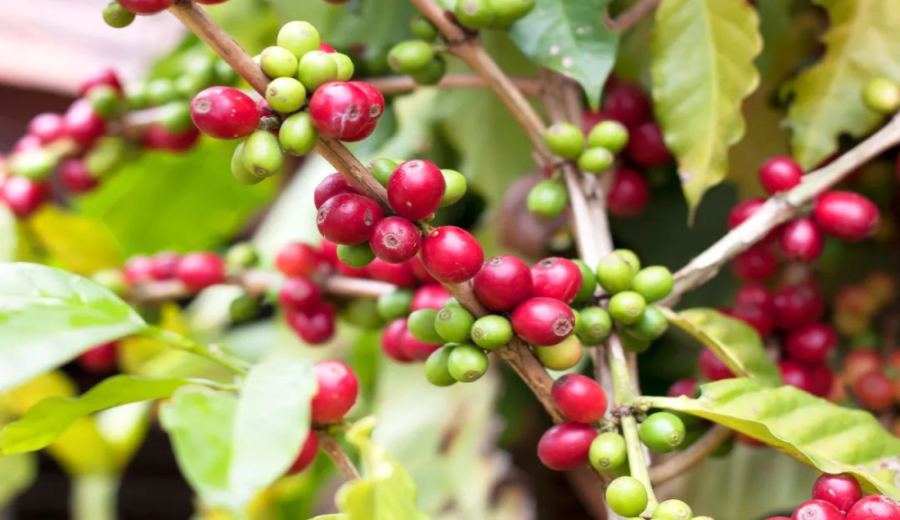
Introduction:Want to know if Yunnan small-grain coffee can truly rank among the world’s specialty coffees? This article takes you deep into the evolution of Yunnan’s coffee industry—mainly centered around Catimor—by exploring its varietal origins, cultivation history, and actual flavor profiles. It also analyzes the impact of washed processing and regional conditions on flavor, and provides pour over parameters and tasting notes to help you gain a more comprehensive understanding of this promising Asian bean.
Yunnan small-grain coffee has been hailed as a “rising star” in the international market in recent years, but does it have solid evidence to back up claims of being “world-class”? We examine this Asian coffee’s true nature through three aspects: varietal background, cultivation history, and cupping flavors. Currently, the “small-grain coffee” mainly produced in Yunnan belongs to the Arabica species, with over 90% of it being the Catimor variety—a hybrid known for its disease resistance and high yield, but also long criticized for its bland flavor.
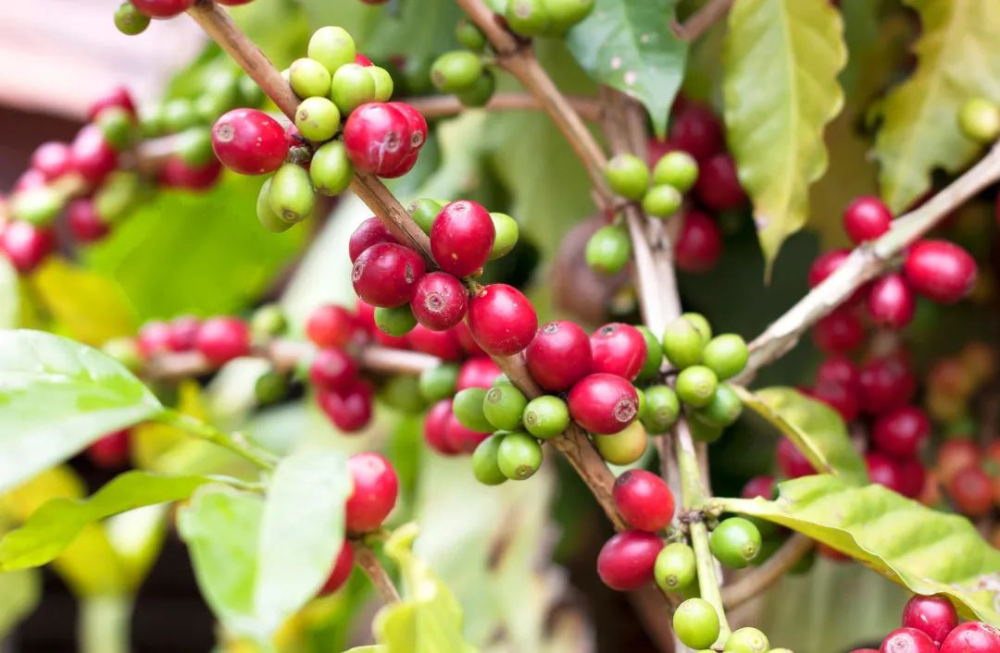
This article will trace the complete journey from the first coffee tree planted in Zhukula Village in 1904, to the trial planting program initiated in the 1950s in Ludian Dam, and then to the 1980s when Nestlé introduced Catimor to drive scaled production. It will also explore the current challenges in washed processing technology and cultivation management, introduce how a brand established its own estate in Lincang to practice full-chain control from breeding to green beans, and finally share pour over suggestions and a clear flavor profile for Yunnan small-grain everyday beans for coffee enthusiasts’ reference.
It’s common in the market for businesses to promote Yunnan coffee as the “world’s most top-tier.” But is such a claim well-founded? The answer requires an in-depth analysis from three aspects: varietal origin, cultivation history, and actual flavor performance.
The so-called “small-grain coffee” actually refers to the Arabica species originating from Ethiopia. These coffee beans are typically smaller in size, featuring clean and bright acidity along with prominent floral and fruity aromas, and are suitable for cultivation in high-altitude regions above 1,200 meters. The large diurnal temperature variation in high-altitude environments helps the fruit mature slowly, thereby accumulating richer flavor compounds and sugars.
In early introductions to places like Baoshan in Yunnan, the variety planted was Typica, an historically significant branch of Arabica. However, the leaf rust crisis that erupted in the Western Hemisphere in the 1970s dealt a heavy blow to the global coffee industry—once infected, coffee tree branches withered and died rapidly. To combat this disaster, the Portuguese successfully bred the Catimor variety in 1959, which has approximately 25% Robusta lineage in its genome. Not only is it highly resistant to leaf rust, but it is also suitable for dense planting, offering stable and abundant yields. This variety was widely introduced internationally, and Yunnan began cultivating it in the 1980s. Currently, the main varieties planted in Yunnan include Catimor, Typica, and Bourbon, with Catimor accounting for as much as 95%.
The history of Yunnan small-grain coffee cultivation can be traced back as early as the late 19th century. After the Sino-French War, the Yunnan-Guizhou Plateau opened up with the country, attracting a large number of foreign merchants and missionaries. In 1904, a French missionary built a church in Zhukula Village, Binchuan, Dali, Yunnan, and planted China’s first coffee tree next to it.
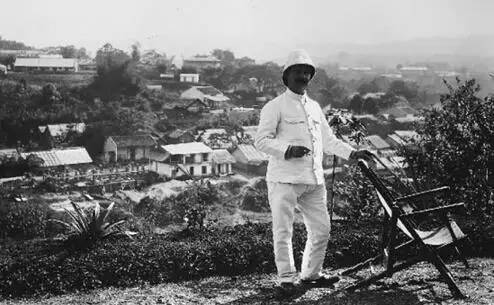
In the 1950s, to meet the coffee supply demand for the Soviet Union, the Yunnan Academy of Agricultural Sciences allocated 80 kilograms of coffee seeds to the Ludian Dam area in Baoshan, encouraging farmers to try planting and establishing the Tropical Cash Crop Research Institute. This marked the start of systematic breeding and cultivation efforts and is regarded as the official beginning of Yunnan’s coffee industry.
In the 1980s after the reform and opening-up, the government and foreign investment jointly promoted industrial upgrading. Among them, Nestlé from Switzerland set up a branch in Yunnan, introducing the high-yield Catimor variety and promising to purchase green beans at the then U.S. market price, driving the expansion of the production area. However, although Catimor has the advantage of high yield, its hybrid background led to it being considered as having ordinary flavor, and it long failed to gain favor in the specialty coffee community. After the 1990s, a large number of instant coffee factories moved in, purchasing raw materials at low prices, further deepening the stereotype of “Yunnan coffee = instant coffee raw material.”
With the rise of the specialty coffee trend, consumers’ demands for coffee quality have become increasingly higher, and the Yunnan production area has also gradually transformed, exploring paths for high-quality development. From natural conditions, Yunnan is located near the Tropic of Cancer and possesses many advantages suitable for coffee growth—including moderate altitude, ample sunshine, distinct diurnal temperature variations, abundant rainfall, and diverse soil types. Especially in areas such as Baoshan, Dehong, Lincang, Pu’er, and Nujiang, there is potential to produce specialty coffee.
However, compared to major coffee-producing countries like Brazil and Colombia, Yunnan still has room for improvement in cultivation management and post-harvest processing technologies, with a relatively low proportion of specialty beans, making it difficult to raise prices and affecting farmers’ income. The industry generally believes that only by increasing the specialty rate can the production area’s competitiveness be truly enhanced, but this requires long-term investment and technical accumulation. Currently, many producers and brands are investing resources to optimize everything from green bean processing techniques to cultivation management.
In the green bean processing stage, due to Yunnan’s long rainy season and insufficient sunlight during harvest time, washed processing has become the mainstream. This method involves fermenting the beans in water tanks after removing the fruit skin, effectively removing the mucilage layer and screening out defective beans in the process, which helps to highlight the intrinsic flavor characteristics of the coffee. However, traditional washed Catimor is prone to flavor defects, so some producers have started experimenting with special processes such as anaerobic fermentation and honey processing to improve the final flavor profile, receiving positive market feedback.
Taking a brand in the Lincang area as an example, since 2013, this brand has established its own estate, personally controlling every step from breeding, planting, pruning, fertilizing, harvesting, to green bean processing, and has finally launched its own beans that have received positive reviews in recent years. They hope to more accurately define specialty coffee by mastering the entire process from “seed to cup” and to convey the correct drinking knowledge to consumers.
The Yunnan small-grain coffee beans from a certain brand belong to the Catimor variety, sourced from Baoshan, with an altitude of about 1,200 meters, processed using washed methods and medium roasted. The flavor profile is primarily driven by nutty and melon fruit notes, complemented by brown sugar sweetness and a soft plum-like acidity. It is a great everyday drinking bean.
Pour over suggestions are as follows: Use a Hario V60 filter, 15 grams of coffee grounds, grind size as fine as granulated sugar (approximately 80% passing through a #20 sieve), water-to-coffee ratio set at 1:15, water temperature controlled at 90°C, using a three-stage extraction. First, pour 30 grams of water for a 30-second bloom, then pour 95 grams of water, wait for the liquid level to drop, and then pour another 100 grams of water, with a total extraction time of about 2 minutes.
This bean is best enjoyed within 4 to 7 days after fresh roasting. The brand guarantees that beans shipped are roasted within 5 days to ensure flavors are at their peak. Upon opening the bag, you can smell dry notes of nuts and berries. The cup offers flavors of nuts, herbs, chocolate, and brown sugar sweetness, with a balanced plum-like acidity, and a lingering hint of fruity acidity.
The above content is compiled by CoffeeHunters, a coffee news website.


