







Introduction:Terms such as ice drip, cold brew, cold water extraction, and Dutch coffee often cause confusion. This article delves into the historical background and extraction principles of ice drip coffee, clarifies the correct concept of cold brew, and provides a detailed introduction to the components of ice drip equipment, parameter settings, and practical steps. It also recommends flavor profiles of coffee beans that are suitable for ice drip, helping you easily master this classic cold extraction technique.
Whenever summer comes and you’re looking for a refreshing cup of black coffee, terms like ice drip, cold brew, cold water extraction, Dutch coffee, and Kyoto coffee can be overwhelming. What exactly are the differences among them? Starting from the basic concept of cold extracted coffee, this article takes you through the historical origins and technical principles of ice drip coffee, clarifies the true meaning of cold brew coffee, and uses in-store practices as examples to step-by-step analyze the structural design, parameter adjustments, operation process of ice drip equipment, as well as the types and flavor directions of coffee beans suitable for making ice drip. This way, you’ll no longer be confused by complicated terminology and can easily get started with this classic cold extraction method.
 One of the most common issues beginners face when learning about coffee isn’t complicated techniques or intricate parameter adjustments, but rather the confusion that arises when searching for professional terms — facing a bunch of similar-sounding yet actually different Chinese expressions. This is especially true in the popular summer category of iced coffee, where searches for terms like cold brew coffee bring up a slew of options: ice drip, cold brew, cold water extraction, Dutch coffee, and even Kyoto coffee, all of which are hard to tell apart. Among these, the definition of “cold brew coffee” is particularly vague — some equate it with cold water extraction, others think it refers specifically to ice drip, and some even understand it as simply mixing coffee grounds with icy water. Don’t worry, let’s start with the broader category of “cold brew coffee.”
The so-called “cold brew coffee” is actually a direct translation of “Cold brew coffee.” The popularity of this term is inseparable from Starbucks’ promotion. More broadly speaking, any black coffee that is extracted using cold water over a long period can be categorized as “cold brew coffee.” In other words, whether it’s immersion, drip filtration, or infusion, as long as the liquid obtained through contact between low-temperature cold water and coffee grounds is involved, it theoretically falls under the umbrella of cold brew coffee.
However, since the term “cold brew tea” has long existed in the Chinese context, most people use the term “cold brew coffee” to refer only to the simple practice of soaking coffee grounds in room-temperature water, placing it in the fridge for several hours, and then filtering out the grounds — what we commonly call “cold water extraction coffee.” As a typical immersion extraction method, cold water extraction coffee is not only easy to operate, suitable for a wide variety of beans, and has a low failure rate, but it is also a staple in coffee shops and a popular choice for home brewing.
Another common method of low-temperature extraction is drip filtration — allowing continuously melting ice water to slowly drip drop by drop into a bed of coffee grounds, completing the extraction process over an extended period. This is what we will focus on today: “ice drip coffee.”
In many English-language resources, ice drip coffee is not often referred to as “Ice Drip Coffee,” but rather as “Dutch Coffee,” which is why it’s often directly translated as “Dutch coffee.” Legend has it that around the 17th century, Dutch sailors tried brewing coffee by soaking coffee grounds in cold water during long sea voyages. They found that the resulting coffee was not only less bitter but also easier to preserve and transport. Later, this cold beverage method was introduced to Japan during the Edo period through trade and became very popular, hence the name “Dutch Coffee.”
 Although the authenticity of this story is difficult to verify, what is certain is that the stylish multi-layer drip devices commonly seen in coffee shops today were actually invented by the Japanese, and the ice drip coffee made using these devices truly gained popularity starting in Japan.
In the 1850s, a Kyoto shop called Hana Fusa (Flower Vase Café) came across this cold extraction technique and collaborated with several chemistry students to develop a three-tiered, valve-equipped tall ice drip tower. This device allowed low-temperature cold water to slowly and evenly drip-filter through coffee grounds. At the time, this setup was hailed as one of the most artistic coffee brewing techniques. Later, as well-known Japanese equipment brands such as HARIO, KINTO, and Kalita launched the familiar cold brew bottles and ice drip towers that are widely used today, this type of low-temperature extracted black coffee spread widely in Japan. By the time the third wave of coffee arrived, this unique device made its way to Europe and was thus referred to by Westerners as “Kyoto Coffee.”
Compared to cold brew and ice drip, the term “cold brew” is less commonly seen in coffee shops, and its exact origin is hard to trace, with varied interpretations among people. Regarding cold brew coffee, it can be considered an elegant translation of “Cold Brew,” essentially equivalent to the concept of cold brew coffee.
In our view, the emphasis of cold brew coffee lies in the character “brew” (釀), which is originally related to brewing and fermentation, sharing common ground with the production of alcoholic beverages. Whether it’s ice drip or cold water extraction, after preparation, the coffee is usually sealed in a container for a period of maturation, allowing flavor compounds to further integrate with the water, gradually producing a fermentation-like taste reminiscent of fine wine. Therefore, whether it’s ice drip or cold brew, as long as it undergoes storage and brewing/maturation, it can be understood as “cold brew coffee.”
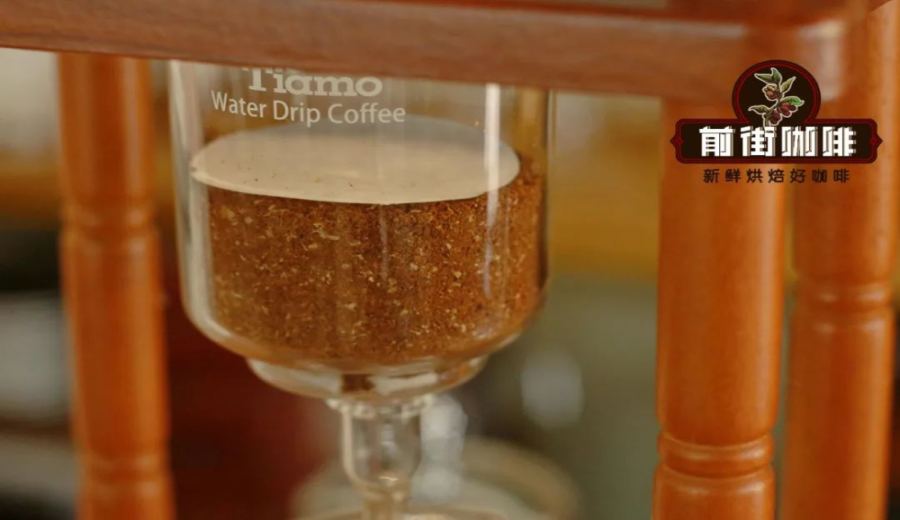
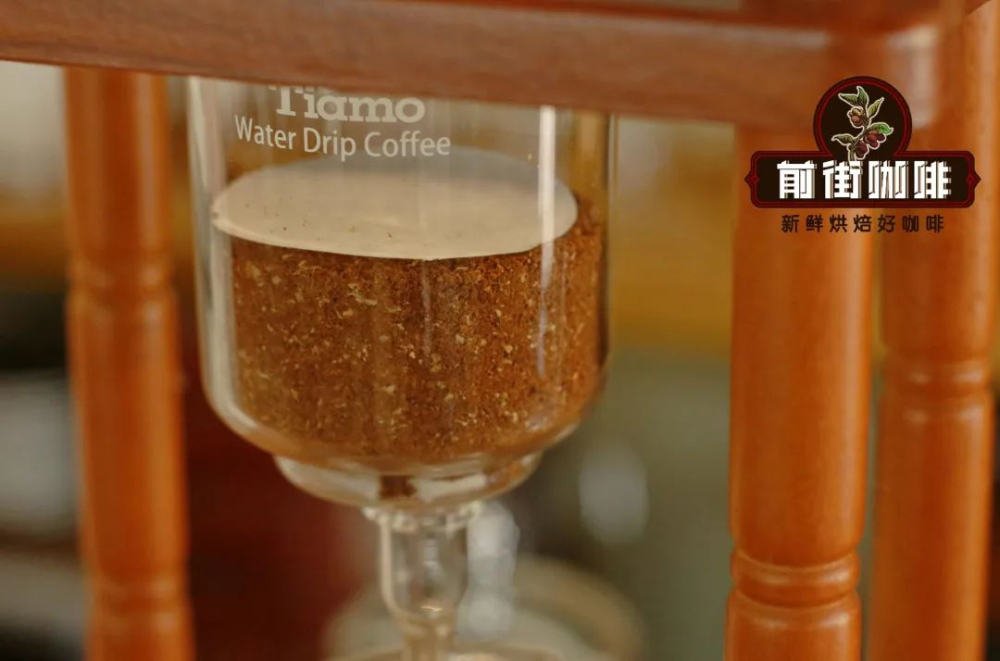
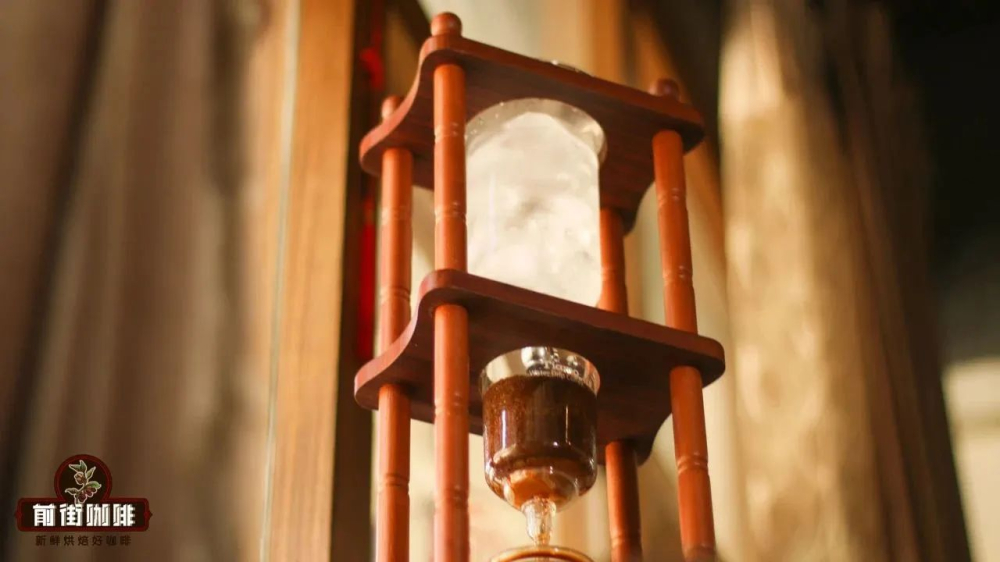
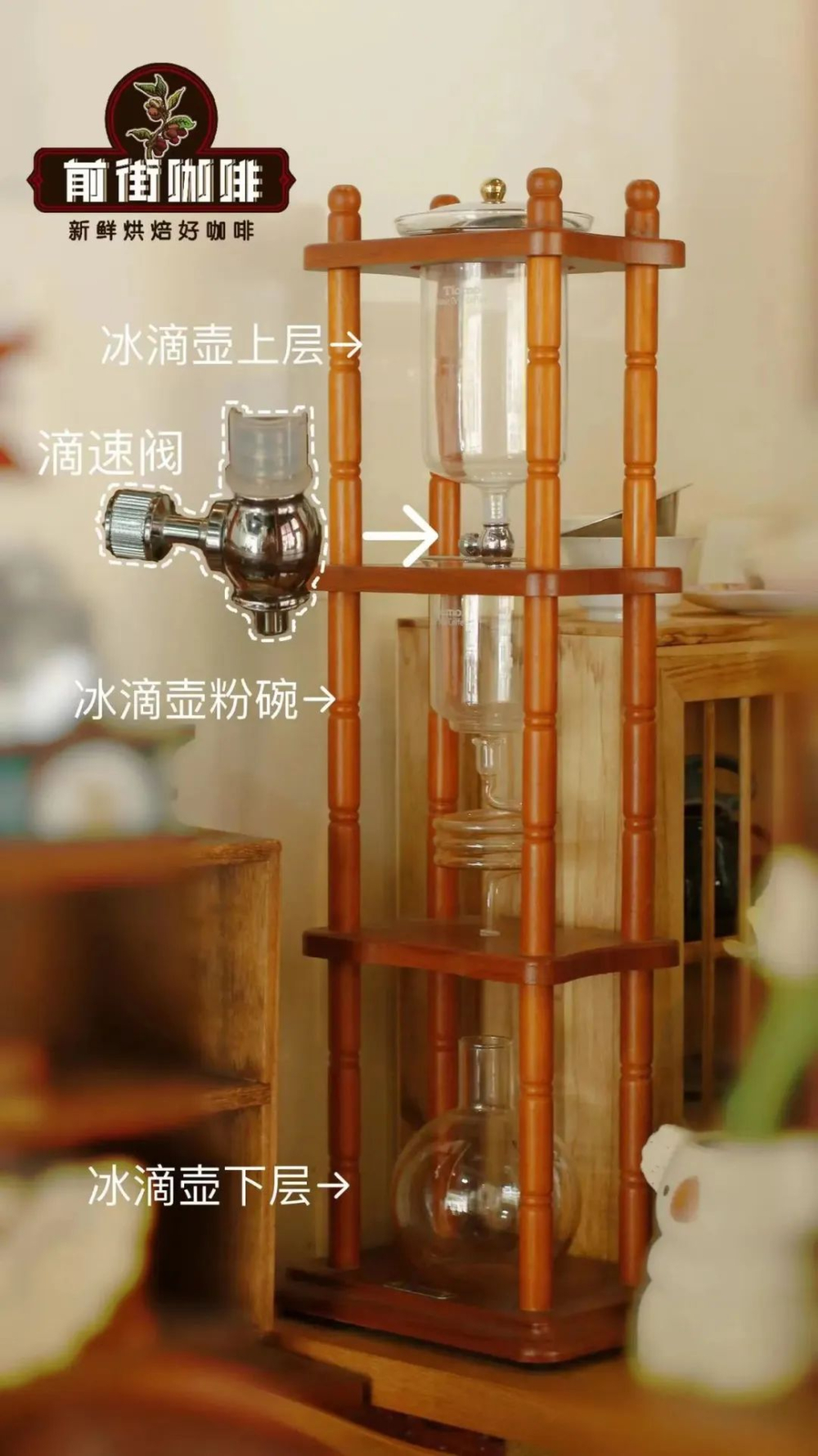
 There are many types of ice drip devices available on the market, varying in material and shape, but they generally consist of three main parts and can be subdivided into four structures: upper chamber, valve, coffee grounds chamber, and lower collection chamber. The top container is used to hold ice and water, connected below to a metal component — the valve — which controls the drip speed by adjusting the size of the water outlet, ensuring the ice water drips evenly onto the coffee grounds. The middle glass container, shaped like a cup, holds the ground coffee, with a filter hole at the center of the bottom through which the extracted coffee liquid drips out. The large chamber at the bottom is responsible for collecting the final coffee liquid.
For this demonstration, we’ve selected a popular in-store coffee: Costa Rica Mozart. This coffee bean is processed using a raisin anaerobic honey method, and its flavor profile includes raisin, osmanthus, and the sweet aroma of fruit fermentation. The ice drip method highlights its fermentation layers even more. For grind size, we typically opt for something close to ice pour over — since cold water reduces extraction efficiency, we grind the coffee slightly finer to improve extraction performance. This bean achieves an 85% filtration rate using a standard Chinese No. 20 sieve, corresponding to a 9-setting on our in-store ek-43s grinder.
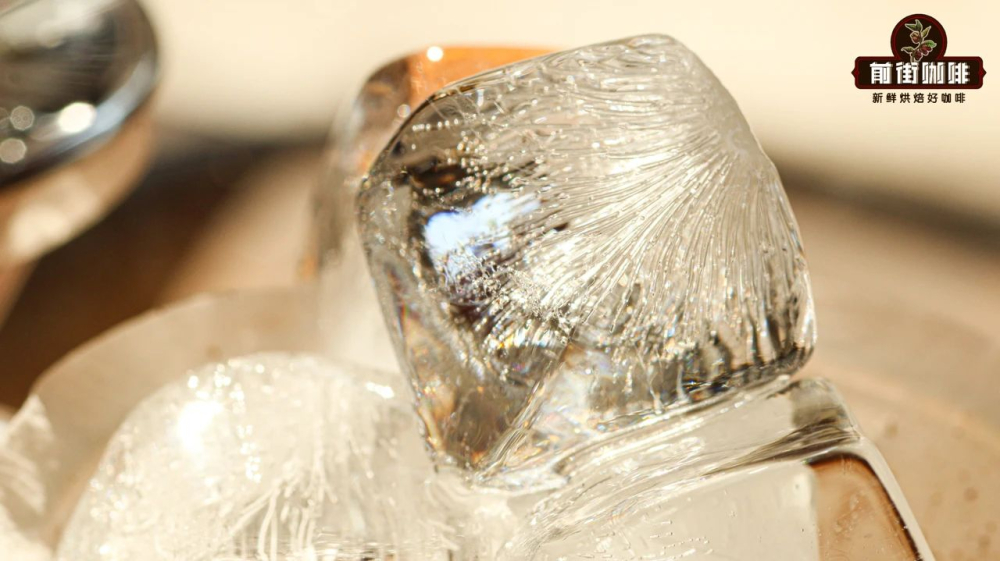
We usually start by setting the extraction parameters: a coffee-to-water ratio of 1:10, meaning 60 grams of coffee grounds for 600 milliliters of coffee liquid. The ice-to-water ratio is 1:1, and the valve drip speed is controlled at 7 drops per 10 seconds. The entire process generally completes the filtration within 6 to 8 hours.
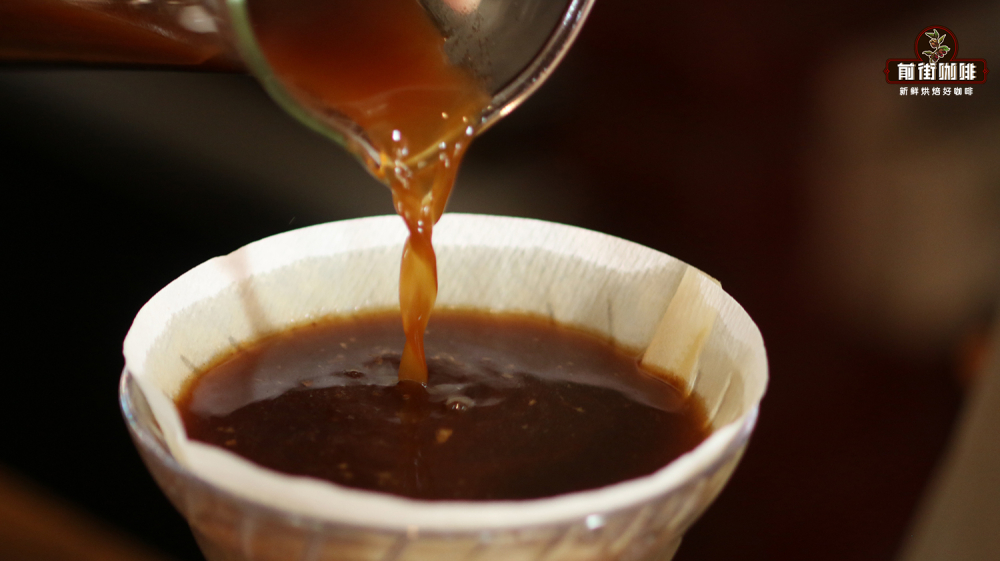
Place a round filter paper at the bottom of the middle chamber, wet it with water, and then add the ground coffee, spreading it evenly to ensure consistent extraction. Then place another round filter paper on top of the coffee layer to prevent the water drops from disturbing the coffee bed. Before starting the drip, it’s recommended to lightly moisten the coffee bed with cold water — this saves time and avoids uneven initial extraction. Position the coffee grounds chamber on the stand and begin pouring the ice water mixture, typically half ice and half water. Adjust the valve drip speed to 7 drops/10 seconds, ensuring the water drop point aligns with the coffee liquid outlet. After the filtration is complete, pour the coffee liquid from the lower chamber into a sealable container (like a glass bottle), and refrigerate it for at least 12 hours to allow fermentation — it’s usually ready to enjoy the next day.
After a night in the fridge, the Mozart coffee exhibits a fermentation feel similar to that of alcohol, with tangy sweetness from berries and pineapple. The flavor is rich yet not overly bitter. When diluted with ice, it’s like sipping a refreshing fruit wine.
The biggest characteristic of ice drip coffee is its long extraction time under low-temperature conditions. Therefore, when selecting beans, we usually lean toward those with more distinctive flavor profiles. Below are a few representative flavor directions:
1. Tropical fruit & fermented wine aroma types
For example, the aforementioned Mozart coffee offers a sweet-tangy profile of dark berries, paired with the wine-like aromas brought by low-temperature maturation, resulting in a richer overall taste. Additionally, other beans on our menu — such as Colombia Flower Moon Night, Honduras Sherry, and Costa Rica Strawberry Candy — have prominent aromas and are also suitable for preparation via ice pour over or cold brew.
2. Clean & refreshing types
Some washed-process coffee beans have clean and full acidity. When made into ice drip, they exhibit a juice-like, refreshing sourness with bright, transparent notes like cherry tomatoes and grapefruit — perfect for hot summer days.
3. Sweet & mellow types
Many people assume that dark roasted coffee isn’t suitable for ice drip, fearing it might turn out too bitter and strong. But that’s not the case. We’ve tried making ice drip with Indonesian Golden Mandheling, and with ice added, it reveals a rich chocolatey sweetness along with fermentation aromas — not bitter at all.
4. Blended flavor types
Besides single-origin beans, ice drip coffee also works well with blends. For instance, blending Honduras Sherry coffee with the Musician Series Beethoven coffee at a 1:1 ratio results in a layered profile that combines whiskey-like aromas and creamy smoothness with fresh fruity acidity.
The above content is compiled by CoffeeHunters, a coffee news website.


