







Introduction:Costa Rican coffee is renowned for its bright acidity and sweet flavor profile, with honey processing being one of its signature techniques. This article delves into the country’s eight major coffee-growing regions, highlights the high-altitude advantages of Tarrazú, explains the key differences between honey and raisin honey processing, and further explores the flavor profiles and pour over recommendations of well-known beans such as the Musician Series and Mirazu. Practical brewing parameters are also provided to help you master the art of extraction.
Costa Rica is an indispensable and significant origin in the global specialty coffee landscape, celebrated for its distinct sweet flavor notes and unique honey processing methods. Nestled in the Central American isthmus, this country not only boasts a naturally privileged geographical environment but is also recognized for its mature industry organization and rigorous quality control processes. From washed, natural, to honey processing, and even advanced techniques like anaerobic fermentation and raisin honey processing, Costa Rica has a wealth of practical experience. This article will systematically outline Costa Rica’s eight coffee-growing regions, focus on analyzing the central role of Tarrazú, explore the characteristics of major cultivated varieties, and combine details of honey processing techniques with the actual flavor profiles of selected beans (such as the Musician Series Mozart and Bach, as well as beans from the Mirazu Estate). Complete pour over parameters and freshness recommendations are provided to help you deeply understand the charm of Costa Rican coffee—from origin to cup.
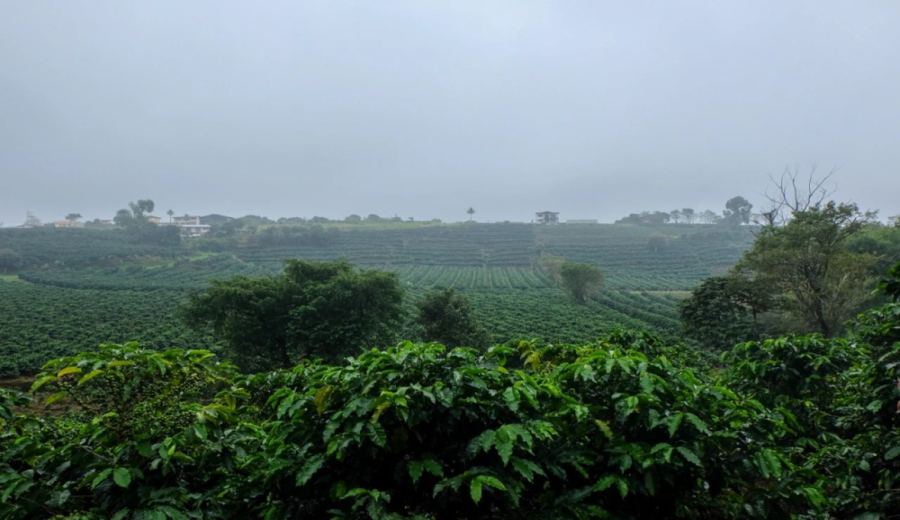
Costa Rica is one of the earliest countries in Central Latin America to cultivate coffee, with a long industry history and mature organization. The country is located in the narrow isthmus of Central America,the Central Plateauat elevations of 1200 to 1600 meters is the golden zone for coffee cultivation. The fertile volcanic ash soil formed by volcanic terrain, along with mild temperatures and stable rainfall, provides ideal conditions for coffee growth.The harvest season mainly occurs from November to March each year, and the three sub-regions within its jurisdiction—San José, Heredia, and Alajuela—are nourished by high-altitude volcanoes such as Irazu, Barva, and Poas, resulting in coffee beans that possess unique flavor characteristics combining chocolatey-cocoa notes, clear fruit acidity, and delicate aromas.
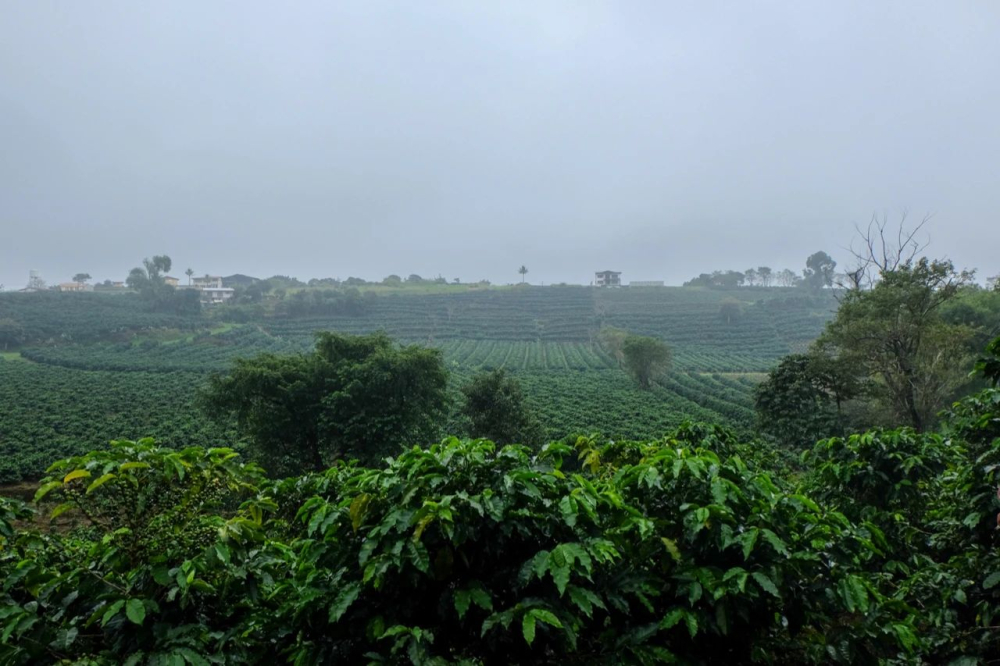
Costa Rica is divided into eight major coffee-growing regions: Valley Central Occidental (Western Valley), Valley Central (Central Valley), Tarrazú, Tres Ríos (Three Rivers), Orosi, Brunca, Turrialba, and Guanacaste. Among them, the Tarrazú region is famed for producing high-quality specialty coffee and is a focal point for coffee enthusiasts worldwide.
Tarrazú is located south of the capital, San José,at elevations ranging from 1200 to 1700 meters, where the boundaries between dry and rainy seasons are distinct, coupled with ideal soil composition and topographical conditions, giving the region’s coffee a soft acidity, dense and hard bean texture, and rich aroma.The main harvest period is from December to March each year, and the high-altitude environment imparts an irreplicable roundness to the coffee beans, making it a globally renowned specialty coffee origin. The name "Tarrazú" originates from the ancient Guaymi indigenous people who once settled here, and the region practices no use of pesticides or synthetic fertilizers, providing a pure growing environment for Arabica varieties.
In the 2014 COE (Cup of Excellence) competition, 17 out of 23 selected beans came from the Tarrazú region, fully demonstrating its leading position in the specialty coffee world. Well-known beans such as Costa Rica Mirazu Coffee and the Musician Series Mozart and Bach from [a coffee brand] are all produced in this region and are recommended as everyday drinking beans.

The Mirazu Estate was founded by Esteban Sanches, a former employee of La Candelilla Estate, who, after accumulating extensive experience in coffee machinery and green bean post-harvest processing, decided to start his own venture."Mirazu" means "overlooking Tarrazú" in the local language, highlighting the estate’s commitment to the characteristics of the region. Esteban Sanches, himself a Ph.D. in agriculture, is well-versed in various processing methods and post-processing techniques. The estate grows a diverse range of varieties. Its sundried Gesha blend (comprising 50% Gesha, 50% ET47, SL28, and Maico) features delicate floral notes and soft ripe fruit aromas, with brown sugar and stone fruit tones creating a rich sweetness.
The Musician Series coffee comes from the Canet Estate, which is located in the highest-elevation area of the Tarrazú region and is also one of the most densely planted fruit-growing areas in Costa Rica.The estate primarily cultivates passion fruit, with coffee grown only in specific small areas and receiving meticulous care. All coffee cherries are hand-picked, selecting only ripe red ones, and are screened again before processing to remove unripe or overripe beans. The Musician Series is named after classical musicians such as “Mozart” and “Bach,” and the planted varieties are Caturra and Catuaí. These beans are processed using raisin honey and washed methods, grown at elevations between 1700 and 1950 meters, and classified as SHB (Strictly Hard Bean). These beans are known for their sweet flavors, blending rich fruit aromas, wine-like notes, and tea-like qualities, earning widespread acclaim in the market.

The coffee varieties grown in Costa Rica are similar to those in other Latin American countries, mainly Bourbon, Caturra, and Catuaí, but also include unique local varieties such as Villalobos and Villa Sarchi. Bourbon is a mutation of Typica that was transplanted to Yemen and later evolved from its slender shape to a more rounded one. It was introduced to the island of Bourbon (later Réunion) off the east coast of Africa by the French in 1715 and subsequently spread to Central and South America. It is highly praised for frequently achieving excellent results in specialty coffee cuppings. Caturra is a natural mutation of Bourbon, discovered in Brazil in 1937. It has a shorter tree stature but higher yield. Though less suited to Brazil’s climate, it is widely planted in Central and South America (e.g., Colombia, Costa Rica, Nicaragua). Catuaí is a cross between Caturra and Mundo Novo, yielding more compact fruits and exhibiting greater wind resistance, though its flavor complexity is slightly lower than Caturra’s, and it comes in both red and yellow fruit forms, with the red fruit offering superior flavor. Villa Sarchi is a green-topped, dwarf natural mutation discovered in Costa Rica in 1950 and later refined through pedigree selection. Though not widely planted in Costa Rica, it has shown complex aromas when introduced to Honduras, performing well with medium-to-dark roasts. Its dry fragrance carries notes of perfumed floral honey, cherry, and cinnamon spices. Villalobos is a native Typica variant from Costa Rica, with branches and trunks forming a 60-degree angle and bronze-colored leaves. It thrives in high-altitude, poor-soil, and shaded environments, and is noted for its pronounced sweetness and pleasant acidity.

The evolution of coffee processing methods in Costa Rica is also representative. Water processing was introduced in 1830, and later, to enhance quality and efficiency, honey processing—an innovative technique between natural and washed methods—was developed. The core of honey processing isdrying with the mucilage (fruit pulp) still attached—after removing the outer skin, the sticky mucilage layer is retained and then naturally dried in shaded, ventilated conditions (usually taking 12 to 14 days), with final checks on moisture content and fermentation status. The retention of mucilage significantly enhances the coffee’s sweetness, which is one of the main reasons Costa Rican coffee is so popular.
Depending on the amount of mucilage retained and the degree of drying, honey processing can be categorized into Black Honey (most mucilage retained, strongest sweetness), Red Honey, Golden Honey, Yellow Honey, and White Honey (least mucilage retained). Additionally, raisin honey processing is a special variation:the coffee fruit is sun-dried with skin and pulp until it reaches a raisin-like state, after which the skin and pulp are removed and drying continues, imparting the coffee beans with intense raisin, dark berry, and fermented fruit wine flavors. The Bach and Mozart beans from [a coffee brand] use this process, with Bach undergoing deeper fermentation, featuring fermented wine notes and dried beef flavors; Mozart undergoes lighter fermentation, presenting dark fruit characteristics.

For pour over brewing of Costa Rican coffee, the following parameters are recommended: use a V60 dripper, control water temperature at 91°C, set the coffee-to-water ratio at 1:15 (15g coffee), and grind to a medium-fine level (80% passing through a Chinese 20-mesh standard sieve). The specific operation can follow a multi-pour method: the first pour adds 30g of water to wet the coffee grounds, forming a “hamburger” shape and allowing a 30-second bloom; the second pour adds water up to 125g at the 1:00 minute mark, and when the water level drops to two-thirds of the coffee bed, proceed to the third pour; the third pour adds water up to 225g at the 1:40 minute mark, with total extraction time around 1:59 and overall process about 2 minutes. After extraction, gently swirl the coffee to ensure evenness before tasting.

In terms of flavor, the Bach coffee from [a coffee brand] presents a complex aroma of berries, strawberries, citrus, cream, cocoa, caramel, and tropical fruits; Mozart focuses on berries and fermentation notes, with flavors of raisins and sweet orange upon entry, and more pronounced fermented wine and osmanthus aromas as the temperature changes. The Mirazu coffee showcases delicate notes of rose, strawberry, raisins, and almonds.
Regardless of which coffee you choose, freshness is a key factor influencing flavor expression. It is recommended to select coffee beans roasted within 5 days and allow them to rest for 4 to 7 days to reach optimal flavor condition. If grinding is needed, note that coffee powder oxidizes quickly, so it is advisable to brew soon after grinding to preserve the best flavor.

The above content is compiled by CoffeeHunters, a coffee news website.


