








Introduction:The Yirgacheffe Wolkite washed coffee is an entry-level specialty coffee favored by many beginners, renowned for its bright acidity and floral-fruit aromas. This article delves into the origin of the beans, the history and processing methods of the Wolkite Cooperative, the ECX grading classification system, as well as the characteristics of the native variety. It also provides practical roasting suggestions and brewing references to help you better understand the potential of this classic bean.
As one of Ethiopia’s most iconic specialty coffee regions, Yirgacheffe has long been beloved by coffee enthusiasts worldwide for its refreshing floral notes and pronounced citrus tones. Among them, the Wolkite washed Yirgacheffe is often the first choice for those trying single-origin beans. This article will provide a detailed analysis of this classic coffee’s multifaceted profile—from the growing environment, the background of the processing cooperative, the washed processing method, the traits of the native variety, to the ECX grading system, as well as roasting and extraction recommendations.
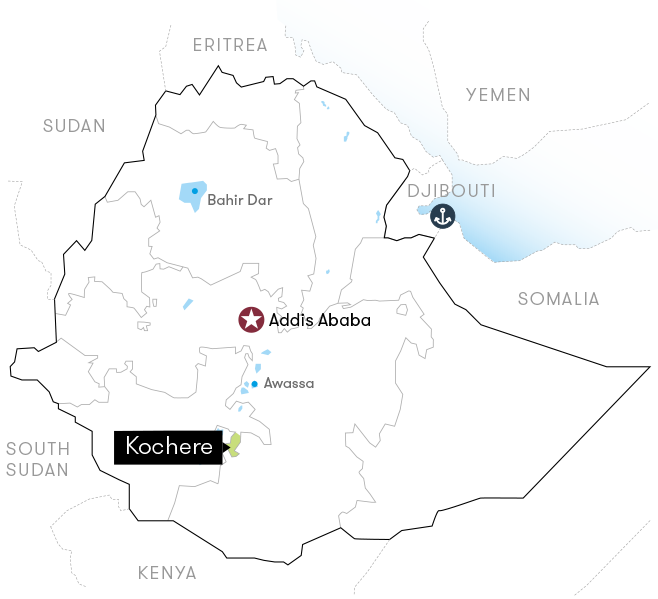
 Yirgacheffe is located in the Kediyo zone of southern Ethiopia, originally a high-altitude sub-region under the former Sidamo province, and has now become an independent and internationally renowned coffee-growing area. Its altitude ranges between 1,700 and 2,100 meters, making it one of the few ultra-high-altitude coffee-producing regions in the world. Such elevation not only slows down the ripening process of coffee cherries but also allows the beans to accumulate richer flavor compounds, resulting in its unique aroma and balanced sweet-acid profile.
The star of this article—the Wolkite washed Yirgacheffe—comes from the Wolkite area within the Yirgacheffe region, at an altitude of approximately 1,800 to 2,000 meters.The region enjoys a cool and humid climate, with year-round fog that envelops the area like a misty valley, nurturing coffee with distinct layers and a blend of fruity and floral flavors.Most coffee farmers here cultivate on a small scale and rely on cooperatives for unified processing and sales, ensuring consistent quality.
 The Wolkite Cooperative was established in 2005 and is affiliated with the renowned Yirgacheffe Coffee Farmers Cooperative Union (YCFCU). From its inception, it was known for producing high-quality natural Yirgacheffe, and in recent years, its washed processing techniques have also matured, earning widespread market acclaim. The cooperative currently has around 300 coffee farmers who collectively maintain rigorous cultivation and post-harvest processes to ensure each batch of beans showcases the unique character of the region.
This Wolkite washed Yirgacheffe employs the traditional washed processing method, which includes the following steps: first, the harvested coffee cherries are sorted to remove unripe or overripe fruits; then, a pulper is used to remove the outer skin and pulp; next, the beans, still covered with mucilage, undergo about 24 hours of fermentation in water, a stage that helps break down the slippery mucilage layer; after fermentation, the beans are thoroughly washed under running clean water to ensure no residue remains; finally, the parchment-covered beans are evenly spread out to dry until their moisture content drops to around 12%, after which the husk is removed to obtain the final usable green coffee beans.
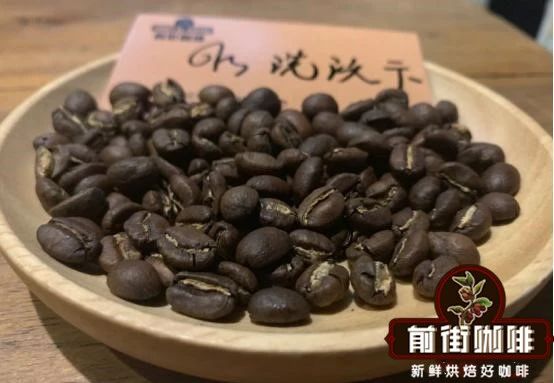 This coffee uses Ethiopia’s uniquenative variety (Heirloom). It’s worth noting that the so-called native variety is not a single cultivar, but rather a collective term for numerous coffee varieties that have naturally evolved over time locally and have not undergone commercial selection or naming. Since Ethiopian coffee often grows in the wild, gardens, or the forest understory, coexisting with other plants and forming a complex gene pool. According to statistics, there are nearly 2,000 recorded coffee varieties in Ethiopia, of which 1,927 are native varieties. These varieties vary significantly in appearance, including differences in bean length, shape, and plumpness.
In Ethiopia, coffee cultivation commonly adopts the “shade-grown” method, where coffee trees grow alongside tall plants such as bananas and shade trees to reduce direct sunlight, regulate microclimates, and help maintain ecological balance while reducing pest and disease issues. This traditional and environmentally friendly planting model is also one of the reasons behind the unique flavors of the region’s coffee.
 Ethiopia’s coffee grading system was previously managed by the CLU department under the Ministry of Agriculture, which classified beans based on the ratio of defective beans. Washed beans typically fell into grades G1 to G2, while natural beans were mostly G3 to G5. However, with advancements in processing techniques, some high-quality natural beans can now also achieve G1 or G2 grades.
Established in 2008, the Ethiopian Commodity Exchange (ECX) reformed the grading system by adopting a comprehensive scoring based on two main criteria: “physical characteristics” and “cupping flavor.” Coffee is divided into three major categories: Specialty, Commercial, and Local/Domestic. Specialty and Commercial grades are suitable for export, with scoring weights of 40% for physical characteristics and 60% for cupping quality. Physical characteristics are further broken down into defect count, appearance size, color, and aroma; cupping evaluates flavor, acidity, body, aftertaste, and more.
Beans graded G1 to G3 are further cupped according to SCAA standards. Those scoring above 85 points are designated as Q1 grade, 80 to 85 points as Q2 grade, and below 80 points as G3. Q1 and Q2 are considered specialty coffees and are the most sought-after grades in the market. If you want to taste top-tier Yirgacheffe, it’s recommended to choose G1 or G2 grade beans, which often exhibit bright white floral notes, citrus acidity, and honey or fruity-like aftertastes.
For brewing and roasting the Yirgacheffe Wolkite washed beans, due to their pronounced acidity and delicate aromas,it is recommended to use a medium-light roastto best preserve their floral-fruit character and refreshing taste. During extraction, aim for a water temperature between 90°C and 93°C, a finer grind (such as medium-fine commonly used for pour over), and carefully control brewing time and coffee-to-water ratio to showcase its optimal layers and balance.
The above content is compiled by CoffeeHunters, a coffee news website.


