







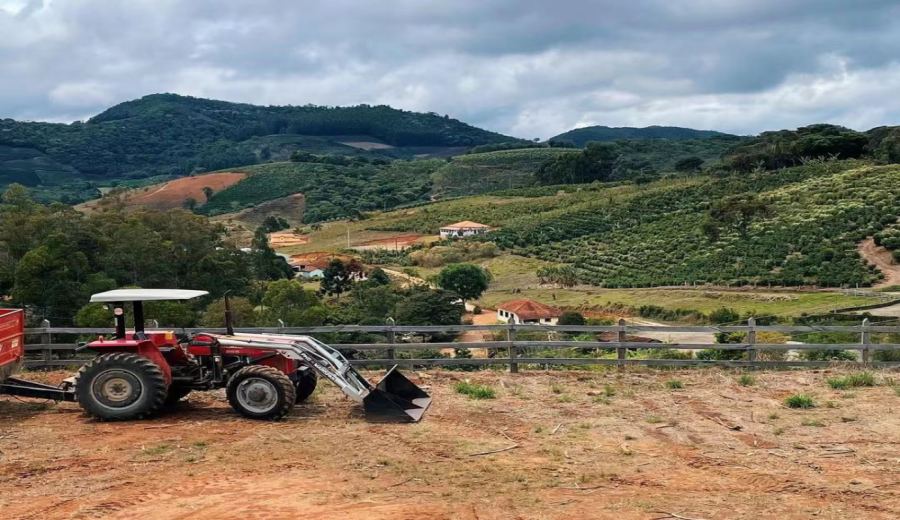
Introduction:Delve into Brazil’s status as the world’s largest coffee-producing country, exploring its variety characteristics and regional distribution, with a special focus on the flavor profiles of Red Bourbon coffees. This article analyzes the terroir differences between the two core regions of South Minas and Cerrado, introduces Brazil’s coffee grading system, and provides practical roasting and pour-over parameters to help coffee enthusiasts master the brewing essentials of this classic bean variety.
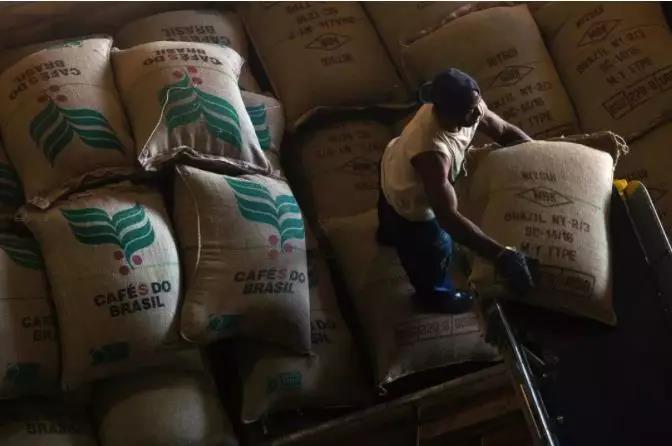
Brazil consistently ranks as the world’s top coffee producer, with cultivation spanning 17 states nationwide and a rich diversity of varieties. Currently, the market is dominated by main cultivars such as Red Bourbon, Yellow Bourbon, Mundo Novo, and Catuai. Since its introduction from French Guiana in 1727, the Bourbon variety has taken root in Brazil for over two centuries and has evolved into a variety of branches. These coffees generally exhibit low acidity, prominent nutty tones, balanced flavor, and moderate body. Though not particularly eye-catching in the specialty coffee scene, they serve as foundational choices for espresso blends.
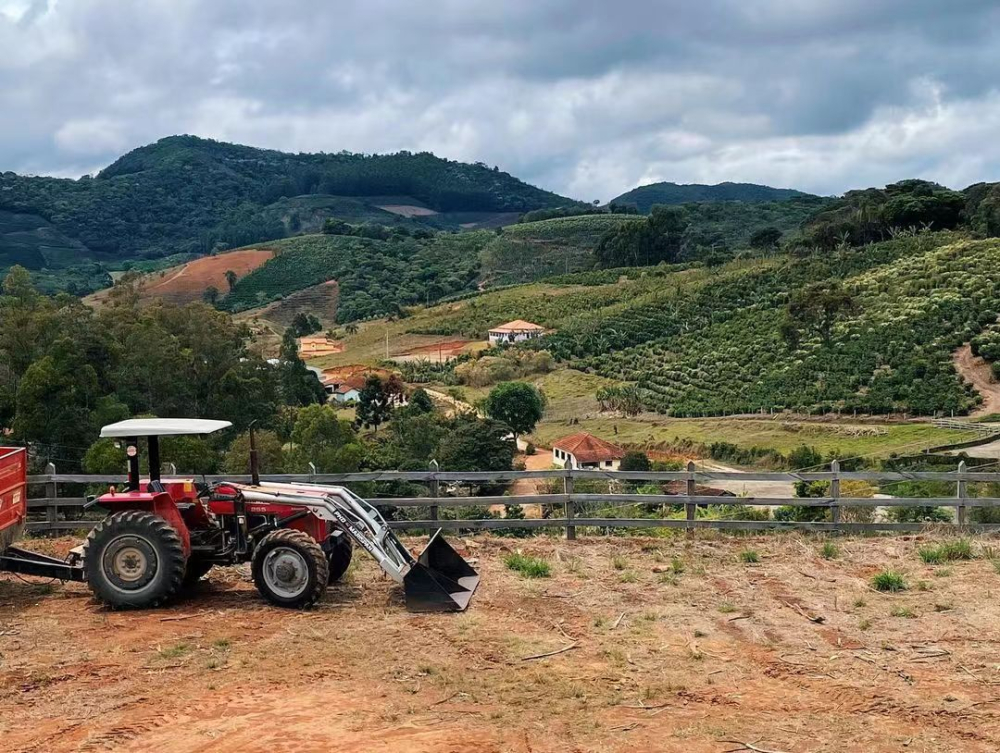
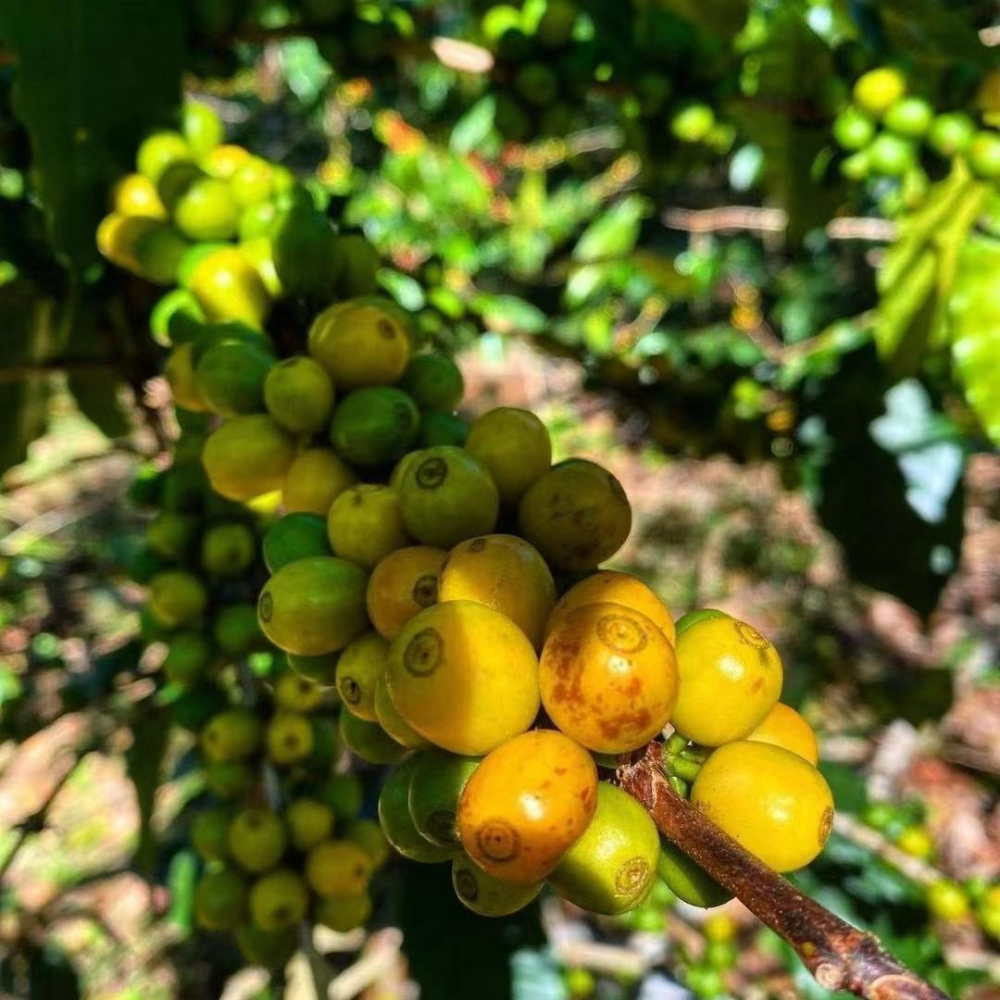
Bourbon and Typica are both ancient Arabica varieties, first cultivated and named on Réunion Island (formerly known as Bourbon Island). Compared to Typica, Bourbon has broader leaves, denser plant growth, and about 30% higher yield. Its beans are rounder and shorter, with flavors featuring berry-like acidity, rich mouthfeel, and outstanding creaminess and aroma, though it is less resistant to disease. Red Bourbon gets its name from the fruit’s ripening process, turning from green to deep red, and was introduced to Brazil around 1860 via the Campinas region, making it one of the representative lineages. Yellow Bourbon yields less but offers more refined quality, while Orange Bourbon is a rarer variant.
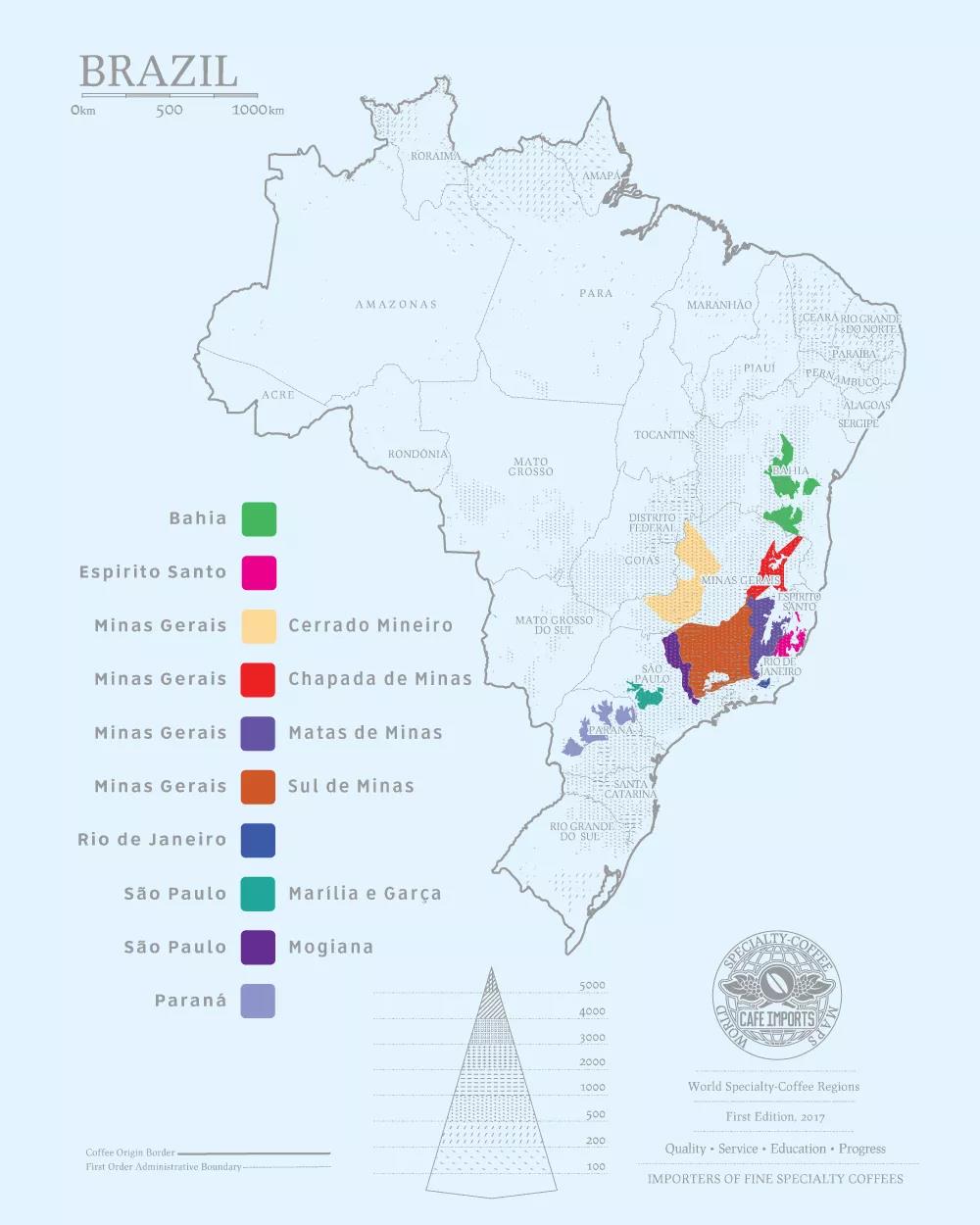
The South Minas region is located in a hilly area at elevations of 700 to 1200 meters and is the earliest area in Brazil to develop coffee cultivation. Due to rising labor costs, mechanical harvesting is now commonly used, and it is also the most commercially mature region, home to many large exporters. The Bahia region mainly produces washed Brazilian beans, while Espírito Santo focuses on Robusta exports. Brazilian coffee-growing terrain is mainly divided into highland areas above 500 meters and plains below 200 meters. The mainstream varieties mostly belong to the Bourbon system, including Yellow Bourbon, Red Bourbon, and flat bean Santos. Its flavor profile is characterized by low acidity, nutty tones, balanced taste, and moderate body. Though its performance in the specialty market is steady, it is a common choice for espresso blends and is often used as the base ingredient to simulate Blue Mountain flavors.
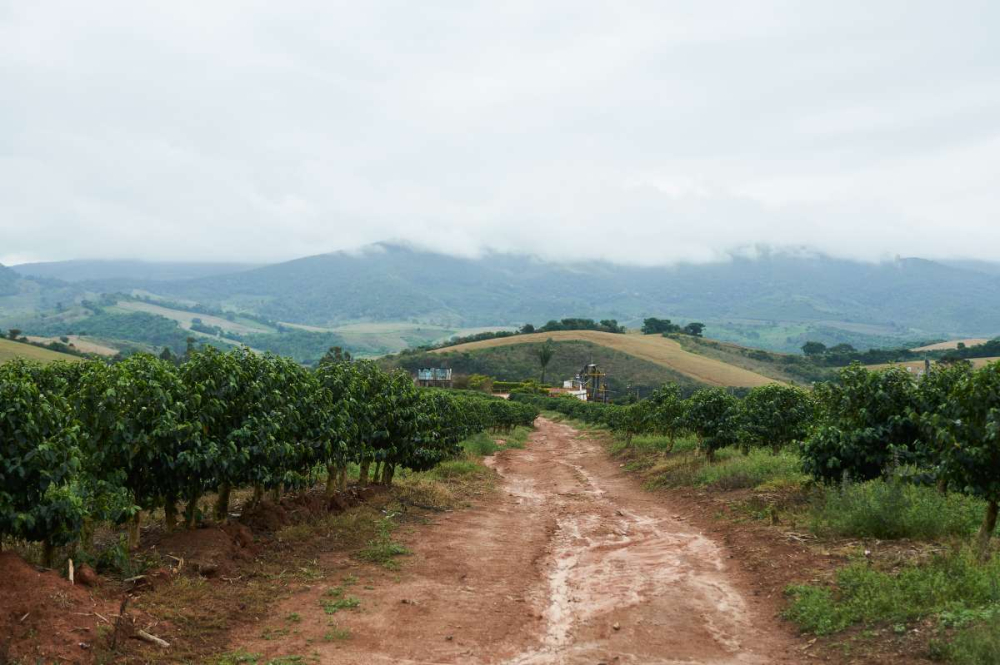
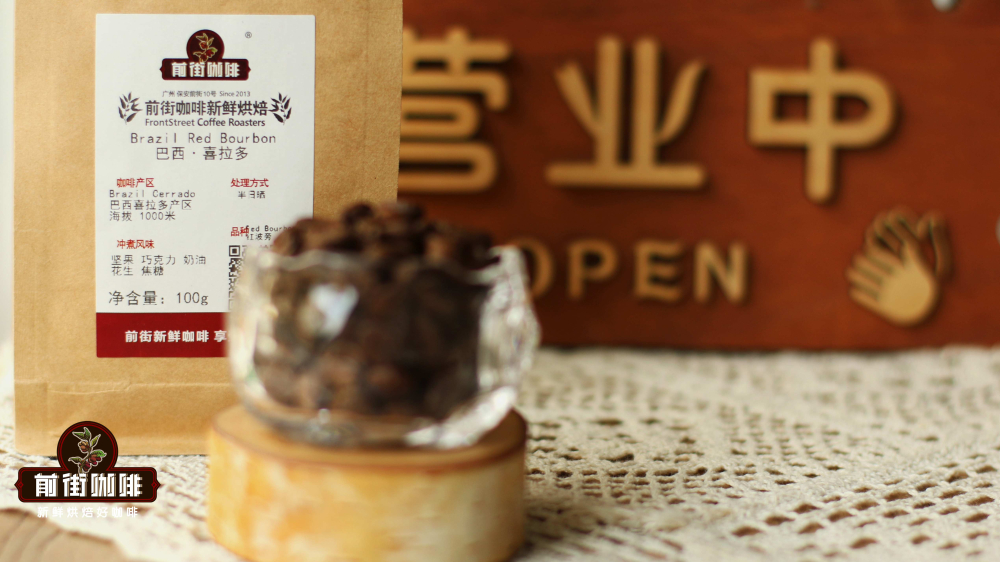
Cerrado Mineiro is a model of technological application in Brazilian coffee. Large farms in the region have widely adopted advanced production technologies, a phenomenon less common in other areas. The plateau climate features distinct seasons, ensuring stable fruit ripening, with the harvest period completely avoiding rainfall interference. Cerrado coffee often employs natural (sun-dried) processing, aligning with current trends in processing methods. A certain brand’s Cerrado Red Bourbon, grown at an altitude of 1000 meters and processed using semi-natural methods, showcases layered flavors of nuts, chocolate, cream, peanuts, and caramel.
Brazilian coffee beans are graded using a “deduction method,” based on the number of defective beans per 300 grams of main beans, divided into seven grades from No. 2 to No. 8. Those with fewer than 4 defects fall into No. 2. Although theoretically No. 1 (flawless) exists, due to unstable supply, No. 2 is considered the highest practical grade. Bean size is screened using a 1/64-inch mesh, with sizes ranging from 14 to 20 mesh, among which 17/18 mesh is the highest commercial grade, while 19 mesh exists but is rarely produced.
For roasting, this Red Bourbon is recommended to be roasted to a medium-dark level to enhance its rich body and the intense flavors of nuts, cocoa, and peanuts. The specific roasting curve is as follows: charge the drum at 175°C, initial heat at 140 and air at 3, with the turning point reached at 1 minute 36 seconds at 95.6°C; then gradually adjust heat and air, reducing heat to 70 and air to 5 at 192°C; when the bean surface shows wrinkles and black speckles, and the toast aroma transitions to coffee aroma, it indicates that first crack is approaching;First crack begins at 10 minutes 51 seconds, air is opened to 5, and after 2 minutes of continued development, the roast is dropped at 201.5°C.
For pour-over brewing, given the nutty dominant profile of Cerrado Red Bourbon, it is recommended to use a medium-coarse grind (70% passing through a 20-mesh sieve), a 1:15 coffee-to-water ratio, and a water temperature of 88°C. Specific steps: start with 30 grams of water to bloom the coffee grounds for 10 to 20 seconds; then pour 100 grams of water in small streams, moving in circles from the center outward, until the water level drops by half; finally, pour 95 grams to reach a total of 225 grams, taking approximately 1 minute 52 seconds. If time is limited, using a drip bag is also a convenient option to replicate the flavor. When using, make sure the non-woven fabric pouch is fully expanded, and control the speed of each pour and the blooming time to enjoy a rich and balanced Brazilian coffee experience.
The above content is compiled by CoffeeHunters, a coffee news website.


