








Introduction:Delve into the characteristics, variety distribution, and processing methods of Peru’s three major coffee regions, with a special focus on the unique flavors of high-altitude washed Geisha from Cajamarca. This article explores how Peruvian coffee has risen from historical lows to the specialty market, analyzing the influence of altitude, variety, and processing on flavor, and offering practical tasting and purchasing guidance.
In the world of specialty coffee, although Peru may not be as renowned as Ethiopia or Colombia, its exceptional geographical environment and abundant heritage variety resources have enabled this South American country to gradually emerge on the international stage. Most of Peru’s coffee is grown in the high-altitude regions of the Andes, benefiting from a stable climate and rich biodiversity—conditions that are particularly well-suited for cultivating high-quality Arabica varieties.
Historically, Peruvian coffee experienced years of dormancy due to internal conflicts and economic hardship, only beginning to recover in the 1990s. During this period, many aging coffee trees were preserved, especially traditional varieties like Typica, contributing to the distinct character of today’s Peruvian coffee. Coupled with the widespread practice of shaded cultivation and washed processing, Peruvian coffee showcases purity, softness, and elegant acidity, earning recognition in the realms of organic and sustainable production.

Located in western South America, about one-third of Peru’s territory is covered by the Andes Mountains. The terrain is diverse, and while the climate is primarily tropical desert, the mountainous areas offer cool and humid conditions ideal for coffee cultivation. Local coffee farming is concentrated at elevations between 1,300 and 1,850 meters, with some premium regions even reaching up to 2,000 meters. Such high altitudes not only slow the ripening of coffee cherries but also allow beans to accumulate richer flavor compounds and higher acidity.
In terms of regional distribution, Peruvian coffee can be divided into three major blocks: northern, central, and southern. Each area features unique characteristics based on its geographical conditions and microclimates. Among them, the northern Cajamarca region, blessed with equatorial climate and fertile soil, has become a rising star in the specialty coffee scene in recent years, particularly excelling with its washed Geisha.
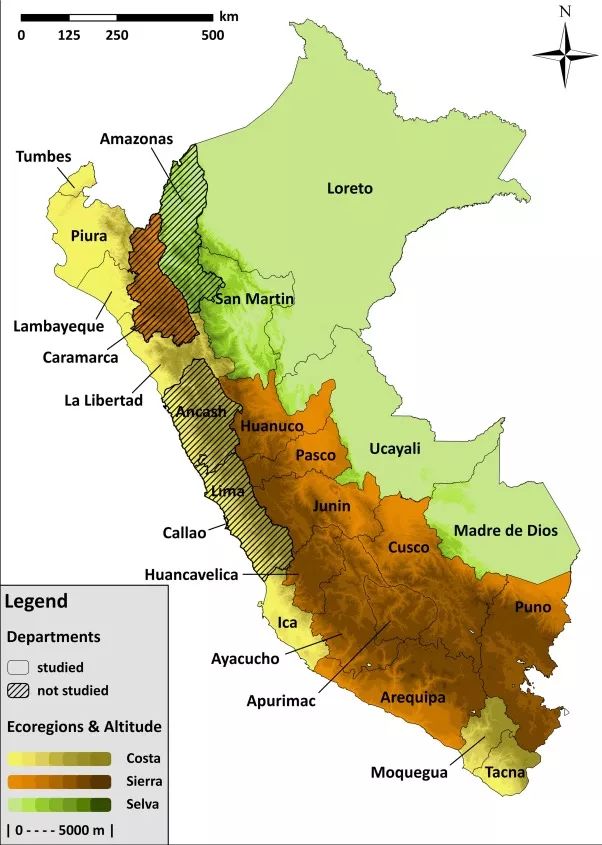
Among the northern regions,Cajamarca (CAJAMARCA)stands out as the most representative specialty coffee zone. With an equatorial climate and volcanic soils ideal for coffee, the region spans a wide range of altitudes—from 900 to 2,050 meters—though the best-producing areas lie between 1,800 and 2,050 meters. Production is dominated by smallholder farmers, but they receive strong support from cooperatives and associations such as CENFROCAFE. These organizations provide technical guidance, financial loans, and market access, significantly enhancing overall regional quality. The main varieties include Typica, Caturra, Bourbon, Panha Moeno, and Catuaí, while the successful introduction and cultivation of Geisha in recent years have further cemented Cajamarca’s place on the global specialty coffee map.
Junín (JUNIN)is located in the central region and serves as a major contributor to Peru’s coffee output, accounting for approximately 20–25% of national production. Most coffee farms here are situated in tropical rainforest zones. Although the area faced challenges from guerrilla activity and disease outbreaks in the past, it began to recover in the late 1990s. Elevations range from around 1,400 to 1,900 meters, and the primary varieties are Bourbon, Typica, Caturra, Pache, Moeno, and Catuai. The coffee from this region is known for balanced acidity, light aroma, and soft mouthfeel, making it ideal for drinkers who prefer milder flavors.
Cusco (CUSCO)is located in the south. Though its output is smaller compared to the northern and central regions, the area is largely managed by smallholder farmers. The region also benefits from a thriving tourism industry, with many visitors traveling from Cusco to explore Machu Picchu. Elevation ranges between 1,200 and 1,900 meters, and the main varieties include Bourbon, Typica, Caturra, Pache, Modo Novo, Catuai, and Catimor. Coffees from this region typically exhibit rich fruitiness and layered complexity, providing an opportunity to further explore the diversity of Peruvian coffee.
Statistics show that up to 98% of Peru’s coffee is grown in forested areas, with the vast majority of producers being small-scale farmers. Despite challenges such as civil war, drug issues, and severe epidemics, Peru’s coffee production has steadily increased—from around 900,000 bags in the mid-1970s to over 1.3 million bags today—thanks to the efforts of both government and civil society. Nowadays, Peruvian coffee supplies not only the domestic market but is also exported in large quantities to Germany, Japan, and the United States. It is often highly regarded as either a premium blend component or a single-origin specialty bean.
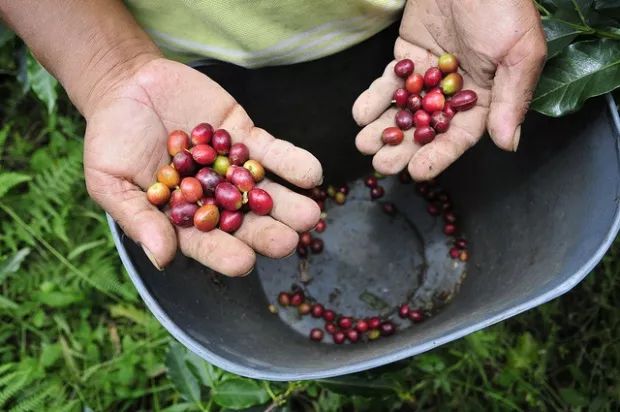
Regarding coffee grading, Peru primarily classifies beans based on altitude and green bean size. Coffee from high-altitude regions is typically categorized asStrictly High Bean (SHB)SHB (Strictly Hard Bean), which requires elevations above 1,350 meters; whileHigh Bean (HB)HB (Hard Bean) refers to beans grown at altitudes between 1,200 and 1,350 meters. Additionally, the percentage of defective beans is another key factor in determining coffee grade. Many buyers further conduct internal grading based on cupping results to ensure the beans meet their desired flavor profiles.
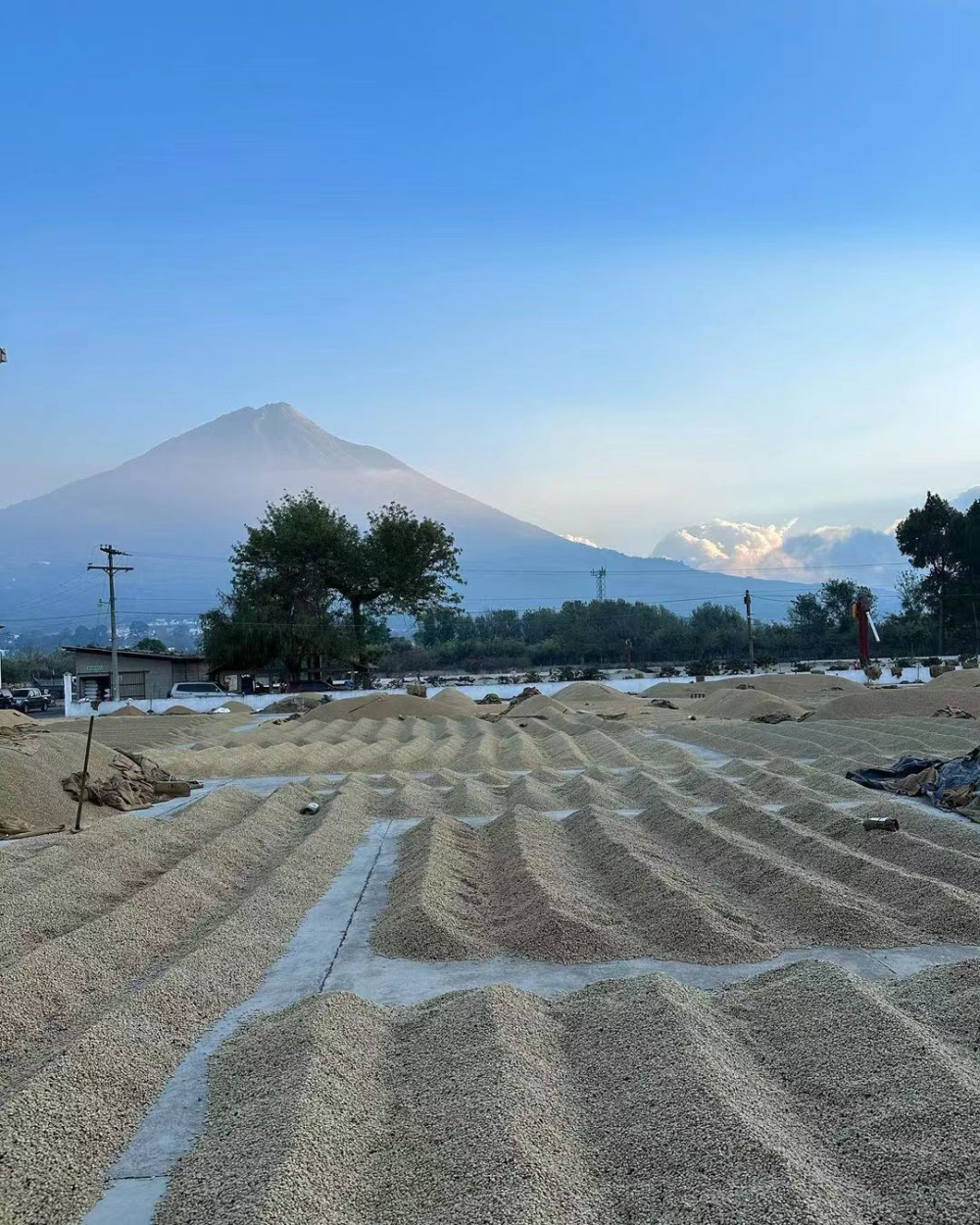
In terms of processing, Peru widely employs traditional washed processing due to its abundant water resources. The process includes flotation to remove low-density fruits, mechanical depulping, fermentation to remove mucilage (with options for either wet or dry fermentation), thorough washing, and finally drying the parchment-covered beans on sun patios until their moisture content reaches 11–13%. This method preserves the coffee’s purity and bright acidity, which are key to the clarity and layered complexity of Peruvian coffee flavors.
When it comes to flavor, Peruvian coffee is known for being soft, clean, and featuring delicate acidity. Traditional varieties like Typica offer tea-like body and sweetness, while the recently introduced Geisha brings entirely new floral and fruity aromatic profiles to the region. The featuredPeru · Cajamarca Washed Geishacomes from a high-altitude mountain region at 1,800–1,950 meters. Through medium-light roasting, it perfectly showcases its unique white floral notes, prune, citrus, and black tea aftertaste.
In cupping, this Geisha exhibits intense dry fragrance, including white florals, berries, preserved plums, and citrus aromas. As hot water is poured, layers of sweet notes such as peach and caramel gradually unfold. Upon tasting, delicate floral notes appear first, followed by rich acidity reminiscent of grape, citrus, and prune juice. The finish leaves a gentle warmth of black tea and caramel, resulting in a clean, layered cup with a long-lasting and pleasant aftertaste.
The above content is compiled by CoffeeHunters, a coffee news website.


