








Introduction:The Mozart coffee beans from the Tarrazú region of Costa Rica, processed using anaerobic honey fermentation, deliver intense dried fruit and raisin sweetness — making them a classic choice for pour over enthusiasts exploring fermented flavors. This article delves into the grading principles of honey processing, the advantages of high-altitude cultivation in Tarrazú, and provides tested V60 pour over parameters to help you fully unlock the layered complexity and sweetness of this bean.
Among Costa Rica’s many coffee-growing regions, Tarrazú stands out for its high elevation and distinctive processing methods. Among them, the Mozart coffee beans, thanks to their anaerobic honey fermentation process, showcase rich dried fruit fermentation aromas and a full-bodied raisin-like sweetness, becoming a flavor benchmark for many pour over lovers. These beans not only feature prominent sweetness but also reveal delicate notes of osmanthus and pineapple through proper roasting and extraction.
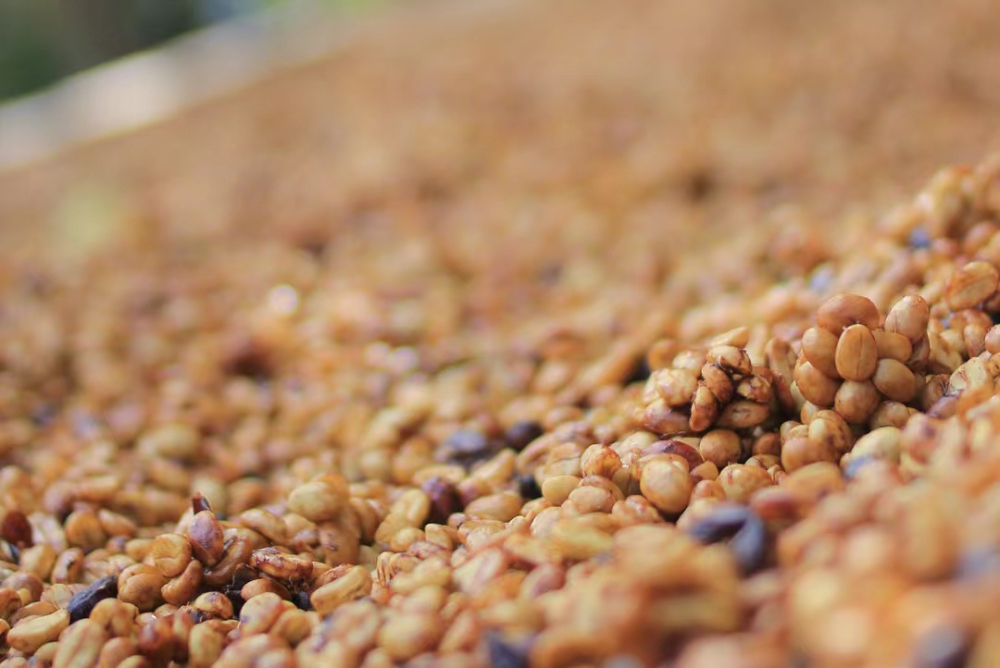
When it comes to honey processing, many mistakenly assume that actual honey is added to the coffee beans. In reality, the “honey” refers to the coffee fruit mucilage retained during the drying process. This sticky mucilage is rich in sugars and, when dried under sunlight or shaded conditions, gradually seeps into the bean, imparting a fermented-like sweetness. Honey processing is referred to in English as either “Honey Process” or “Miel Process,” with “Miel” being the Spanish word for “honey.” This technique originated in Costa Rica and later evolved into various methods with differing levels of mucilage retention.

Based on the amount of mucilage retained, honey processing can be categorized into white honey (40%-50% retention), yellow honey (60%-70%), red honey (80%), and black honey (close to 100%). The more mucilage retained, the deeper the fermentation, resulting in more pronounced sweetness and fermented flavors — though the drying time is also significantly extended. For example, black honey often requires over 14 days of drying in shaded conditions to avoid over-fermentation. Due to its terrain and climate constraints, Costa Rica initially drew inspiration from Brazil’s semi-washed method and developed honey processing techniques suited to its local environment. Anaerobic honey processing takes this further — before removing the fruit skin, the coffee cherries are first fermented in an oxygen-free container to enhance the flavor profile.
The Tarrazú region is located in the Talamanca Mountains of Costa Rica, at elevations between 1200 and 2000 meters, making it one of the country’s highest-altitude coffee-growing areas. The Mozart coffee beans are cultivated at an altitude of 1800 meters. The significant day-night temperature variation at this elevation slows the growth of the coffee beans, allowing more time for the accumulation of complex flavors. Combined with anaerobic honey processing, the performance of these beans is akin to Mozart’s music — subtle yet distinctive, with clearly defined layers of flavor.
During the roasting phase, the roaster opted for a medium roast to balance acidity and sweetness while enhancing overall complexity. Throughout the roast, the time from the turning point to first crack was intentionally extended to boost sweetness through the Maillard reaction, while avoiding over-roasting that could mask the unique aromas brought by the mucilage fermentation. This roasting strategy allows the Mozart coffee beans to fully express the richness of raisins and the freshness of pineapple during brewing.
For pour over enthusiasts, it is recommended to use a V60 #01 filter cone with a medium-fine grind (sugar cube size, about 80% extraction rate on a Chinese No. 20 standard sieve). Specific parameters are: 15 grams of coffee grounds, water temperature at 91°C, and a brew ratio of 1:15. The brewing process follows a three-stage pouring method: the first stage involves pouring 30 grams of water for a 30-second bloom, followed by a slow circular pour to reach 125 grams for the first pour; when the water level drops just about to expose the coffee bed, continue pouring to 225 grams before stopping, then remove the filter cone once the water level drops again. The total extraction time is kept around 1 minute and 50 seconds, effectively extracting the sweet and fruity nuances from the mucilage fermentation.
The brewed Mozart coffee presents a clear flavor profile: it opens with distinct fermentation aromas, followed by the sweet notes of raisins intertwined with the delicate floral scent of osmanthus, and finishes with a refreshing citrusy acidity from pineapple. The overall mouthfeel is balanced and layered. These beans are not only ideal for those who enjoy sweet-tasting coffees, but also serve as an excellent entry point for exploring anaerobic honey processing and the terroir characteristics of high-altitude cultivation.
The above content is compiled by CoffeeHunters, a coffee news website.


